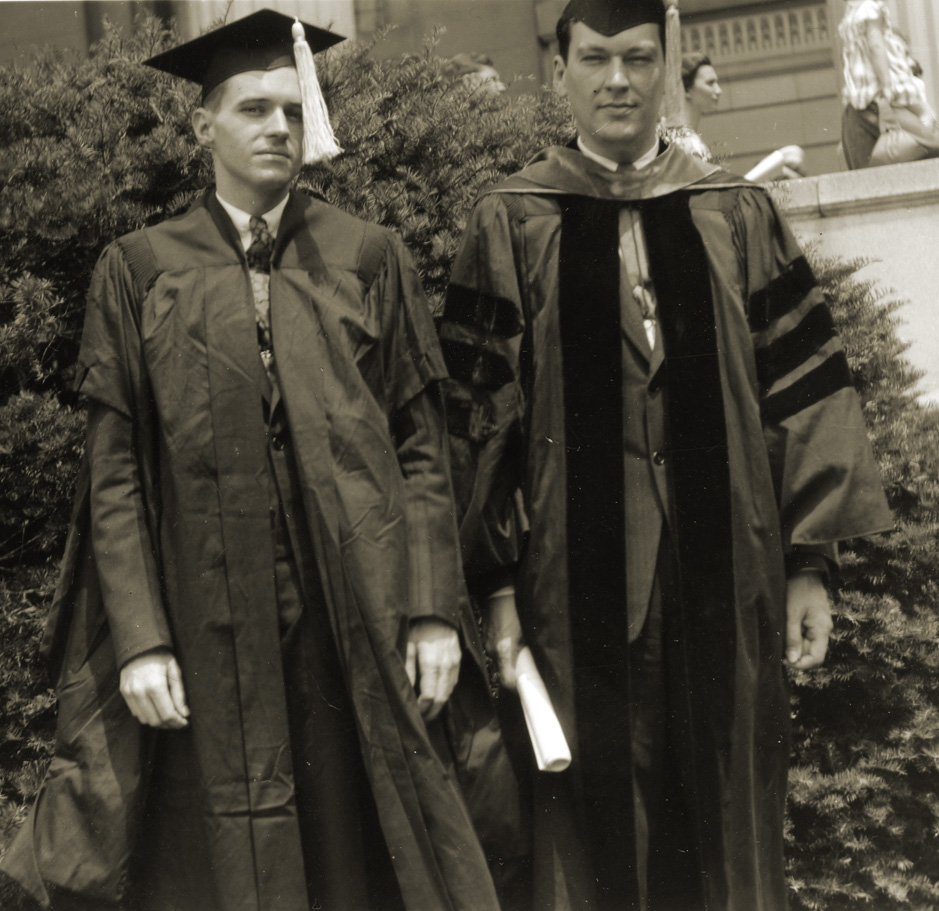
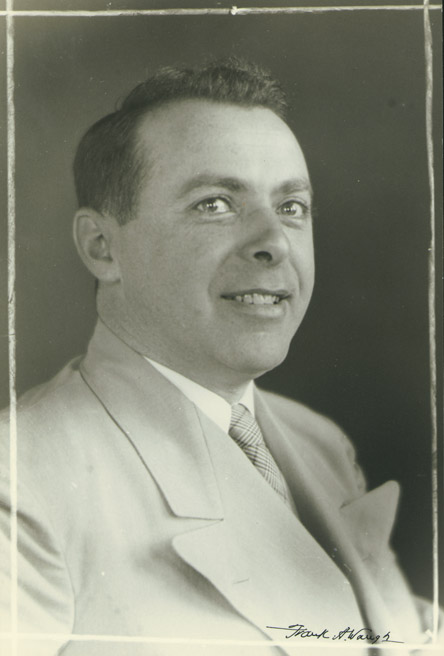
The protistologist Lea Bleyman has conducted research into the genetics, mating systems, and life cycles of ciliates. A former student of Tracy Sonneborn, Bleyman has served as past Secretary and President (2001-2002) of the Society of Protozoologists, and spent many years on the faculty of the Department of Natural Sciences at Baruch College.
The Bleyman Papers contain lab and research notes, abstracts of talks and conference materials, along with some correspondence and annual progress reports from Baruch College. The earliest materials in the collection relate to her years as a student in Sonneborn’s lab; other Bleyman material is located in the records of the International Society of Protistologists at the University of Maryland Baltimore County Library.
Subjects
Baruch College--FacultyParamecium--GeneticsProtozoans--CompositionProtozoans--GeneticsProtozoology--ConferenceSociety of ProtozoologistsTetrahymena--Genetics
Contributors
Bleyman, Lea KNanney, David Ledbetter, 1925-Sonneborn, Tracy Morton, 1905-1981
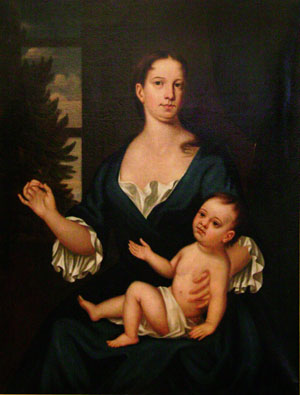
Deborah Brinley and infant son Francis, 1729 Copy by Charles U. Bond (1830) after John Smibert
A prosperous family of merchants and landowners, the Brinleys were well ensconced among the social and political elite of colonial New England. Connected by marriage to other elite families in Rhode Island and Massachusetts — the Auchmutys, Craddocks, and Tyngs among them — the Brinleys were refined, highly educated, public spirited, and most often business-minded. Although many members of the family remained loyal to the British cause during the Revolution, the family retained their high social standing in the years following.
The Brinley collection includes business letters, legal and business records, wills, a fragment of a diary, documents relating to slaves, newspaper clippings, and a small number of paintings and artifacts. A descendent, Nancy Brinley, contributed a quantity of genealogical research notes and photocopies of Brinley family documents from other repositories. Of particular note in the collection is a fine nineteenth century copy of a John Smibert portrait of Deborah Brinley (1719), an elegant silver tray passed through the generations, and is a 1713 list of the library of Francis Brinley, which offers a foreshadowing of the remarkable book collection put together in the later nineteenth century by his descendant George Brinley.
Subjects
American loyalists--MassachusettsBook collectors--United States--History--19th centuryBrinley familyBrinley, George, 1817-1875--LibraryBusinessmen--Massachusetts--HistoryBusinessmen--Rhode Island--HistoryCraddock familyLandowners--Massachusetts--HistoryLandowners--Rhode Island--HistoryLibraries--Rhode Island--18th centuryMassachusetts--Economic conditions--18th centuryMassachusetts--Politics and government--19th centuryRhode Island--Economic conditions--18th centuryRhode Island--GenealogyRhode Island--Politics and government--19th centurySlavery--United States--HistoryTyng familyUnited Empire Loyalists
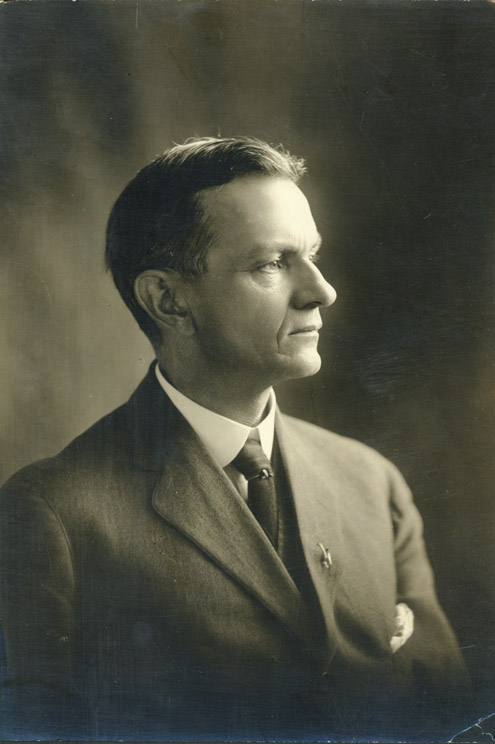
An agricultural and educational reformer born in 1868, Kenyon Butterfield was the ninth president of Massachusetts Agricultural College and one of the university’s most important figures. An 1891 graduate of Michigan Agricultural College and recipient of MA in Economics and Rural Sociology from the University of Michigan (1902), Butterfield entered university administration early in his career, becoming President of the Rhode Island College of Agriculture and Mechanic Arts in 1903 and, only three years later, of the Massachusetts Agricultural College. Possessed of a Progressive spirit, Butterfield revolutionized the college during his 18 years in Amherst, expanding and diversifying the curriculum, quadrupling the institutional budget, fostering a dramatic increase in the presence of women on campus and expanding the curriculum, and above all, helping to promote the Smith-Lever Act of 1914 and developing the Cooperative Extension Service into a vital asset to the Commonwealth. Nationally, he maintained a leadership role in the field of rural sociology and among Land Grant University presidents. After leaving Amherst in 1924, Butterfield served as President at Michigan Agricultural College for four years and was active in missionary endeavors in Asia before retiring. He died at his home in Amherst on Nov. 25, 1936.
The Butterfield Papers contain biographical materials, administrative and official papers of both of his presidencies, typescripts of his talks, and copies of his published writings. Includes correspondence and memoranda (with students, officials, legislators, officers of organizations, and private individuals), reports, outlines, minutes, surveys, and internal memoranda.
A mariner and whaleman originally from Provincetown, Massachusetts, John S. Chandler (1836-1916) relocated to Bucksport, Maine, in the 1870s to provide care for his aging in-laws.
Chandler’s account book and diary includes records of crewmembers on various voyages, accounts for labor, supplies, and merchandise, pasted-in bills for taxes, clothes, coal, boots, and other commodities, and a journal of Chandler’s farming activities, consisting of notes on labor performed, items and livestock sold, weather accounts, new purchases, and notation of personal visits and trips.
Subjects
Bucksport (Me.)--Economic conditionsBucksport (Me.)--Social life and customsFarmers--Maine--BucksportMerchant mariners--Massachusetts--History--19th centuryProvincetown (Mass.)--Economic conditions--19th centuryShip captains--Massachusetts
Temporarily stored offsite; contact SCUA to request materials from this collection.
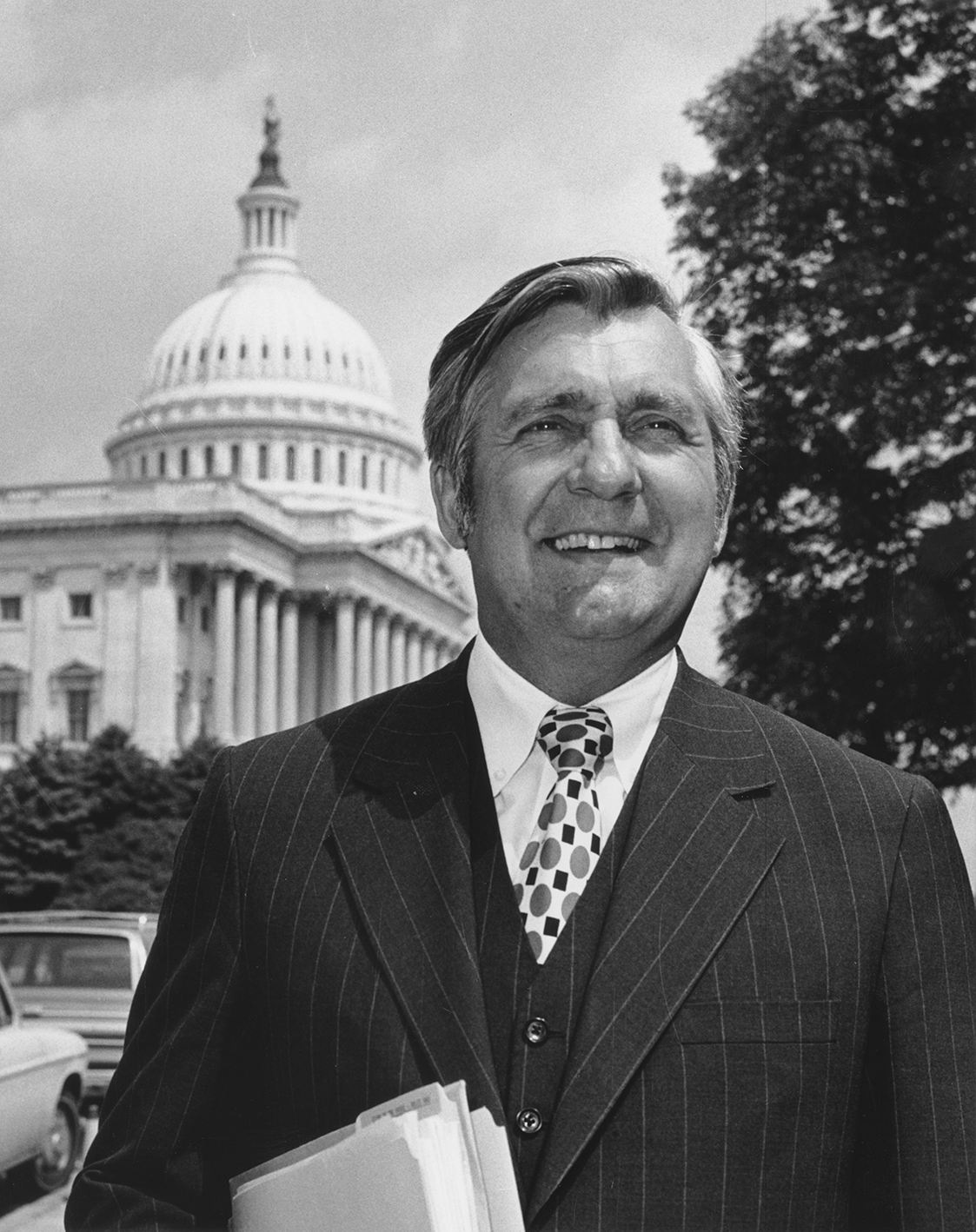
Massachusetts State Senator for the Berkshire District, 1950-1958, and representative for Massachusetts’s First District in the United States Congress for 17 terms, 1959-1991, where he made significant contributions in the areas of health and human services, the environment, education, energy, transportation, and small business.
Spanning four decades and eight presidents, the papers offer an extraordinary perspective on the major social, economic, and cultural changes experienced by the American people. Includes correspondence, speeches, press releases, bill files, his voting record, committee files, scrapbooks, travel files, audio-visual materials and over 5,000 photographs and slides.
Subjects
Massachusetts--Politics and government--1951-Massachusetts. SenateUnited States--Politics and government--20th centuryUnited States. Congress. House
A scholar of eighteenth century British literature and culture, Thomas W. Copeland began what would become more than half a century of research on the statesman and political philosopher Edmund Burke while studying for his doctorate at Yale (1933). After publication of his dissertation in 1949 as Our Eminent Friend Edmund Burke, Copeland was named managing editor of the ten-volume Correspondence (1958-1978). After academic appointments at Yale and the University of Chicago, he joined the faculty at UMass in 1957, remaining here until his retirement in 1976. A chair was established in his name in the Department of English.
The Copeland Papers are a rich collection of personal and professional correspondence, journals and writings from Copeland’s Yale years, manuscripts, typescripts, notes, and draft revisions of his works on Edmund Burke, and a journal chronicling Copeland’s four-year exercise in the daily practice of writing.
Subjects
Burke, Edmund, 1729-1797University of Massachusetts Amherst--FacultyUniversity of Massachusetts Amherst. Department of English
The concept of product marketing in a Communist state may seem slightly incongruous, but in the countries of the Eastern Bloc, consumer goods were packaged and sold with much the same care as they were in the west. The Packaging Design Collection contains examples of quotidian products sold during the post-war period, ranging from boxes for soap powder to toothpaste, shampoo, and sugar sacks. The collection documents the visual language used on consumer products in East Germany and the evolution of graphic design in the Communist states of Eastern Europe from the 1950s through 1980s.
A voice of the radical working class during the Great Depression, Jack Conroy was the son of a union organizer, born and raised in the mining camps near Moberly, Mo. His novels The Disinherited (1933) and A World to Win (1935) were among the best known works of “proletarian” American fiction to appear in the 1930s.
The Conroy Collection includes a series of 24 letters from Jack Conroy to Lewis Fried, a professor of English at Kent State University and UMass PhD, along with a small number of letters by associates of Conroy, and a selection of publications associated with or including work by him. Of particular interest are Fried’s oral history interviews with Conroy (1971) and Sally Goodman (1978).
Subjects
AnvilBontemps, Arna Wendell, 1902-1973Communists--United StatesDepressions--1929New AnvilWorking class authors
Contributors
Conroy, Jack, 1899-1990Farrell, James T. (James Thomas), 1904-1979Fried, Lewis Frederick, 1943-Gold, Michael, 1894-1967Goodman, PercivalGoodman, SallySnow, Walter
The Glass Container Association (now the Glass Packaging Institute) was founded in 1919 as a trade association for the North American glass container industry. Throughout its history, the Association was an important voice setting industry standards and educating packing professionals, and they monitored trends and conducted and disseminated research in the use of glass containers. During the 1920s and 1930s, they responded to queries from their membership by carrying out research projects on product-specific issues in using glass containers as well as research into more general concerns relating to the use of glass containers.
This subject file maintained by the Glass Container Association during the 1920s through the mid-1930s, consists of inquiries from manufacturers and food processors about concerns in packing relating to particular products and packing methods. Organized topically, the files contain copies of queries and other correspondence, research data (in some cases) and reports, replies, publications, and occasionally write-ups on products and industry standards.
Professor of English, adviser to student newspaper (The Collegian) and Jewish student organizations, University of Massachusetts, and founding member, College English Association.
The Goldberg Papers contain correspondence, speeches, published writings, papers written as a graduate student, biographical material, book reviews, subject files, newsclippings, and material from committees and projects with which he was involved, including the College English Association, College English Association Institute, Humanities Center for Liberal Education, and American Humanities Seminar.
Subjects
College English AssociationHumanities Center for Liberal EducationJews--MassachusettsUniversity of Massachusetts Amherst--FacultyUniversity of Massachusetts Amherst. Department of English

 View the