The University of Massachusetts Amherst
Robert S. Cox Special Collections & University Archives Research Center
CredoResearch digital collections in Credo

Collections: mss

Scott, Job, 1751-1793

Job Scott Collection

ca.1790-1946
1 box 0.5 linear feet
Call no.: MS 931

A traveling minister for the Society of Friends, Job Scott was born in Providence, R.I., in October 1751. After a spiritual experience at the age of 19, Scott became deeply religious, joining Smithfield Monthly Meeting, and at the age of 22, he took a position teaching the children of Moses Brown, helping to convince Brown to join the Society in 1774. Removing to Springfield, Mass., at the time of the American Revolution, Scott was authorized as a traveling minister, eventually visiting communities from New England to Georgia and England. A quietist in principle, he preached and wrote about both the importance of the Inward Light and the importance of scripture, insisting on the dependence on the immediate movings of the spirit that in some ways prefigures the debate at the center of the Hicksite separation of 1827. He died of smallpox while traveling in Ireland in 1793. His posthumously published journal was highly influential throughout American Quakerism.

The Scott collection is a slender compilation of works by and about the Quaker minister Job Scott. In addition to a thin folder of family materials, the collection includes several unpublished essays by Scott (Brief remarks upon the knowledge of the one Lord; Salvation by Jesus Christ the most important of all subjects; Remarks on the nature of salvation; and On perseverance), several of his published works, and research notes and a biographical essay about him compiled by Jessie G. Carter (1940-1946).
Gift of the New England Yearly Meeting of Friends, 2016

Subjects

Quakers--Rhode IslandSalvationSociety of Friends--DoctrinesSociety of Friends--Rhode Island
Scott, Kesho

Kesho Scott Papers

1952-2025
19 Boxes 7.923 linear feet
Call no.: MS 1270

She is an internationally renowned Diversity Trainer/Consultant, an Associate Professor of American Studies and Sociology at Grinnell College, and an award-winning writer.  Kesho was a founding member of International Capacity Building Services, a cultural competency training team that specializes in facilitating both “unlearning isms” and Human Rights workshops as well as various seminars and training programs that have been successfully adapted for audiences throughout the United States and abroad. In over two decades of developing unlearning racism work, Kesho has led hundreds of professional and community-based workshops; she has been keynote speaker for national conferences as well as a participant on several dozen national and local radio debates, discussions, and public service announcements.  Grounded in this extensive experience, Kesho developed an “affirmative duty” technique for facilitating unlearning racism workshops.  It is a method that helps shift participants’ awareness, commitment and skill-set toward being actively and personally anti-racist and anti-sexist, rather than remaining merely passive observers.

Subjects

African American women--BiographyAfrican American women--Social conditionsAmerican fiction--African American authorsShort stories, American--Michigan--Detroit

Contributors

Scott, Kesho
Seager, David

David Seager New Left and Anti-War Academic Repression Collection

1971-1994 Bulk: 1993-1994
2 boxes 1.5 linear feet
Call no.: 1168

David Seager’s 1995 PhD history thesis, “Repression in Academia: New Left and Antiwar College Teachers and Political Dissent in the Vietnam War era, 1964-1975” is one of the few in-depth studies of academic repression during the Vietnam era. Besides Ellen Schrecker, who has written extensively on academic freedom and repression in higher education, there has been a dearth of material written about the personal and career consequences faced by American college and university teachers who spoke out against the Vietnam War. For his thesis, Seager did extensive primary and secondary source research and directly interviewed 35 instructors and corresponded with 38 additional ones throughout 1993 and 1994.
               
The project was fully self-funded by Seager who had very little financial support. Early in the research project, his advisor passed away unexpectedly of a heart attack. He worked with a competent replacement, but they were not involved with the original concept and Seager was, in a sense, orphaned. Seager planned to expand the thesis with additional post-graduate work, but he was instead caught in a desperate financial bind with no help from a true mentor, a growing pile of job rejections, and a need for income, so the project ended with the thesis.

Subjects

Vietnam War, 1961-1975

Contributors

Seager, David R.

Types of material

Audiocassettes
Restrictions: none none
Seneca Women's Encampment for a Future of Peace and Justice

Seneca Women's Encampment for a Future of Peace and Justice Collection

1979-1992
1 box 0.5 linear feet
Call no.: MS 839
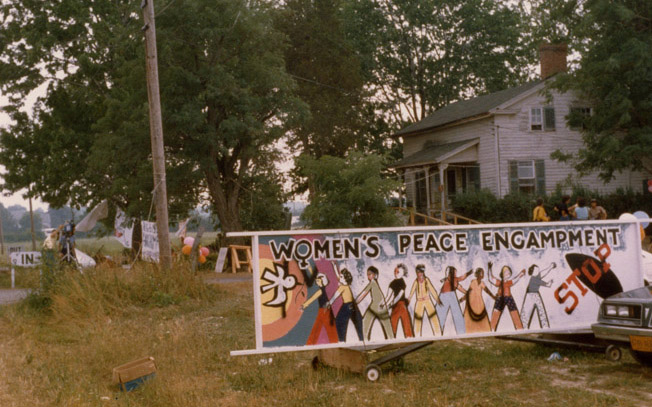
Depiction of

Concerned women in upstate New York joined together in the summer 1983 to form the Seneca Women’s Encampment for a Future of Peace and Justice, occupying a site near the Seneca Army Depot in Romulus, N.Y., where nuclear weaponry was stored. Taking a radical stance against militarism, violence, and oppression and modeling their approach after the women’s encampment at Greenham Common in England, the Seneca Encampment drew participants from a large number of women’s peace groups. In 1994, the Encampment transitioned into the Women’s Peace Land, remaining an active center of resistance to militarism and nuclear power for several years.

Maintained by attorney Alaine T. Espenscheid, the collection consists primarily of legal records relating to the Seneca Encampament, including filings documenting health and saftey, sanitation, water, and finances and materials relating to the arrest of several women for civil disobedience in 1985. Also included is a folder of ephemera and clippings on the Encampment from local media.

Subjects

Antinuclear movements--New York (State)Peace movements--New York (State)

Contributors

Espenscheid, Alaine T.
Service Employees International Union, Local 925 (Tufts University)

SEIU Local 925 (Tufts University) Records

1978-1980
2 boxes 1 linear feet
Call no.: MS 589
Depiction of SEIU Local 925
SEIU Local 925

In October 1978 a group of clerical workers at Tufts united in an effort to organize their coworkers with Local 925, S.E.I.U. Isolated and scattered across campus, the clerical employees at the university greeted this call to unionize with support, hoping it would mean an improvement in salaries and in grievance procedures. By the summer of the following year, 60% of eligible employees signed authorization cards, more than required to vote on the issue, and an election early that fall was expected. Tufts administration, however, delayed the election by disputing the composition of the bargaining unit. Formal hearings took place from September through the end of the year, but instead of resolving the case, the Boston Labor Board referred it to Washington on January 25, 1980. Nine months later the election was finally held, but the results were not what were anticipated more than a year earlier. Rather than an easy victory to unionize, the majority of clerical staff at Tufts voted not to make Local 925 their exclusive bargaining representative. The administration’s anti-union campaign waged throughout 1979 and 1980 had a tremendous impact on the employees at the university, and a number of concessions made on wages, health insurance, and vacations further eroded support for organizing with Local 925.

The collection documents the efforts of Tufts clerical workers to unionize during 1978-1980. The group’s biweekly newsletter, Inside Tufts, written by the university’s employees and published by Local 925, offers an important behind-the-scenes look on two fronts: the issues and grievances of the clerical staff at Tufts and the reasons behind their decision to unionize. Materials relating to the efforts of other Boston-area institutions, in particular colleges and universities, are also included.

Subjects

Labor unions--MassachusettsLabor unions--Organizing

Contributors

Service Employees International Union. Local 925
Shapiro, Leon

Leon Shapiro Papers

1939-1985
15 boxes 8.75 linear feet
Call no.: MS 127

Historian, author, Professor of Russian and Soviet Jewish History at Rutgers University, who helped arrange the escape of Jews from Europe during World War II and was active in several organizations concerned with the emigration of Soviet and Eastern European Jews to Palestine. Papers include biographical materials, correspondence, legal documents, writings, lecture and research materials, statistical data in the world Jewish population before and after World War II, oral history transcripts, pamphlets, newspaper clippings, and four photographs.

Subjects

Europe, Eastern--Ethnic relations--History--20th centuryIsrael--Emigration and immigration--HistoryIsrael--History--1948-1967Jews, Soviet--History--SourcesJews--Europe, Eastern--History--SourcesJews--Migration--HistoryJews--Population--HistoryJews--Soviet Union--History--SourcesOccupational training for Jews--History--SourcesPalestine--History--1929-1948Romania--Emigration and immigration--HistoryRutgers University--CurriculaRutgers University--FacultySoviet Union--Ethnic relations--HistoryWorld ORT Union--History

Contributors

Shapiro, Leon

Types of material

Oral historiesPhotographs
Sharpe, Wayne G., 1915-1991

Wayne G. Sharpe Papers

1943-1944
1 box 0.5 linear feet
Call no.: MS 462

Wayne G. Sharpe was a secretary for Company A in the 1874th Engineers Aviation Battalion of the Army Air Corps and a middle-class family man from Belmont, Massachusetts. Enlisted in February of 1943 at the age of twenty-seven, Wayne left his wife and infant son for a year’s training at home before his Battalion was dispatched to New Guinea in late December. Flown to a hospital on the island in late April 1944, he returned to the United States in August.

The papers of Wayne G. Sharpe, Sr. are primarily made up of his letters and V-mails home during his training and service abroad, but also include his wife’s letters to him from April 1943-August 1944.

Subjects

World War, 1939-1945

Contributors

Sharpe, Wayne G., 1915-1991
Shattuck, Louise F.

Louise F. Shattuck Papers

1881-2006
34 boxes 24 linear feet
Call no.: MS 563
Depiction of Louise Shattuck
Louise Shattuck

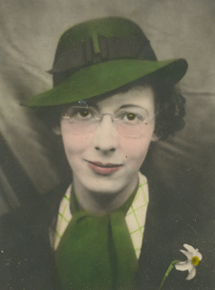
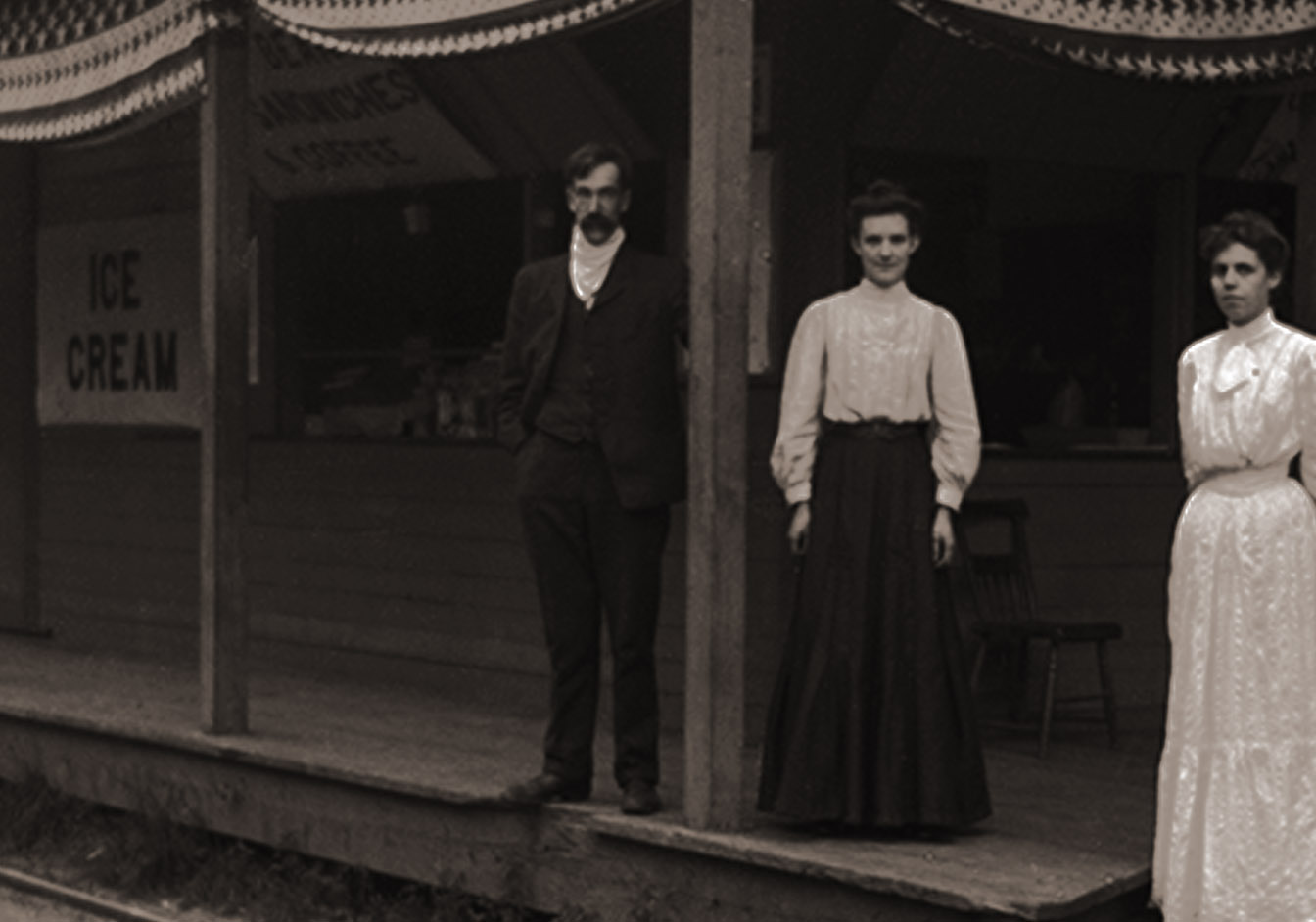
A life-long resident of Lake Pleasant, Massachusetts, and a third-generation Spiritualist, Louise Shattuck was an artist, teacher, and noted breeder of English cocker spaniels.

Shattuck’s work as a teacher, writer, artist, and dog breeder are documented in this collection through decades of correspondence and diaries, artwork, publications, and newspaper clippings. Of particular note are the materials associated with the Spiritualist history of Lake Pleasant, including three turn of the century spirit slates, samples of Louise’s automatic writing, a ouija board and dowsing rods, and an excellent photograph album with associated realia for the Independent Order of Scalpers, a Lake Pleasant.

Subjects

Dogs--BreedingEnglish Cocker spanielsLake Pleasant (Mass.)--HistoryMediums--MassachusettsMontague (Mass.)--HistorySpiritualism

Contributors

Shattuck, Louise FShattuck, Sarah Bickford

Types of material

DiariesPhotograph albumsPhotographsSpirit slatesSpirit writing
Shaw Brothers

Shaw Brothers Collection

1960-2014
13 boxes, 1 plastic bin, 1 map case folder
Call no.: MS 1236

Ron and Rick Shaw performing on stage, ca. 1970.

Folk singer-songwriter twins Rick and Ron Shaw were born on February 1, 1941 in West Stewartstown, New Hampshire. Both learned to sing and play music from a young age, and many of the songs that they learned became hits with the folk revival of the 1960s. While undergraduates at the University of New Hampshire Rick and Ron, along with friends, put together a group called the Windjammers, then the Tradewinds, before finally becoming The Brandywine Singers. As The Brandywine Singers, they signed with the William Morris Agency and recorded and released two albums. At the height of their popularity in 1966, The Brandywine Singers were forced to disband when Rick was drafted to serve in Vietnam. While Rick was in Vietnam, Ron continued to perform as part of the Pozo Seco Singers with Don Williams and Susan “Pie” Taylor. When Rick returned from service in 1968, both brothers were working as teachers before coming together again to perform as The Shaw Brothers. In 1972, Rick and Ron became members of The Hillside Singers, who recorded and performed the hit song “I’d Like to Teach the World to Sing.” The Shaw Brothers signed to RCA Records and released several albums and performed with the likes of Bob Hope, John Denver, and others. The Shaw Brothers retained a strong connection to their home state of New Hampshire and their annual summer concert series at Prescott Park in Portsmouth, New Hampshire drew large crowds. Ron passed away in 2018, and Rick in 2021.

Spanning fifty years of recording and performing, The Shaw Brothers Collection documents the bulk of Rick and Ron’s musical career as well as the greater New England folk music scene through promotional material such as posters and contracts, clippings, recordings and sheet music. There is also artwork by Rick created for a children’s book as well as personal journals.

Gift of Jessica Shaw and Sallie Macintosh, 2024

Subjects

Folk musicFolk musicians

Types of material

PhotographsSound recordings
Shaw, Carolyn Martin, 1944-

Carolyn Martin Shaw Papers

1962-2017 Bulk: 1972-2010
10 boxes 12.5 linear feet
Call no.: MS 974
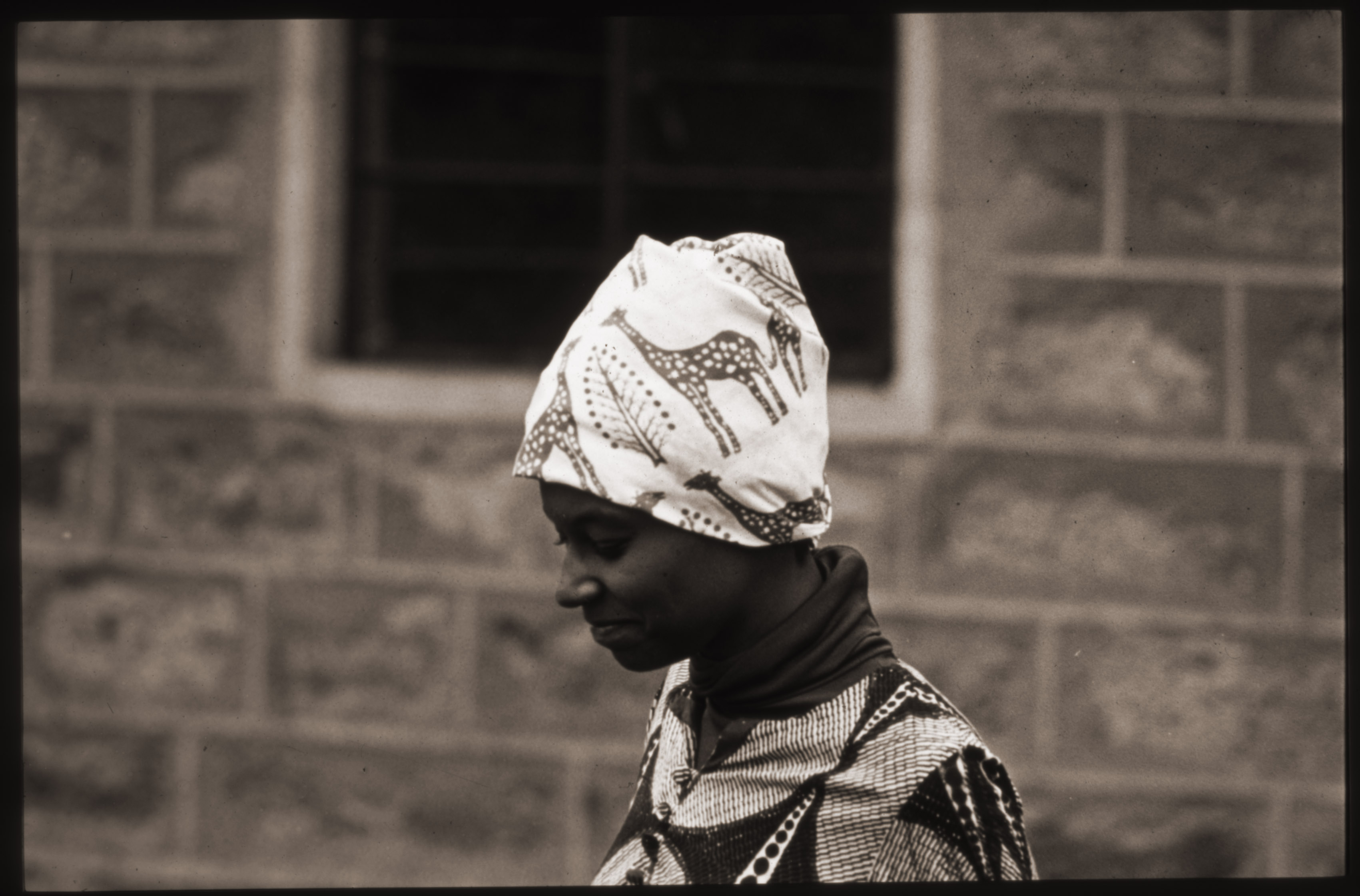
Depiction of Carolyn Martin Shaw in Kenya, ca.1972
Carolyn Martin Shaw in Kenya, ca.1972

From a childhood spent in a tenement in Norfolk, Va., Carolyn Martin Shaw went on to enjoy a distinguished career as a pioneer in Black Feminist anthropology. Educated in segregated schools, she was an outstanding student, winning scholarship funding to Michigan State University, where she received both her BS (1966) and PhD (1975). Shaw’s dissertation on Kikuyu kinship morality marked several themes that she developed through subsequent research projects in Kenya and Zimbabwe. Based in the Department of Anthropology at UC Santa Cruz throughout her career, she was a productive scholar, publishing dozens of articles and chapters, and two important monographs, Colonial Inscriptions: Race, Class and Sex in Kenya (1995) and Women and Power in Zimbabwe: Promises of Feminism (2015), and she filled a variety of administrative posts, including department chair, Provost of the Kresge residential college, and Chair of the UC system-wide Committee on Privilege and Tenure. She has received numerous awards in her career, including a Fulbright Fellowship to the University of Zimbabwe in 1983-1984, a Danforth Award for Excellence in Undergraduate Teaching, and a McHenry Award for Service to the Academic Senate at UCSC. Shaw retired from UCSC in 2010.

Documenting her work in Black feminist anthropology, the Carolyn Martin Shaw collection includes published and unpublished writing, correspondence, and a wealth of information on her research in Kenya and Zimbabwe. Along with her fieldnotes, research data, and photographs, the collection also includes records of her faculty service at USCS, and awards received for teaching and university service.

Gift of Carolyn Martin Shaw, May 2017

Subjects

Anthropologists--CaliforniaEthnology--KenyaEthnology--ZimbabweFeminismUniversity of California Santa Cruz--FacultyWomen--Africa