The University of Massachusetts Amherst
Robert S. Cox Special Collections & University Archives Research Center
CredoResearch digital collections in Credo

Collections: A

Autoharp and Folk Song Periodicals

Autoharp and Folk Song Periodicals Collection

Bulk: 1981-1993
2 boxes .63 linear feet
Call no.: MS 1161

This collection consists of periodicals on the subject of the autoharp and folk song education. Autoharp Quarterly was published out of Pennsylvania with quarterly issues until summer of 2021. It was edited by Mary Lou Orthery and Ivan Stiles. It features letters, songs and tablature, and columns called “‘Harpers at Large” and “Auto-suggestion,” which includes tips from readers. Autoharp Teachers Digest was published out of Kalamazoo, Michigan, and edited by Jacalyn Post. Most issues, which are two or three pages, include a lesson plan with some tablature. Autoharpoholic was edited by Becky Blackley, the author of The Authoharp Book (1983), published by i.a.d, in Brisbane, CA. Folksong in the Classroom was a newsletter established in 1979 by members of the American Historical Association’s Committee on History in the Classroom, led by Laurence I. Seidman, a folklorist and professor at Post College, New York. It was issued three times a year, and reached an audience composed primarily of upper elementary, junior high, and high school teachers. It was self-published, edited by John A. Scott of the Fieldston School (New York) and Rutgers University (NJ); and Laurence I. Seidman. Each issue has a themed section, such as Lullabies or “Teaching about Slavery through Folk Song,” with historical background information and songs, including lyrics and music, and sample lesson plans. Issues also include correspondence with readers, and lists of useful resources for classroom teachers like books and workshop offerings.
Sarah Bilotta, January 2020

Subjects

Autoharp musicFolk music

Types of material

periodicals
Avakian, Arlene Voski

Arlene Voski Avakian Papers

1963-2010
13 boxes 19 linear feet
Call no.: FS 150
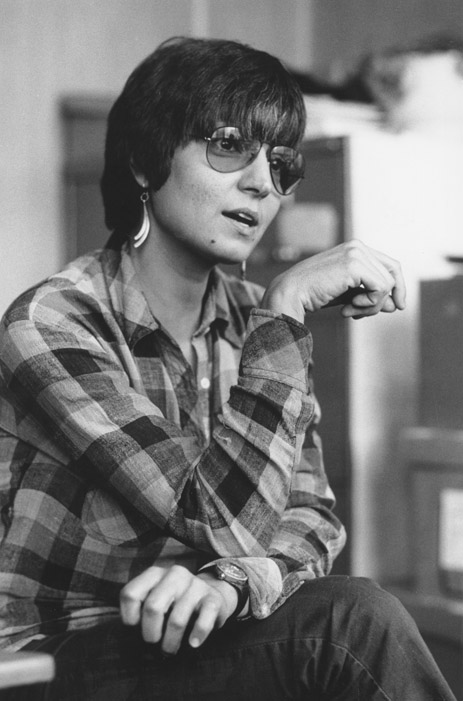
Depiction of Arlene Avakian
Arlene Avakian

Arlene Avakian arrived at UMass in 1972 as a graduate student working on the social history of American women, but quickly became a key figure in the creation of the university’s new program in Women’s Studies. As she completed her MA in History (1975) and EdD (1985), she helped in the early organization of the program, later joining the faculty as professor and program director. Through her research and teaching, she contributed to an engaging departmental culture in which the intersection of race, class, gender, ethnicity, and sexuality were placed at the center, building the program over the course of 35 years into the nationally-recognized Department of Women, Gender, and Sexuality Studies. Avakian has written and taught on topics ranging from the lives and experiences of Armenian American and African American women to culinary history and the construction of whiteness. She retired in May 2011.
Documenting the growth and development of Women’s Studies at UMass Amherst, the collection includes valuable material on the creation of the department (and Women’s Studies more generally), second- and third-wave feminism, and Avakian’s teaching and research. The collection includes a range of correspondence, memoranda, notes, and drafts of articles, along with several dozen oral historical interviews with Armenian American women. Also noteworthy is the extensive documentation of ABODES, the Amherst Based Organization to Develop Equitable Shelter, which established the Pomeroy Lane Cooperative Housing Community in South Amherst in 1994.

Subjects

ABODESArmenian American womenCornell University. Program in Female StudiesFeminismHousing, CooperativeUniversity of Massachusetts Amherst--FacultyUniversity of Massachusetts Amherst. Department of Women, Gender, and Sexuality StudiesZoryan Institute

Contributors

Avakian, Arlene Voski

Types of material

Audio recordings
Azzola, Friedrich Karl

Karl Friedrich Azzola Collection

1976-2009
2 boxes 1 linear feet
Call no.: MS 665

Born in December 1931, Friedrich Karl Azzola fled with his family to Germany in 1944. Settling in the state of Hesse, he earned a degree in chemistry at the University of Giessen and doctorate at the Technische Hochschule Darmstadt in 1965. After five years in the chemical industry, he was called to the Fachhochschule Wiesbaden-Russelsheim as professor, teaching chemistry and materials science to engineers until his retirement in 1997. Beginning in the 1950s, Azzola earned a wide reputation for his research on gravemarkers and “cemetery culture,” publishing widely on Medieval and early modern monuments in Germany.

Part of the Association for Gravestone Studies Collection, the Azzola collection consists of a run of Friedhof und Denkmal (2000-2009, with a few earlier issues), along with a suite of offprints of articles and pamphlets by Azzola and others on cemeteries and gravemarkers.

Subjects

Friedhof und DenkmalSepulchral monuments--Germany

Contributors

Association for Gravestone StudiesAzzola, Friedrich Karl