The University of Massachusetts Amherst
Robert S. Cox Special Collections & University Archives Research Center
CredoResearch digital collections in Credo

Collecting area: Printed materials

Johnson-Simon, Deborah

Deborah Johnson-Simon Papers

ca. 1967-2015 Bulk: 1997-2010
5 Boxes 2.085 linear feet
Call no.: MS 1254

Dr. Deborah Johnson-Simon, PhD, is a museum anthropologist dedicated to advancing social justice and fostering community engagement through cultural heritage projects. She focuses on attracting and maintaining African American audiences and works extensively on museum outreach and development. Dr. Johnson-Simon is the co-editor of The Second Generation of African American Pioneers in Anthropology, a work that highlights significant contributions in the field.

She is the founder and CEO of the African Diaspora Museology Institute (ADMI), formerly known as the Center for the Study of African and African Diaspora Museums and Communities (CFSAADMC). The institute is committed to conducting and distributing research on the history and culture of African and African Diaspora museums and communities, furthering the understanding of their impact and significance. Dr. Johnson-Simon’s research interests center on these communities’ cultural and historical narratives, emphasizing their role in museum studies and broader cultural heritage.

Dr. Johnson-Simon received her BA from Rollins College in 1997 and her MA from Arizona State University with a certification in Museum Studies. She earned her PhD in 2007 from the University of Florida in 2007.

The Deborah Johnson-Simon Papers document Dr. Johnson-Simon’s research, travels, and professional engagements. The collection includes photographs from her research in Arizona, culminating in Culture Keepers Arizona, as well as ephemera from her time at Rollins College in Florida and her research and teaching at Santa Fe Community College in Gainesville, Florida. It also highlights her extensive work with and on Rev. Dr. C.T. Vivian and the C.T. Vivian Leadership Institute. Additionally, the collection contains an extensive collection of cards from individuals she met at conferences, during research, and while traveling. Notably, it includes her work with industrial designer Charles “Chuck” Harrison, who revolutionized the View-Master, along with a View-Master and more than 80 accompanying slides.

Subjects

African American anthroplogistAfrican Americans--MuseumsAnthropology--United States--HistoryEthnology--United States--History

Contributors

Johnson-Simon, Deborah
Kress, Claude Washington

Kress Political Economy Collection

1673-1925 Bulk: 1750-1850
2,934 items 46.5 linear feet
Call no.: D8 .A2

The heart of the Kress Collection lies in the lively pamphlet literature regarding Anglo-American political economics in the late eighteenth and early nineteenth centuries. Although somewhat miscellaneous, the collection contains thousands of titles touching on many of the major issues in trade, finance, political reform, and public policy in Britain and to a lesser degree America. Topics range from tariffs and free trade to public debt and taxation, imports and exports, banking, unionism, and socialism. Nearly three quarters of the collection dates from before 1848.

Subjects

Economics--History--18th centuryEconomics--History--19th centuryGreat Britain--Politics and Government--18th centuryGreat Britain--Politics and Government--19th century
Kweskin, Jim

Jim Kweskin Papers

1907-2018 Bulk: 1960-2018
57 boxes, flat files 85 linear feet
Call no.: MS 1064
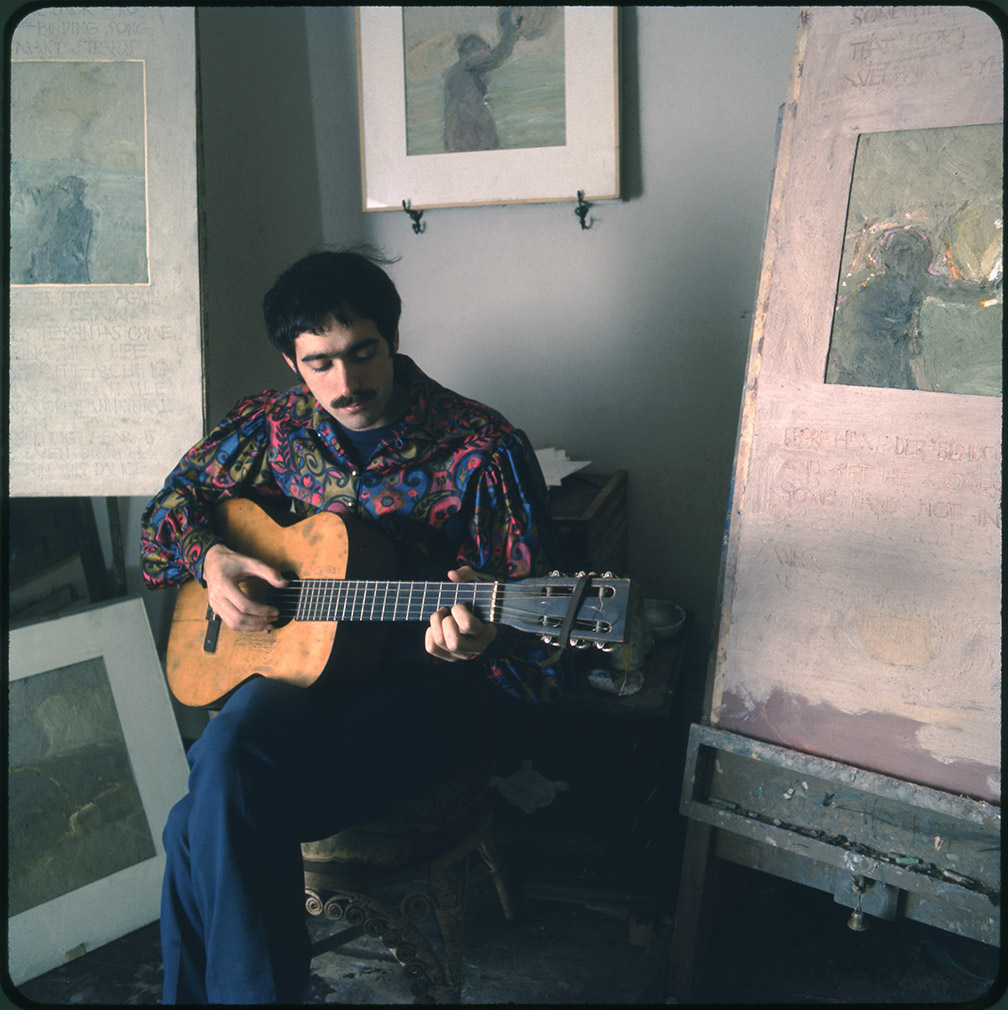
Depiction of Jim Kweskin playing guitar at Fort Hill, 1967
Jim Kweskin playing guitar at Fort Hill, 1967

The Jug Band visionary Jim Kweskin was one of the major lights of the 1960s folk revival, and an influential figure in Americana music since. A native New Englander, Kweskin was born in Stamford, Conn., in 1940. As a student at Boston University, he was drawn into the Boston-Cambridge folk scene and inspired to learn the guitar, developing a ragtime-blues fingerpicking technique that he inflected with jazz and blues that became a bedrock style of the folk revival. Following a sojourn in California, he returned to Boston in 1963 and formed the Jug Band with Fritz Richmond, Geoff Muldaur, Bob Siggins, and Bruno Wolfe, later joined by Maria Muldaur, Mel Lyman, Bill Keith, and Richard Greene. The Jug Band developed a national following performing pre-World War II American music, laced with a sense of humor and 1960s sensibility. At the height of their popularity, the Jug Band dissolved in 1968. For several years in the 1980s and 1990s, Kweskin was relatively removed from recording, but he resumed work as a soloist, as a member of the U & I Band, the Texas Sheiks, the Jug Band; and as fellow performer with a long list of artists.

A rich record of eclectic musical tastes and a passion for American music, the Kweskin collection offers important documentation of a major figure on the folk scene. The collection includes scrapbooks, newsclippings, concert posters and fliers, and ephemera from throughout Kweskin’s career, along with hundreds of personal and professional photographs of Kweskin, the Jug Band, U and I, and later collaborations. As an historian of American music, Kweskin also assembled discographies of major artists and labels and built a library of works on blues, country, and other forms of popular music, along with hundreds of 78 rpm records, 45s, LPs, and compact disc recordings. Finally, there are hundreds of reel to reel, cassette, CD, and DVD recordings of Kweskin from throughout his career.

Gift of Jim Kweskin, 2018

Subjects

Blues (Music)Folk musicians

Types of material

Open reel audiotapesPhotographsSound recordings
Lerner, Frederick Andrew, 1945-

Frederick Andrew Lerner Science Fiction Collection

1939-1996
304 titles 15 linear feet
Call no.: RB 016

Fred Lerner is a librarian, bibliographer, and historian who has written extensively on American science fiction. After earning three degrees from Columbia University, including his MLS and DLS (1981), Lerner worked for many years in information science for Spectra, Inc., and the National Center for Posttraumatic Stress Disorder. His diverse including work in radio, writing about the history of psychiatry, libraries, Rudyard Kipling, and science fiction.

The Lerner collection contains a cross-section of American science fiction writing concentrated largely in the 1960s through mid-1980s.

Gift of Frederck Andrew Lerner, 2010-2011

Subjects

Science fiction
Lewis, Benjamin F.

Benjamin F. Lewis Collection of Robert Frost

1901-1986
301 items 24 linear feet
Call no.: RB 036

An avid collector of Robert Frost, Benjamin F. Lewis was born in Boston, on 23, 1941, to Leo and Anne (Starr) Lewis, Benjamin Lewis. Lewis enjoyed a distinguished career as a social worker, an adminstrator, a researcher in drug and alcohol abuse, and on the AIDS epidemic, working in his latter years as a member of the Department of Psychiatry at the Dartmouth-Hitchcock Medical Center. Lewis died on Jan. 29, 2019, leaving his life partner Karen Orsini and two children. While working at Goodspeeds in Boston as a college student, Lewis was presented with a Robert Frost first edition, beginning a lifelong collecting habit.

The collection assembled by Lewis includes first and early editions of Frost’s books (many inscribed), early printings and later (life-time) editions of most, selected first appearances of his poetry in magazines and anthologies, scarce ephemeral printings of his work and association pieces, a handful of letters and holograph poems, and phonograph recordings of Frost reading his own work.

Gift of Benjamin F. Lewis and Karen Orsini, 2018-2019

Contributors

Frost, Robert, 1874-1963
Lyman, Benjamin Smith, 1835-1920

Benjamin Smith Lyman Japanese Book Collection

1664-1898
87 linear feet
Call no.: RB 006

A prominent geologist and mining engineer, Benjamin Smith Lyman traveled to Japan in the 1870s at the request of the Meiji government, helping introduce modern surveying and mining techniques. Omnivorous in his intellectual pursuits, Lyman took an interest in the Japanese language and printing, collecting dozens of contemporary and antiquarian volumes during his travels.

Lyman’s book collection begins with his background in the natural sciences, but runs the gamut from language to literature, religion, the arts, and culture. With several hundred volumes, the collection includes a number of works dating to the eighteenth century and earlier, and while the majority were printed in Japan, a number, particularly of the older works, are in Chinese.

Language(s): Japanese

Subjects

Japan--History--1868-Printing--Japan--History

Contributors

Lyman, Benjamin Smith, 1835-1920
Massachusetts Center for Interdisciplinary Renaissance Studies

Massachusetts Center for Interdisciplinary Renaissance Studies Collection

1699-1853
76 titles 20 linear feet
Call no.: RB 029

Founded by Arthur Kinney in 1998, the Massachusetts Center for Interdisciplinary Renaissance Studies promotes the research, teaching, and dissemination of all aspects of literature and culture in the Early Modern Period (roughly 1400-1700). In addition to sponsoring a diverse array of visiting scholars, scholarly conferences, lectures, and seminars, the Center hosts dramatic performances, concerts, and special events for the general public.

As a partner of the Renaissance Center, SCUA is steward for antiquarian books that fall outside the Center’s primary chronological and thematic scope. Books printed during the Renaissance and selected scholarly works on the era are housed at the Center itself.

Transfer from the Renaissance Center, 2016-2017

Subjects

Printing--History
McIntosh, Beatrice A.

Beatrice A. McIntosh Cookery Collection

ca.1880-2022
ca.8,000 items 200 linear feet
Call no.: MS 395

Temporarily stored offsite; contact SCUA to request materials from this collection.

The McIntosh Cookery Collection includes books, pamphlets, and ephemera relating to the history of cookery in New England. Of particular note are nearly 7,500 cookbooks prepared by community organizations from the 1880s to the present, usually for fund-raising or charitable purposes. These cookbooks were produced by a variety of organizations, including parent-teacher groups, churches and synagogues, social service agencies, private clubs, and historical societies as fund-raising projects.
These cookbooks document important aspects of the lives of families and women in the region, as well as ethnic groups and their adaptation of traditional foods to New England. The collection is focused primarily on New England, but includes cookbooks from other states for comparative purposes.

Subjects

Community cookbooksCookbooksCookery--New England
Medieval and Early Print Studies

Medieval and Early Print Studies Collection

1504-2016
79 titles 24 linear feet
Call no.: RB 030

Although SCUA’s book collections are focused heavily on modern printing, the evolution of the book and the history of production and spread of the printed word are critical to our instructional mission.

The Medieval and Early Print Studies Collection consists of a growing body of facsimiles of medieval manuscripts and early printed books selected for use in teaching about the history of printing and reading. Emphasizing high quality reproduction, the facsimiles represent a variety of regional styles and traditions in text and illustration, primarily in Europe, from the 11th century through the incunable era. A handful of post-incunables have been included. A spreadsheet list of available titles can be consulted online.

Subjects

Manuscripts, Medieval--FacsimilesPrinting--History
Meier, August, 1923-2003

August Meier Collection

1837-1984
3 boxes, 329 titles 34.5 linear feet
Call no.: MS 844
Depiction of

A pioneer in African American history, August Meier was a model of an engaged academic, a prolific writer, active participant in the civil rights struggle, and staunch member of the NAACP, SNCC, and CORE. While pursuing graduate work at Columbia under Henry Steele Commager, Meier taught at a succession of Historical Black Colleges, including Tougaloo (1945-1949), Fisk (1953-1956), and Morgan State (1957-1964). His dissertation, completed in 1957, became the first of eleven books he wrote or edited, Negro Thought in America, 1880-1915 (1963), with much of later work conducted in collaboration with Elliott Rudwick and John Bracey. Meier joined the faculty at Kent State University in 1967 and remained there until his retirement in 1993. His much-anticipated monograph on the history of the NAACP had not been completed at the time of death in 2003.

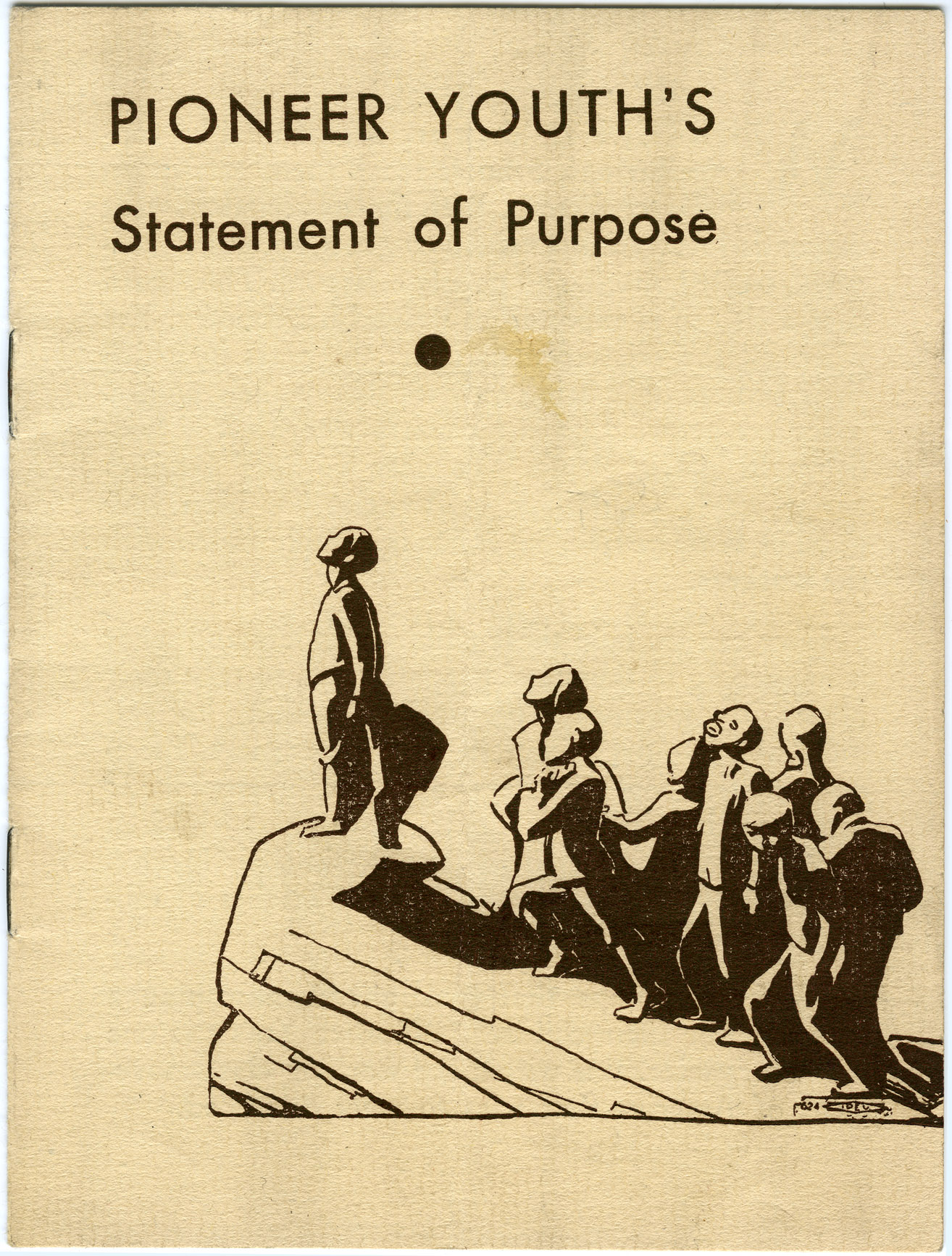
Organized in two discrete parts, the Meier collection bookends a long career in the study of African American history. The first part of the collection is centered on Meier’s association with the Pioneer Youth summer camp in Rifton, N.Y., and his growing consciousness of the fundamental problems of race and class in American society, with some materials from his wartime years as an undergraduate at Oberlin College. The second part of the collection includes books collected by Meier during his academic career, mostly on African American history and culture. Titles range from works on the Civil Rights movement to literature and poetry of the late nineteenth century and Harlem Renaissance, works on slavery and antislavery, race theory, the South, and African American education and religion.

Subjects

African Americans--HistoryAntislavery movementsCamps--New York (State)Civil rights movementsCommunists--United StatesDepressions--1929Du Bois, W. E. B. (William Edward Burghardt),1868-1963Oberlin College--StudentsPioneer Youth of AmericaRace relationsWorld War, 1939-1945

Contributors

Braunthal, Gerard, 1923-

Types of material

NewslettersSongbooks