The University of Massachusetts Amherst
Robert S. Cox Special Collections & University Archives Research Center
CredoResearch digital collections in Credo

Archive

Dudley, Joseph

Joseph Dudley Memoir and Diary

1866-1893
1 vol. 0.25 linear feet
Call no.: MS 650 bd

Born in Cheshire, Conn., in 1822, Joseph Dudley learned “the marble business” from his father Elias, who had in turn been trained by David Ritter of New Haven. A staunch Methodist swept up in the religious ferment of the Second Great Awakening, Dudley joined his father’s business as a stonecutter in about 1845 and notes that he was among the first to letter tombstones in the rural Ever Green Cemetery in Woodstock, Conn., when it opened in 1848. He later worked in Meriden, Conn.

By generations, this volume has served as an account book, diary and memorandum book, memoir, geneaological record, and scrapbook, with each layer accumulated over all previous. Dudley’s memoir (beginning p. 78) includes a discussion of his upbringing in Cheshire, the tumultuous religious revivals during the 1840s and his reception into the Methodist Church and the Millerites, and much on his introduction to the marble business and work as a stonecutter through about 1853. The diary somewhat erratically covers the years 1873-1893.
Subjects

Marble industry and trade--ConnecticutMillerite movementSepulchral monuments--ConnecticutStonecutters

Contributors

Association for Gravestone StudiesDudley, Joseph

Types of material

DiariesMemoirs
Duesing, Bill

Bill Duesing Collection

1995-2000
14 items 1.5 linear feet
Call no.: MS 760
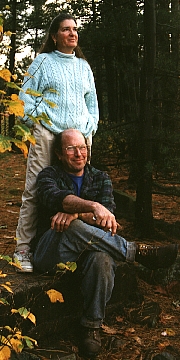
Depiction of Bill and Suzanne Duesing
Bill and Suzanne Duesing

A pioneer in organic agriculture in New England, Bill Duesing has been as an environmental educator, writer, artist, and lecturer over for four decades. After graduating from Yale University (1964), Duesing worked as a Cooperative Extension agent before turning to organic principles in the early 1970s. Emphasizing sustainability and greater local food sufficiency, he has been instrumental in developing organic standards for gardening and land care and he has served as both founding president and later executive director of the Northeast Organic Farming Association Connecticut and president of the NOFA Interstate Council. During the 1990s, Duesing produced two radio shows, “Living on the Earth” (WSHU) and “The Politics of Food” (WPKN), and he is author of Living on the Earth: Eclectic Essays for a Sustainable and Joyful Future (1993).

The Duesing collection consists of transcripts of his radio show, “Living on the Earth” (1990-2000) and fourteen recordings of “The Politics of Food,” which was broadcast monthly over WPKN (89.5 FM) in Bridgeport in 1997-1998. Each half hour segment of “Politics” included news, a fifteen minute interview, recipes, and tips, with interviewees including Mel Bristol, Jac Smit, Vincent Kay, John Wargo, Hugh Joseph, Joseph Kiefer, Julie Rawson, Michael Sligh, Kathy Lawrence, Lee Warren, and Elizabeth Henderson.

Subjects

Cookery, Health aspectsLiving on the EarthNatural foods--CertificationOrganic farmingOrganic farming--Law and legislationPolitics of foodSustainable agriculture

Contributors

Henderson, Elizabeth, 1943-Rawson, Julie

Types of material

Audiotapes
Dunham, Benjamin W.

Benjamin W. Dunham Papers

ca.1897-1907
1 box 0.25 linear feet
Call no.: MS 573

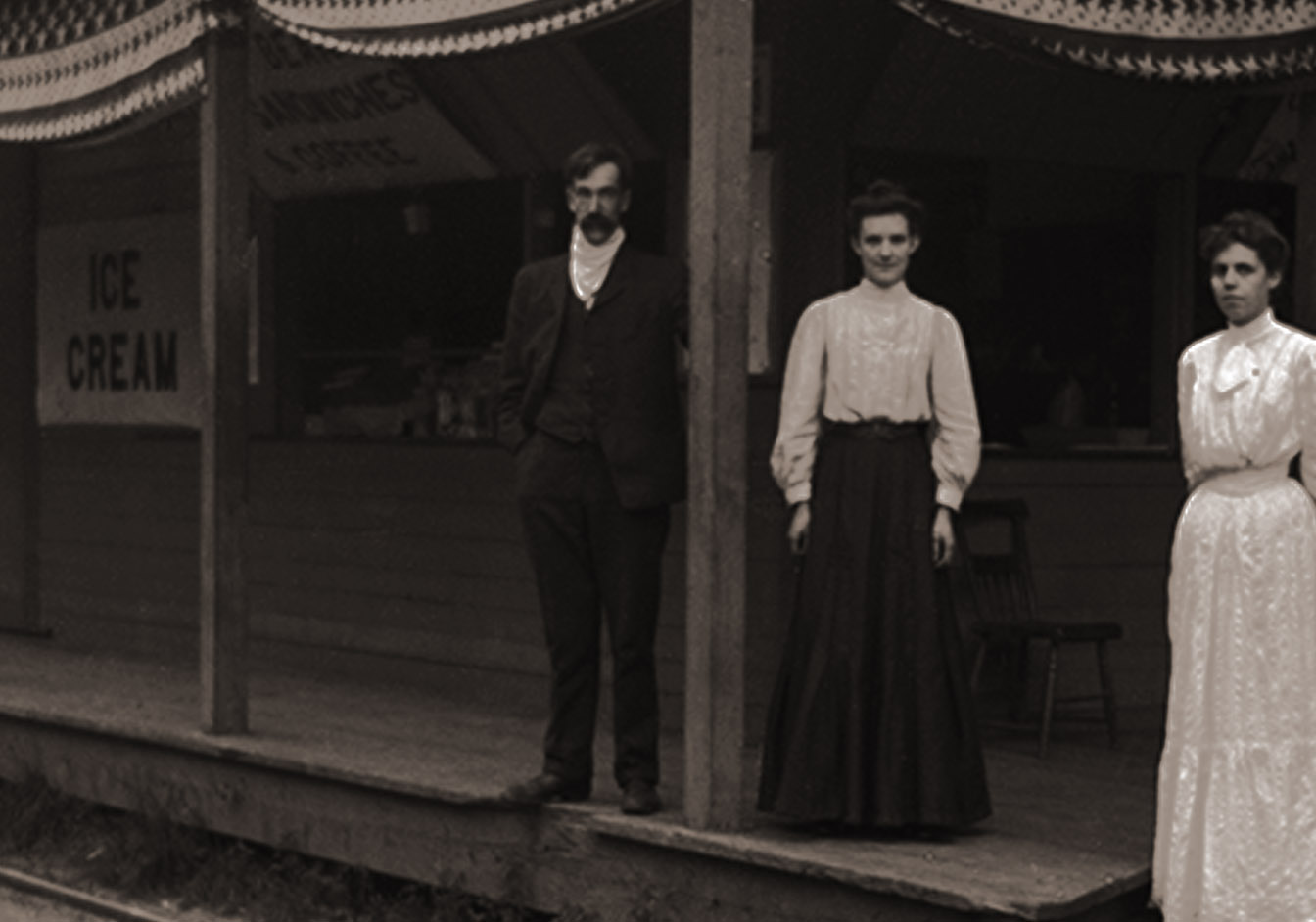
Situated on a hill overlooking Quabbin Lake, the Quabbin Inn was a well known resort near Greenwich, Mass. During its peak years during the turn of the twentieth century, the Inn was owned by Otis Dunham, but it figured prominently in the lives of the entire Dunham family.

The Dunham papers contain family correspondence addressed to Benjamin W. Dunham during his service as a machinist with the U.S. Navy. In addition to discussions of the business of the Quabbin Inn, the collection includes news and gossip from the town of Greenwich, the attempted suicide and subsequent hospitalization of Benjamin’s brother Asa, and the migration west of another brother, Herbert.

Subjects

Greenwich (Mass.)--Social life and customsMachinists--MassachusettsQuabbin Inn (Greenwich, Mass.)Quabbin Reservoir Region (Mass.)--HistorySpanish American War, 1898United States. Navy

Contributors

Dunham, Benjamin W
Durham Friends Meeting

Durham Friends Meeting Records

1967-2021
8 vols., 2 boxes 2 linear feet
Call no.: MS 902 D874
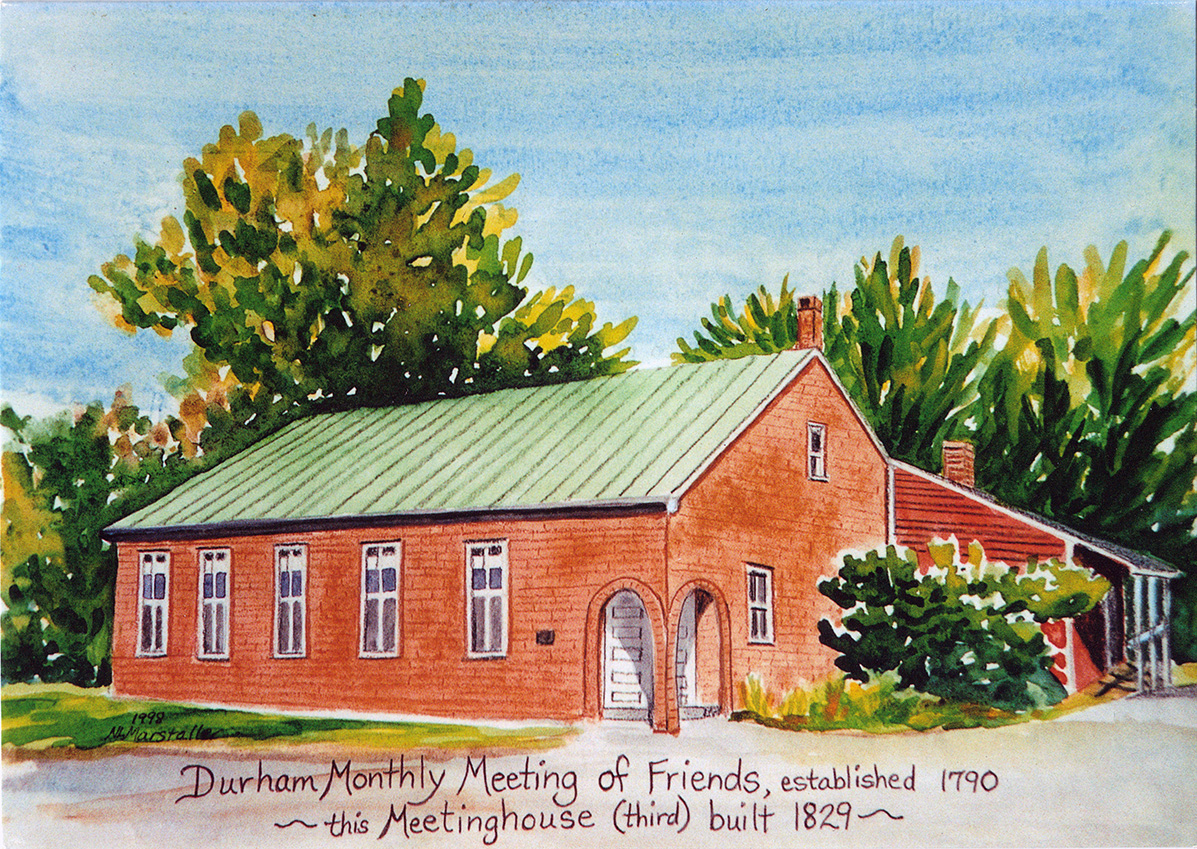
Depiction of Durham Friends Meetinghouse
Durham Friends Meetinghouse

Durham Friends Meeting was set off as a monthly meeting under Salem Quarter in 1790, and was transferred to Falmouth Quarter in 1794. Leeds Monthly was set off from Durham in 1813, and Durham over saw a preparative meeting in the adjoining town of Lewiston until it, too, was set off in 1980.

The records of Durham Monthly Meeting consist of minutes of the meeting for business since 1987 and newsletters from 1967 to the present. Older records for the meeting are held at the Maine Historical Society

Gift of NEYM and Durham Friends Meeting

Subjects

Durham (Me.)--Religious life and customsNew England Yearly Meeting of FriendsQuakers--MaineSociety of Friends--Maine

Contributors

New England Yearly Meeting of Friends

Types of material

Minutes (Administrative records)Newsletters
Duus, Peter, 1933-

Peter Duus Papers

ca.1970-2008
13 boxes 19.5 linear feet
Call no.: MS 574

Access restrictions: Temporarily stored offsite; contact SCUA in advance to request materials from this collection.

The William H. Bonsall Professor of History at Stanford University and a prolific scholar, Peter Duus has made significant contributions to the understanding of the development of Japanese imperialism and the emergence of the modern Japanese nation. Having received his doctorate from Harvard, Duus taught successively at Harvard, Washington University, and the Claremont Graduate School before arriving at Stanford in 1973. The recipient of numerous awards during his career, he has served in numerous positions within the field and as Director of the Center for East Asian Studies at Stanford.

The Duus Papers contain the professional correspondence, research notes, and other materials relating to the career of the eminent Japanologist, Peter Duus.

Subjects

Japan--History--20th centuryStanford University--FacultyStanford University. Department of History

Contributors

Duus, Peter, 1933-
Early Children's Literature

Early Children's Literature Collection

1810-1894
42 items 0.5 linear feet
Call no.: RB 017
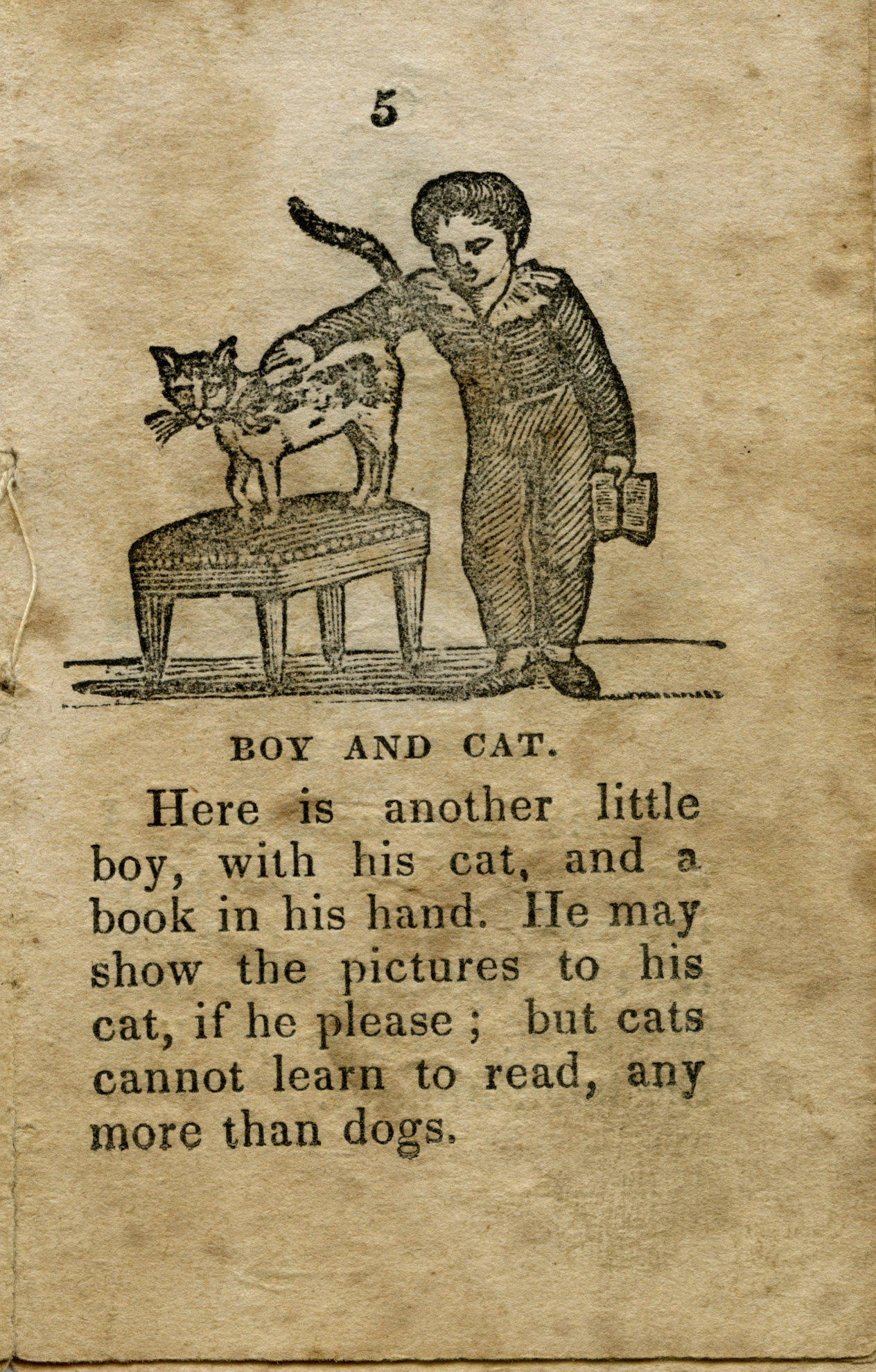
Depiction of The New Picture-Book (1837)
The New Picture-Book (1837)

Publishers in Western Massachusetts engaged in a brisk trade in books intended for children during the antebellum years, producing chapbooks to teach reading, didactic works on morals and comportment, and toy books for reward and entertainment. Brief and most often simply produced, the books are noted for their diminutive size, stock woodcut illustrations and characteristic moralistic tone, but they are rich sources for understanding popular conceptions of childhood, education, religious life, and marketing in the book trade, among other subjects.

The majority of the works in the Early Children’s Literature Collection were products of the antebellum press in western Massachusetts, produced and distributed by printers such as John Metcalf (Wendell and Northampton), Anson Phelps (Greenfield), and A. R. Merrifield (Northampton). There are examples of chapbooks from other printers, most notably Mahlon Day of New York and the American Sunday School Union in Philadelphia.

Acquired variously.

Subjects

Children's literature--MassachusettsToy and movable books

Contributors

Metcalf, John, 1788-1864

Types of material

Books
East Germany

East German Packaging Design Collection

ca.1955-1985
4 boxes 6 linear feet
Call no.: MS 519

The concept of product marketing in a Communist state may seem slightly incongruous, but in the countries of the Eastern Bloc, consumer goods were packaged and sold with much the same care as they were in the west. The Packaging Design Collection contains examples of quotidian products sold during the post-war period, ranging from boxes for soap powder to toothpaste, shampoo, and sugar sacks. The collection documents the visual language used on consumer products in East Germany and the evolution of graphic design in the Communist states of Eastern Europe from the 1950s through 1980s.

Gift of James and Sibylle Fraser, Nov. 2006

Subjects

Germany, EastPackaging--Design--Germany, East
East Germany

East German Book Collection

1948-1993
ca.300 vols. 13 linear feet
Call no.: RB 021

From the official optimism of the post-war years in East Germany through the dynamic press of the 1970s to the end of the regime in 1989, the state and its critics developed a distinctive print culture that was reflected in its literary and artistic output and in its popular and academic works.

The DDR collection contains miscellaneous volumes printed in East Germany, including literature and drama, touristic books, popular history, works on the arts, and a variety of academic and reference works.

View the full DRR collection in the library’s catalog.

Subjects

Germany (East)--History

Types of material

Books
Easthampton (Mass.) Community Chest

Easthampton Community Chest Records

1943-1969
2 boxes 0.75 linear feet
Call no.: MS 051

Organization created to sponsor and conduct all fundraising for, and to distribute funds to, relief and social agencies in the town of Easthampton, Massachusetts. Contains records of minutes, campaign reports, Presidents’ and Treasurers’ reports, and correspondence. Also included are scrapbooks with newspaper clippings and other printed material.

Subjects

Charities--Massachusetts--Easthampton--History--SourcesEasthampton (Mass.)--Social conditions--SourcesEasthampton Community War Fund (Easthampton, Mass.)--ArchivesFederations, Financial (Social service)--History--Sources

Contributors

Easthampton Community Chest (Easthampton, Mass.)

Types of material

Scrapbooks
Easton (Mass.)

Easton (Mass.) Physician's Daybook

1831-1833
1 vol. 0.15 linear feet
Call no.: MS 283 bd

The Bristol County, Massachusetts, towns of Easton and Norton had only a small number of trained physicians in the antebellum period tending to a growing population. During the 1830s, that number was probably less and ten, including those with allopathic medical degrees, alternative practitioners, and those who had irregular educations.

The unidentified physician who kept this daybook appears to have practiced in either Easton or Norton, Massachusetts, during the early 1830s. The daybook includes brief records of patient names and dates of visits, medical care dispensed, and minimal records of medical procedures.

Acquired from Charles Apfelbaum, 1989

Subjects

Physicians--Massachusetts

Types of material

Daybooks