The University of Massachusetts Amherst
Robert S. Cox Special Collections & University Archives Research Center
CredoResearch digital collections in Credo

Archive

Adams-Mills Family

Adams-Mills Family Papers

1840-1965 Bulk: 1880-1940
8 boxes 6 linear feet
Call no.: MS 1213
Georgiana and Mason Adams, siblings, as children, posing for a photo
Georgiana and Mason Adams, ca. 1880.

Son of Nathaniel Dickinson Adams and Harriet Hastings, Charles Dickinson Adams (1839-1889) was valedictorian at Amherst College, finished the 2-year law program at Columbia in one year, and practiced law in New York City until his early death. He was active in church and community work, and married Mary Clark Wood. The couple had two children, Georgiana and Mason. In 1905, Georgiana Wood Adams (1874-1957) married Franklin Hubbell Mills, the only son of George Franklin Mills, a classics teacher and later Dean at the Massachusetts Agricultural College. George’s father, Benjamin F. Mills, started the Greylock Institute which was active several decades, and both Franklin and his father George were graduates of Williams College. Franklin and Georgiana Mills lived in New York City, and had one child, Mary Mills (1908-1963). Mason Tyler Adams (1877-1933) married Juliette Emily Hubbell, and the couple had two children. Many in the Adams-Mills-Wood extended family are buried at Wildwood Cemetery in Amherst, MA, as Mary Clark Adams and her mother-in-law Harriet bought two side-by-side lots for the family.

The Adams-Mills Family papers document three core generations of the Adams and Mills families with roots in western Massachusetts. Manuscript material, ephemera and numerous photographs document Charles Dickinson Adams, his wife Mary Clark Wood Adams, and George Franklin Mills; the merging of their families through Georgiana Wood Adams Mills and Franklin Hubbell Mills; and their children, other family, and friends. Highlights include Mary Mills’ baby book, over 20 years of correspondence from Mason to his sister Georgiana, correspondence between other family members reflecting attitudes and events in the late 1800s through mid-1900s, several travel journals and scrapbooks, and records from local schools such as Massachusetts Agricultural College, Amherst College, and Williams College. Over one-third of the collection is photographs, reflecting photographic technology, clothing styles, vacation spots, and home aesthetics from the 19th and 20th centuries.
Gift of Anora Sutherland McGaha, 2024.

Subjects

Amherst (Mass.)--HistoryAmherst (Mass.)--Social life and customsAmherst CollegeMassachusetts Agricultural CollegeNew England--History

Types of material

CorrespondencePhotographs
Amelia Earhart’s Underground Flying Society

Amelia Earhart’s Underground Flying Society Records

1986-2000
1 box 0.2 linear feet
Call no.: MS 940
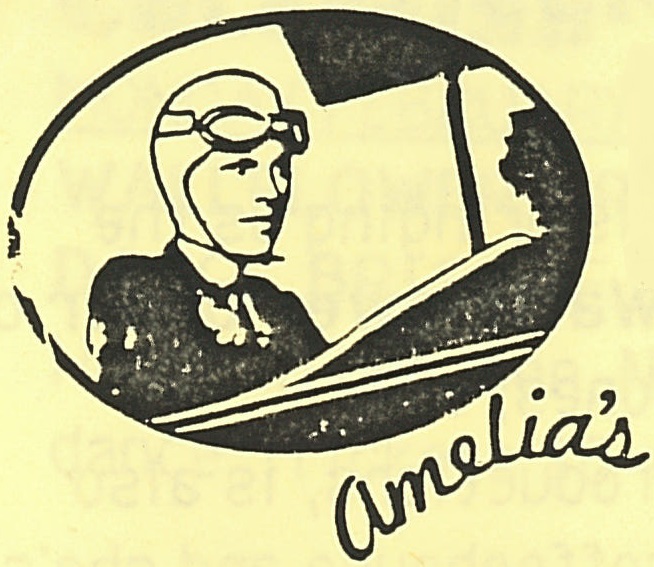
logo
Amelia Earhart’s Underground Flying Society logo

Amelia Earhart’s Underground Flying Society, (a.k.a. the Amelia’s) was a lesbian social club based out of Lebanon, N.H., serving the Upper Valley area of Vermont and New Hampshire, and beyond. Reachable via an unnamed post-office box, the club began in 1979 and provided members not only with much sought after social, leisure, and entertainment opportunities, but also a unique community of peers for discussion and activities around political, educational, health, and legal issues of importance to women and lesbians. Like their famous namesake, the Amelia’s did not shy away from risks in supporting women, the feminist movement, or actions promoting and educating about lesbians. The group often overlapped with feminist and lesbian print shop and publishing company, New Victoria Press, and the Amelia’s often used the New Vic building for their meetings.

The Amelia Earhart’s Underground Flying Society Records consist of over 25 issues of the “Amelia’s Newsletter” from 1986-2000; two clippings covering news related to the group, including the repeated vandalization of their “Upper Valley Lesbians” Adopt-A-Highway Program sign; a 1994 audiocassette of interviews for an oral history of the Amelia’s; and a VHS tape of a community event held in 2003 to reflect on the women’s movement in the Upper Valley in the 1970s and 1980s. The newsletter offers detailed documentation of the group and their concerns, including calendars of their social gatherings and other local, regional, and national events of interest, and recaps of relevant news to the lesbian community including updates about politics, legal issues, civil rights and benefits, marriage, discrimination cases, women’s health, education and school issues, and lesbian focused social and entertainment events.

Subjects

Feminism--New England--HistoryLesbian community--New EnglandLesbian community--New HampshireLesbian community--Vermont

Contributors

Dingman, Beth

Types of material

AudiocassettesNewslettersVHS
Amherst Study Circles: Dialogues on Race and Class

Amherst Study Circles: Dialogues on Race and Class Records

2002-2016 Bulk: 2002-2006
1 box .4 linear feet
Call no.: MS 917

Amherst Study Circles: Dialogues on Race and Class flier

The Amherst Study Circles: Dialogues on Race and Class were a series of dialogue and project action groups begun in 2002 to discuss and enact social change in the school districts and communities around Amherst, MA. They arose as a response by the Amherst Regional High School (ARHS) Parent Center to a question to their group: What were they going to do about racism in the Amherst Schools? The ARHS Parent Center Board suggested the study circle model, and a round of facilitated pilot groups were run in February 2003. The successful pilots stirred the organizers to seek additional support, and with funding from the Amherst Education Foundation and the Amherst Drugs Free Partnership, additional groups were organized each year, building awareness, trust, and power amongst those striving to improve the community’s schools for all students. Almost 200 people, including school administrators, teachers, staff, students, parents, and community members participated over the course of several years, and each group culminated in an action forum and set up action groups to propose and enact tangible steps towards specific goals. Action groups affected change in school climate, policies, and course offerings, and organized a standing committee of the ARHS Parent Center called RaDAR: Race and Discipline, Action, Rights.

The Amherst Study Circles: Dialogues on Race and Class Records consist of descriptive materials from the ARHS Parent Center; an organizer’s binder with sections on the origin in 2002, participants, action groups, finances, curriculum, and evaluations; and additional materials such as evaluations for study circle sessions and facilitators, newspaper clippings of articles about the group and their work, and documents for student study circles, such as advertisements, curriculum, and certificates.

Subjects

Amherst (Mass.)--HistoryAmherst Regional High School (Amherst, Mass.)Classism--MassachusettsEducation--MassachusettsRacism--Massachusetts

Contributors

Amherst Regional High School Parent CenterWolf, Jackie
Botkin, Steven

Steven Botkin Papers

1962-2022 Bulk: 1983-2015
10 boxes 15 linear feet
Call no.: MS 1215
3 men, Steven Botkin, Thulani Nkosi, and Rob Okun in front of a sign for the Men's Resource Center
L-R: Steven Botkin (MRC Executive Director), Thulanu Nkosi (men's work leader in South Africa), and Rob Okun (MRC Associate Director), ca. 2000

Joining a men’s group soon after his arrival in the Pioneer Valley in 1979, and finding the support and community there important personally, and professionally for his graduate work in anti-oppression education, Steven Botkin began his now decades long work in anti-sexist activism. While doing his doctoral work at the University of Massachusetts Amherst, in 1982, Botkin co-founded the Men’s Resource Connection (MRC) to promote healthy ideas of masculinity and male leadership by challenging harmful stereotypes involving violence, sexism, and oppression and to create a local network devoted to this work. He completed his Ed.D. in 1988 (dissertation entitled Male Gender Consciousness: A Study of Undergraduate College Men) and continued to guide the MRC into a successful non-profit community-based organization, whose programs became a model for men’s organizing in communities around the world. In 2004, Botkin founded Men’s Resources International (MRI) to support the development of masculinity awareness and men’s engagement as allies within a global network. MRI eventually merged with MRC to form MERGE for Equality, Inc. Botkin additionally co-founded the Springfield based Men of Color Health Awareness (MOCHA), and the North American MenEngage Network, and has served as a leader, trainer, educator, and consultant for local, national, and global men’s groups and organizations, including in Africa, Asia, and Europe, and for groups such as the YMCA, Planned Parenthood Federation, Save the Children, the International Rescue Committee, and the Women’s Peacemakers Program.

The Steven Botkin Papers document Botkin’s long career in global men’s organizations and networks and their work in policy, education, empowerment, and organizing around the intersections of masculinity, gender, violence, sexism, oppression, power, politics, and society. Materials related to the men’s movement include significant records from the various groups Botkin co-founded and assisted, including organizational histories, program records and reports, meeting agendas, resource pamphlets, posters, networking and training curricula handbooks and handouts, a full run of the MRC magazine Voice Male, and video tapes and recordings. Botkin’s collection compliments and enriches the materials in the Men’s Resource Center Records.

Subjects

MasculinityMen’s movementViolence in men

Contributors

Gift of Steven Botkin, 2024.

Types of material

Administrative reportsAudiovisual materialsFliers (printed matter)Manuals (instructional materials)Printed ephemera
Brazier, Frederick William

Frederick William Brazier Scrapbooks

1888-1936 Bulk: 1888-1915
2 vols. 1 linear feet
Call no.: MS 1197

Frederick William Brazier (1852-1936) began his railroad career in 1877 as a car builder in his hometown of Boston, before working his way up the railroad business in Fitchburg, MA, where he was also involved with politics, including elected positions such as acting mayor of the city in 1893. He and his family then moved in 1893 to Chicago, IL, while he worked for the Illinois Central Railroad, and then left in 1899 for Yonkers, NY, where Brazier had an office in Grand Central Station while working for the New York Central Railroad. He concluded his career as Superintendent of Rolling Stock for the New York Central Railroad.

Brazier kept scrapbooks about the railroad throughout his life, and this collection includes two small (8×10) scrapbooks filled with clippings about the Fitchburg Railroad (and the town of Fitchburg in general), with a few pages about the New York Central Railroad. In addition to clippings, there is a small amount of related ephemera as well as personal items such as correspondence, Christmas cards, a few family photographs, and a 1904 pin recognizing Brazier as president of the Master Car Builders Association. Some scrapbook pages are stuck together and therefore inaccessible. A short biography of Brazier as well as his own essay, “My Railroad Service,” were included by the donor, a great-granddaughter of Brazier’s.

Gift of Jean Kilbourne, 2023.

Subjects

Boston and Maine Railroad. Fitchburg DivisionFitchburg Railroad CompanyRailroad companies--United States--History
Center for International Education

Center for International Education Records

1968-2015
38 boxes 56 linear feet
Call no.: RG13/4/2/4
Center for International Education logo
Center for International Education

Temporarily stored offsite; contact SCUA to request materials from this collection.

The Center for International Education (CIE) was established in 1968 as a research and implementation organization within the Department of Educational Policy, Research, and Administration in the College of Education at the University of Massachusetts Amherst. In partnership with the academic program in International Education, CIE helps to foster a community of learning and practice on campus and in international development settings, offering opportunities in the areas of International Development Education, Education Policy and Leadership, Nonformal/Popular Adult Education, Basic Education and Literacy, and Internationalizing U.S. Education. The Center has a long and successful history of grant and contract management for projects designing, implementing, and evaluating educational initiatives internationally, and does additional work locally, including Massachusetts Global Education for teachers, and educational and leadership trainings for transitioning students and for immigrant and refugee communities. Additional material from CIE is available through the university’s institutional repository, ScholarWorks.

The bulk of this record group consists of files associated with CIE projects, organized by country and topic, including projects in Central Asia, South Asia, Central and South America, the Middle East, North America, and numerous projects in Africa. The records of CIE faculty member David R. Evans are heavily documented, particularly his work in Uganda. This material also includes multiple examples of “games” used by the Center in various teaching and training sessions to stimulate discussion and creativity. Additional records cover the administrative history of CIE, including founding materials and early files, reports and committee records, newsletters, photographs, and information about Center activities, celebrations, and visitors. A number of CIE publications, including their series, Technical Notes, are also available.

Subjects

Education, Higher--MassachusettsInternational education--Activity programsUganda--HistoryUniversity of Massachusetts Amherst--FacultyUniversity of Massachusetts Amherst. School of Education

Contributors

Evans, David Russell, 1937-
Cook, Maurice E.

Maurice E. Cook Papers

1893-1921 Bulk: 1893-1895
1 box .25 linear feet
Call no.: RG 050/6 C66

Maurice Elmer Cook: studio portrait, Massachusetts Agricultural College, 1895

Born in Marlborough in 1876, Maurice Elmer Cook moved to Shrewsbury at the age of two, when his father, Herbert, purchased property on Floral Street for his market gardening and greenhouse flower and vegetable business. Maurice Cook stayed in the family business, and joined the Massachusetts Agricultural College class of 1897 to further his education in agriculture and market gardening. He worked at the plant house while attending MAC, and often took trips with classmates to hike local fields and ranges in the Pioneer Valley area to collect specimens. Cook was a member of the College Shakespeare Club, the YMCA, the Natural History Society, the Washington Irving Literary Society, and Sergeant in Battalion Org, Company A on campus. He roomed with Harry T. Edwards, of Chesterfield, in South College his first year, and in North College with Charles Adams Peters, from Greendale, for his second and third years. Cook left college early, in November 1895, on account of rheumatism, and did not return. After a trip to Pasadena, CA for his health, Cook returned to Shrewsbury, where he would live and work for the rest of his life. He built a new property and greenhouses there after his 1906 marriage to Carrie Harrington. Both died in Shrewsbury in 1931, leaving behind their three daughters, Gertrude, Elizabeth (class of 1934), and Florence.

The Cook Papers present a detailed view into the daily life and activities of an early MAC student, as well as a look into the infrastructure and organization of the MAC campus. Cook wrote home regularly, and the over 80 letters from his two and half years at the college offer significant coverage of his classes and studies, his living arrangements and financial needs, activities on campus and in Amherst, natural and agricultural locales, travel logistics for students, and updates on MAC buildings. In addition to the rich set of correspondence, the collection includes a small but unique set of photographs of MAC grounds and students, additional photographs taken by Cook, several MAC produced postcards, and Cook’s 1894 College Shakespearean Club certificate.

Gift of Kenneth Lever, October 2019

Subjects

Massachusetts Agricultural College--AlumniMassachusetts Agricultural College--Students

Types of material

CorrespondencePhotographs
Cosby, Bill, 1937-

Bill Cosby Radio Program Collection

1968 Jan-Jul
12 phonograph records .3 linear feet
Call no.: MS 981

“The Bill Cosby Radio Program” was a daily syndicated radio series of roughly 5-minute comedy inserts by Cosby and produced by Frank Buxton (who also served as the show’s announcer and comedic “straight man”). Along with sound man Gene Twombly, Cosby and Buxton improvised the episodes, which were syndicated to more than 200 top-40 radio stations around the nation on transcription discs by The Coca-Cola Company and distributed by McCann-Erikson (Coke’s ad agency). The show marked the beginning of Cosby’s long association with Coca-Cola and was the debut of many characters from Cosby’s comedy.

This collection features twelve radio broadcast transcription discs (one 12-inch disc and eleven 16-inch discs) of “The Bill Cosby Radio Program” containing programs #21-130 (1968 Jan 29-Jun 24) and programs #141-145 (1968 Jul 15). The disc labels contain the original program description and art.

Gift of Jerry Reed, June 2017.

Subjects

African American comediansBuxton, FrankCoca-Cola CompanyCosby, Bill, 1937-Radio comediesRadio programs

Types of material

Phonograph records
Restrictions: SCUA does not currently have the appropriate media to play these records.
Economic Research and Action Project (New Haven, Conn.)

Economic Research and Action Project (New Haven, Conn.) Records

1965
1 box .05 linear feet
Call no.: MS 949
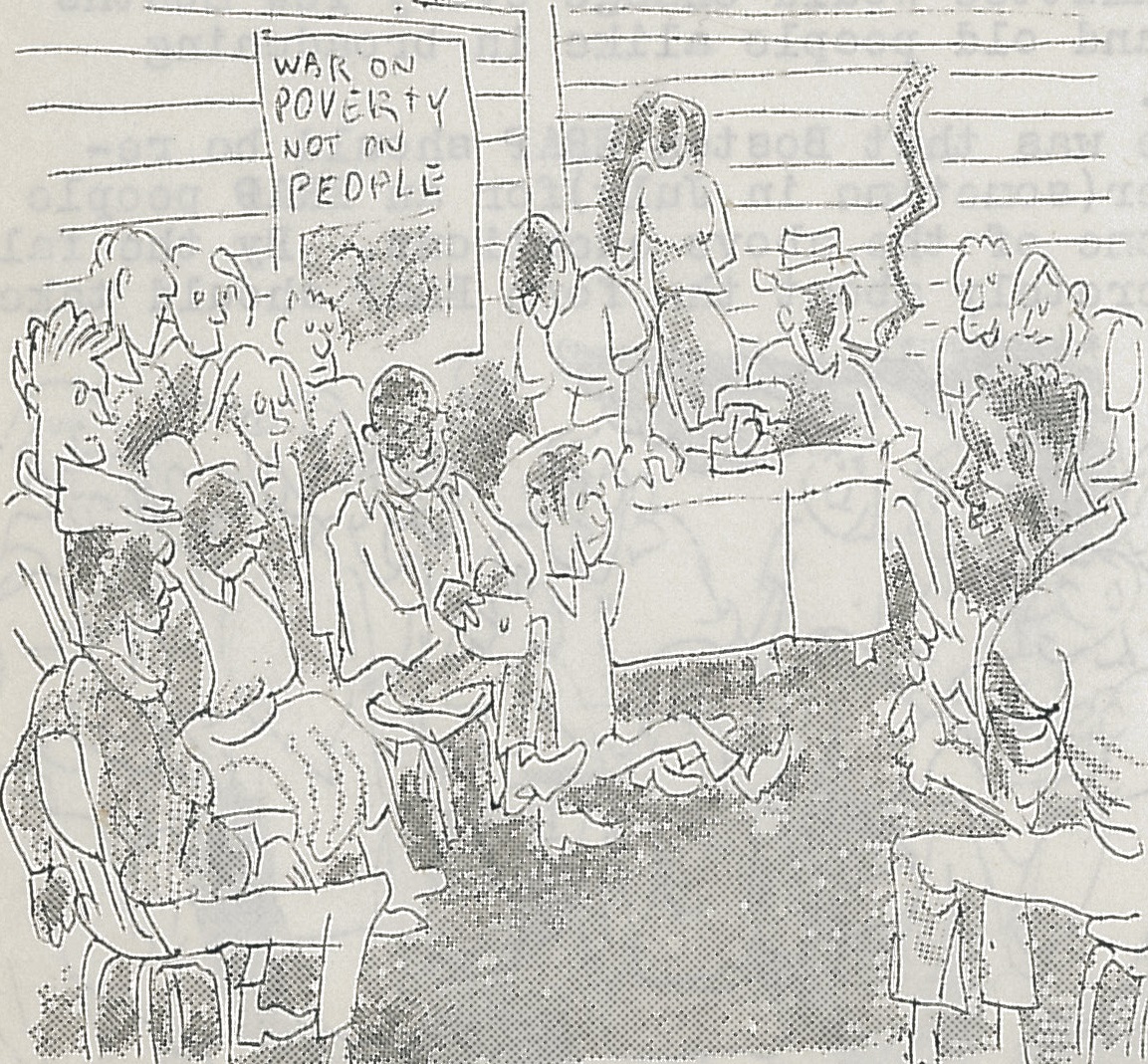
War on Poverty Cartoon from ERAP Newsletter
War on Poverty cartoon from New Haven ERAP Newsletter, July 23, 1965

The Economic Research and Action Project (ERAP) was a community organizing project sponsored by the Students for a Democratic Society (SDS). It began in 1963, with SDS activists working in low-income urban neighborhoods to help residents come together to identify and agitate for shared needs. While practical goals included education and advocacy for welfare rights, youth programing such as free school lunches, and increasing minority participation in local politics, the program as a whole had grand aspirations of abolishing poverty and ending racial inequality through an interracial and community organized movement of the poor in America. The largest and longest lasting projects were located in Boston, Chicago, Cleveland, and Newark, but multiple cities had ERAP groups. While none achieved an ongoing interracial movement of the poor, all had lasting effects in bringing minority and urban resident voices to the SDS platform, in teaching the skills, obstacles, and possibilities of community organizing, and in encouraging individuals, both from SDS and local neighborhoods, to participate and engage with diverse people in seeking social change.

New Haven ERAP Records are a small but rich collection, mainly consisting of three summer of 1965 issues of the ERAP Newsletter from the New Haven Project. Additional materials include a clipping from the April 30, 1965, Life issue featuring photographs of New Haven ERAP members working in a “slum called The Hill”; two printed photographs from Life not used in the article; and a written report and supporting research interview on the failure of the New Haven corporation Community Progress, Inc., to provide good services and comply with the requirements of the Economic Opportunity Act and the Community Action Program Guide.

Gift of Liz Blum, November 2016

Subjects

Activists—United StatesCommunity development, Urban -- United StatesSocial service—United StatesStudent movements – United StatesStudents for a Democratic Society (U.S.)

Contributors

Economic Research and Action Project

Types of material

NewslettersPhotographs
Evans, Cheryl L.

Cheryl L. Evans Papers

1946-2019 Bulk: 1960-2015
3 boxes, 1 oversized folder 3 linear feet
Call no.: RG 050/6 E93

Cheryl Evans singing at Medford High School, ca. 1962

A lifelong activist, performer, and educator, Cheryl Lorraine Evans was born in 1946 in west Medford, MA, the eldest of five. As a high school student, Evans attended the march on Washington in 1963, and was then the first in her family to attend college, in 1964 joining the largest class at UMass Amherst to date. She graduated four years later as a pivotal organizer of African American students across campus, the Five Colleges, and in the region – during the period when Black student groups, the Black Cultural Center, and the Black Studies department all had their origins at UMass. Evans was the first elected president of an African American student organization at UMass, and remains an organizer to this day, particularly as a key connector for Black alumni and through her UMass Black Pioneers Project.

Evans went on to work at UMass as an assistant area coordinator of Orchard Hill, an area housing the majority of the students of color and CCEBS students on campus at the time, and then for the Urban University Program at Rutgers University. She worked for over a decade in early childhood education, mostly in New Jersey and New York City, then while working for the State of Massachusetts received her MA in Communication from Emerson College, partially to help her public radio show, “Black Family Experience.” Evans was the first African American woman to run for City Council in Medford, and was appointed to the Massachusetts Area Planning Council by Governor Dukakis. She taught for five years at Northshore Community College, received her PhD from Old Dominion University in 1997, and ended her career at Bloomfield College, where she was a professor for 18 years until her retirement in 2016. A prolific singer as a child and young adult, Evans was, and continues to be, a performance artist, with several theater pieces focused on Black history, all in addition to her outreach, organizing, and workshops, many focused on increasing the number of Black graduate and doctoral students.

The Cheryl Evans Papers document over 60 years of the life of the educator and activist, including childhood report cards and essays, clippings from the civil rights movement she followed and joined as a high school student, undergraduate records and ephemera, documentation of Black UMass alumni events, and records from her careers in public advocacy, education, and the theater. Evan’s time at UMass is especially well documented, including schoolwork, numerous photographs of student life on campus, social and political organization records, including contact lists of and correspondence with Black students, and the original protest demands from the 1970 Mills House protest and march to Whitmore.

Gift of Cheryl L. Evans, 2018

Subjects

African American college students--MassachusettsAfrican American women teachersUniversity of Massachusetts Amherst--AlumniUniversity of Massachusetts Amherst--Students

Types of material

Photographs