Residents of Worcester, Mass., Madeline and Winthrop Goddard Hall were part of an extended community of young friends and family associated with the American Board of Commissioners of Foreign Missions, including Charlotte and Edwin St. John Ward, Margaret Hall, and Ruth Ward Beach. From 1907 to 1914, Edwin Ward was sent as a missionary to the Levant, working as a physician and teacher at Aintab College in present-day Turkey and Syrian Protestant College in Beirut. Margaret Hall and Ruth Beach were stationed in China, teaching in Tientsin, at the Ponasang Women’s College in Fuzhou, and at the Bridgeman School in Shanghai.
The Hall Papers include 67 lengthy letters from the Ottoman Empire and China, the majority from Charlotte and Edwin Ward. Intimate and often intense, the correspondence provides insight into the social and family life of missionaries and gives a strong sense of the extended community of missionaries.
Subjects
American Board of Commissioners for Foreign MissionsLebanon--Description and travelMissionaries--ChinaMissionaries--Middle EastTurkey--Description and travel
Contributors
Beach, Ruth WardHall, MadelineHall, MargaretHall, Winthrop Goddard, 1881-1977Ward, CharlotteWard, Edwin St. John
A theoretical physicist at University of the Sciences in Philadelphia, Paul Halpern is the author of a dozen popular books on science and dozens of scholarly articles. After spending his undergraduate years at Temple University, Halpern received a doctorate at SUNY Stony Brook, and has since written on complex and higher-dimensional solutions in general relativity theory and the nature of time as well as the history of the modern physical sciences. He has been a Fulbright Scholar and fellow of the John Simon Guggenheim Foundation.
The hundreds of ephemeral publications, fliers, and handbills in the Halpern Collection provide a window into political and social activism in Philadelphia during the late 1970s and early 1980s. The content ranges widely from publications produced by peace and disarmament groups to the literature of anti-imperialist (e.g. CISPES), antinuclear groups (SANE and post-Three Mile Island mobilization), radical political parties, and religious organizations including the Unification Church and the Church of Scientology.
The horticulturist Tom S. Hamilton was a member of the faculty at UMass Amherst in the Department of Landscape Architecture and Regional Planning. A specialist in ornamental plants, Hamilton worked at UMass from prior to 1950 until his retirement in 1986.
The Hamilton Papers contain three works on ornamental plants published by the Dept. of Landscape Architecture, along with a mimeographed laboratory manual that Hamilton used in his courses on landscape operations in 1979.
Subjects
HorticultureUniversity of Massachusetts Amherst--FacultyUniversity of Massachusetts Amherst. Department of Landscape Architecture and Regional Planning
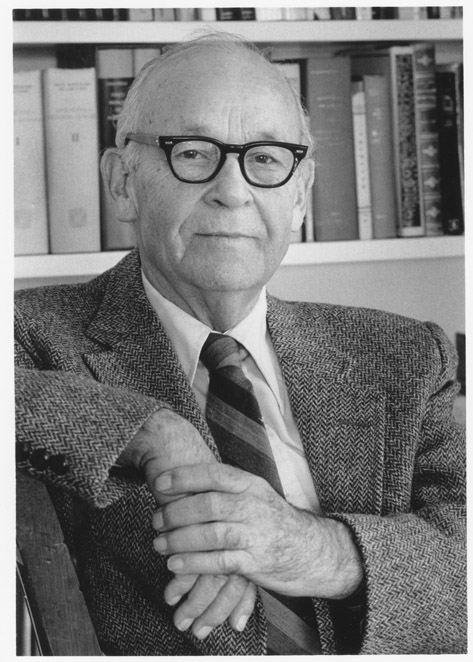
Lewis Hanke, the Clarence and Helen Haring Professor of History from 1969 to 1975, was a scholar of Latin American history, served as the president of the American Historical Association, worked extensively as an editor, and was best known for his research on Bartolome de Las Casas. Hanke was born in 1905 in Oregon City, Oregon, and received his B.S. and M.A. in history from Northwestern University. After earning his Ph.D from Harvard in 1936, the great depression barred his way to professorial appointment, allowing Hanke to work outside of academia as the director of the Hispanic Foundation until 1951. After teaching at the University of Texas and Columbia University, Hanke eventually became a professor at the University of Massachusetts in 1969 until his retirement in 1975. During his tenure at the University, Hanke edited the Guide to the Study of US History Outside the US, 1945-1980, and the year before his retirement, he served as the president of the American Historical Association, where he oversaw the re-writing of the AHA’s charter. Hanke died in March, 1993.
Lewis Hanke’s papers document his historical research and his prolific scholarly output. The largest portion of the collection are notes, correspondence and administrative records relating to his editorship of the Guide to the Study of US History Outside the US, 1945-1980, as well as a collection of his published and unpublished papers from 1939. The collection also includes notes, correspondence, and image reproductions for Hanke’s book Spanish Viceroys. The remainder of the collection is professional correspondence, documents from Hanke’s tenure as AHA president, and materials from his many research projects.
Subjects
Guide to the Study of US History Outside the US, 1945-1980Spain--HistoryUniversity of Massachusetts Amherst--FacultyUniversity of Massachusetts Amherst. Department of History
The tanner Phinehas Hemenway was born in Bolton, Worcester County, Mass., in September 1794, the fourth of six children born to Simeon and Mary (Goss) Hemenway, but he resided nearly his entire adult life in the Franklin County hill town of Shutesbury. Although little is known about his life, Hemenway appears to have married twice, to a Polly or Mary Gray in about 1816, and to the widow Mary Sears of Prescott in Aril 1838. Hemenway died in Shutesbury on December 21, 1850.
With approximately 150 pages of brief, but closely written records of daily transactions, the Hemenway daybook documents the range of activities of rural tannery in antebellum Massachusetts. Along with the names of clients, the date and amount, and a brief notation on whether the work was for dressing, tanning, currying, or (apparently) the sale of finished product, Hemenway records work in a variety of leathers, from calf to sheep, hog, and horse and from sole leather to upper leather, sometimes specified as for shoes. The daybook also includes credit entries for labor performed, the purchase of hemlock bark or hides, or more rarely for cash to settle accounts.
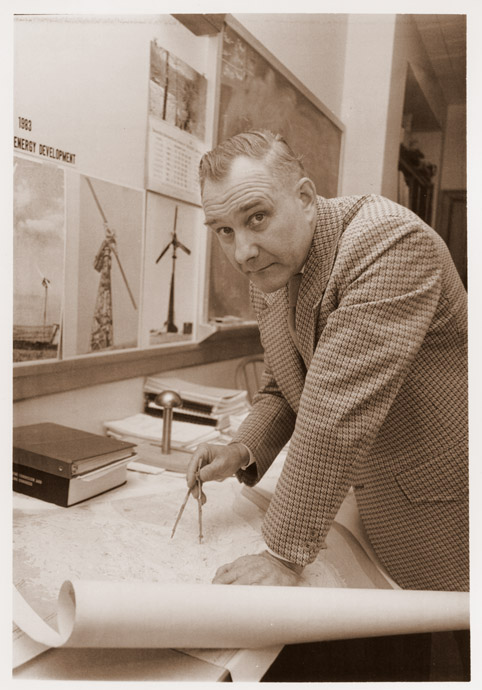
William E. Heronemus underwent a radical transformation during his tenure as Professor of Civil Engineering at the University. After serving in the U.S. Navy, engineering the construction of submarines from 1941 until his retirement in 1965, Heronemus disavowed his work with nuclear energy and joining the University faculty in 1967, dedicated his life to the study of alternative energy. Born in Madison, Wisconsin, Heronemus earned his B.S. from then United States Naval Academy and two M.S.s (Naval Architecture and Marine Engineering), from the Massachusetts Institute of Technology. Heronemus was invited to the University to help develop a research program in Ocean Engineering and focused his work on alternative energy to sources that could make use of oceanic power. William Heronemus retired from the University in 1978 and died of cancer on November 2, 2002.
The William E. Heronemus Papers document his research in alternative energy and his quest for harnessing wind and thermal power from the ocean through technical reports on alternative energy systems written from 1972 to 1974.
Subjects
University of Massachusetts Amherst--FacultyUniversity of Massachusetts Amherst. Department of Civil Engineering
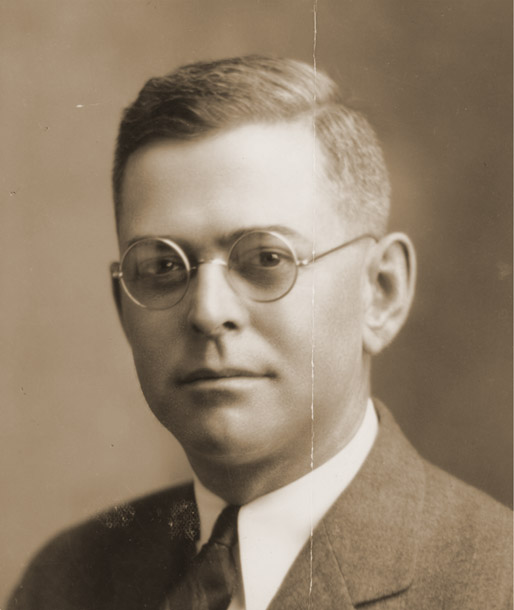
Curry S. Hicks pioneered the University’s athletics program as it transitioned from the Massachusetts Agricultural College to the University of Massachusetts. Hicks led the charge to build modern athletic fields and gymnasia and during his tenure, many of the University’s teams climbed to new heights of excellence. Born in 1885 in Enfield, New York, Hicks began undergraduate studies at Michigan State University but was forced to drop out because he was unable to pay tuition, beginning a teaching career that brought him from math teacher to high school principal. Returning to Michigan Normal School, Hicks earned his B.A. in physical education in 1909, followed by the Hitchcock Fellowship at Amherst College and eventually his assistant professorship in Physical Education and Hygiene at the University in 1911. On his retirement in 1949, Hicks left behind a thoroughly modernized athletics program and moved to Tucson, Arizona, where he passed away in 1963.
The Curry S. Hicks Papers consist of a bound volume of letters, sent to Hicks as a commemoration of his retirement in 1949 and a folder of correspondence related to his organization and fundraising efforts for a new physical education building at the University.
Subjects
University of Massachusetts Amherst--FacultyUniversity of Massachusetts Amherst. Department of Physical Education
Bronislaw Honigberg was a parasitologist who, though studying the intestinal parasites of amphibians, provided research for the U.S. Department of Public Health’s infections diseases lab. Born in Warsaw, Poland in 1920, Honigberg fled to the United States at the beginning of World War II, cutting short his Polish medical education to become an undergraduate at the University of California Berkeley, where he earned his B.A. (1943), M.A (1946) and Ph.D. (1960). Honigberg joined the University faculty in 1961 and taught in the zoology department until his death in 1992.
The collection is comprised of Honigberg’s lecture notes, including exams, lab exercises, and illustrative material. There is also five folder of reprints spanning the years 1949 to 1991 and thus representing Honigberg’s research throughout his career.
Subjects
University of Massachusetts Amherst--FacultyUniversity of Massachusetts Amherst. Department of Zoology
A member of the Massachusetts State College Class of 1936, Leonta Gertrude Horrigan was affiliated with UMass Amherst throughout her long career in academia. After receiving he MA from Smith College in 1942 for a thesis on DeQuincy and Milton, Horrigan taught creative writing, composition, among writing classes, to UMass undergraduates, and was frequently singled out as a favorite instructor on campus. In 1964, she was appointed Assistant Dean in the College of Arts and Sciences, and retired to emeritus status in 1986.
The Horrigan Papers contain nearly a half century record of instruction in writing education at UMass, with a wide array of other materials relating to Horrigan’s varied interest, events on campus, and to the evolution of the university in the post-war years.
Subjects
University of Massachusetts Amherst--FacultyUniversity of Massachusetts Amherst. Department of English
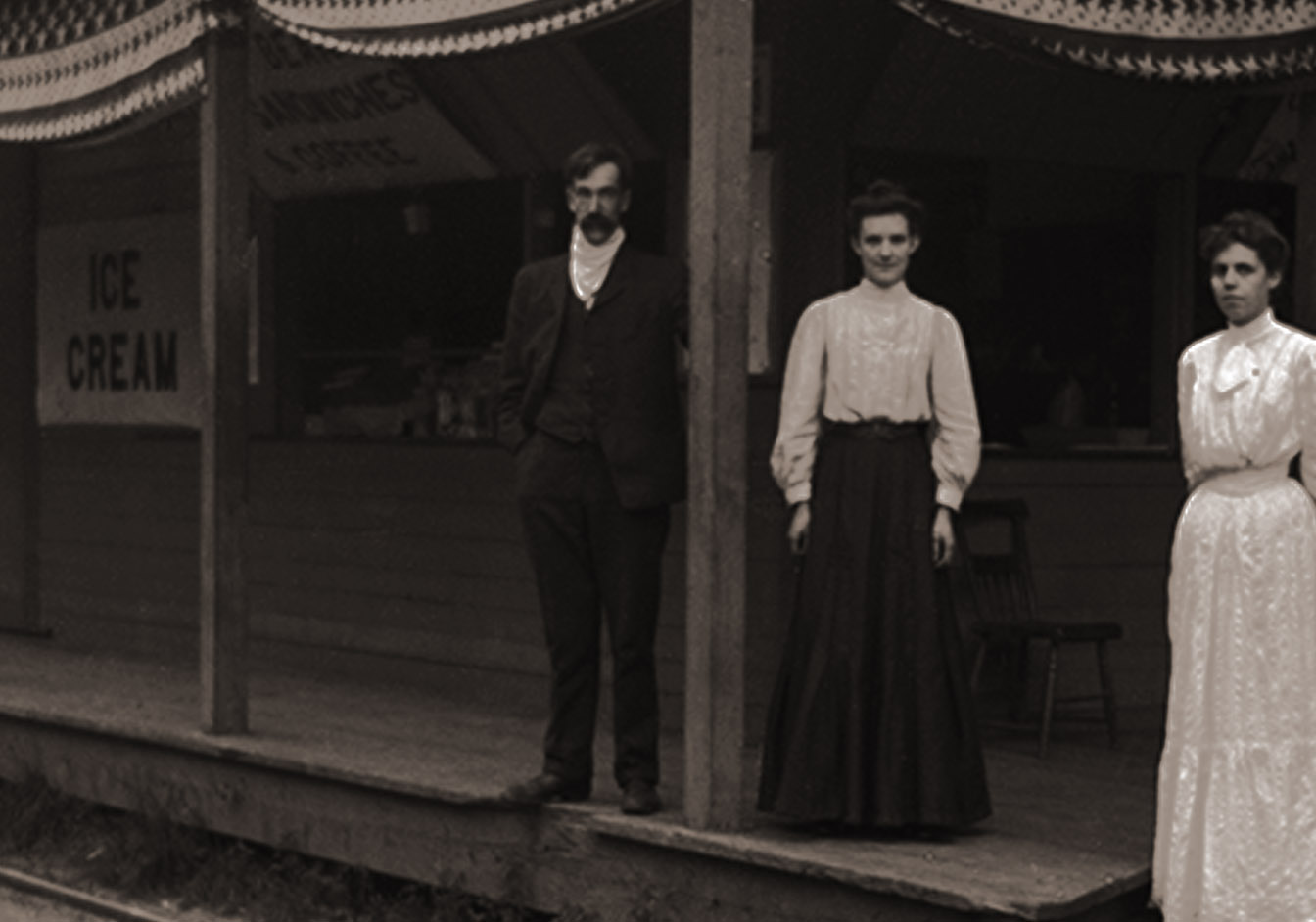
The proprietor of a general store and postmaster in Wendell Depot, Mass., W. W. Hunt carried on a thriving business for a small Franklin County town during the 1880s and 1890s. Selling a range of dry goods, foodstuffs, and other goods, Hunt catered to residents in Wendell and neighboring communities up and down the Miller River.
An extensive ledger, marked No. 5, the W.W. Hunt account book contains records of sales of a surprising range of dry goods and foodstuffs, snaths and scythes, stamps and envelopes, and other goods useful to a rural community. Although most of Hunt’s customers were individuals seemingly purchasing for personal consumption, he also sold goods to the Farley and Goddard Wood Paper Companies, the Ladies Aid Society, and the town of Wendell, with some accounts marked “Town Farm.”
Subjects
Merchants--Massachusetts--Wendell DepotWendell Depot (Mass.)--Economic conditions--19th century