The University of Massachusetts Amherst
Robert S. Cox Special Collections & University Archives Research Center
CredoResearch digital collections in Credo

Archive

Waugh, Frederick V. (Frederick Vail), 1898-1974

Frederick V. Waugh Collection

1917-1919
6 items 0.25 linear feet
Call no.: PH 026
Depiction of Black cat logo
Black cat logo

In July 1917, prior to the American entry in the First World War, Frederick Vail Waugh joined a group of about fifty residents of Amherst, Mass., who enlisted for duty in the Ambulance Service of the French Army. From August 1917 through April 1919, SSU 39 (Service Sanitaire Unis) — redesignated SSU 539 and transferred to the American Expeditionary Service in January 1918 — served among the trenches of northern France and Belgium. Known as the Black Cat squadron, they took part in three major offensives with the AEF, the Aisne-Marne, Oise-Aisne, and Ypres-Lys. Waugh was among three members of the unit awarded the French Croix de Guerre for courage and energy during the last month of the war. After returning to the states, Waugh earned a bachelor’s degree from Massachusetts Agricultural College (1922), where his father Frank A. Waugh was a Professor of Horticulture and Landscape Architecture, followed by an MA from Rutgers (1926) and PhD from Columbia (1929). He enjoyed a distinguished fifty-year career as an agricultural economist with the US Department of Agriculture.

A snapshot of life in the First World War, the Waugh collection includes Frederick Waugh’s army jacket (with Croix de Guerre), helmet, and puttees, and a remarkable history of the unit and photo album, Being the Book of S.S.U. 539. A second book, I Was There with the Yanks in France (1919), has been transferred for shelving to the Rare Books stacks.
Gift of Prudence Waugh Donovan, Oct. 2009

Subjects

Ambulance drivers--United StatesUnited States. Army Ambulance Service. Section 539World War, 1914-1918--Medical care

Contributors

Waugh, Frederick V. (Frederick Vail), 1898-1974
Wendell (Mass.). Treasurer

Wendell (Mass.). Treasurer Account book

1794-1864
1 vol. 0.1 linear feet
Call no.: MS 090

A sparsely populated rural community in eastern Franklin County, Massachusetts, the town of Wendell was incorporated in 1781 after it was separated from the adjacent towns of Shutesbury and Erving. Primarily a farming community to the present day with only light manufacturing (particularly the manufacture of palm-leaf hats), Wendell remains one of the state’s least populous communities.

A standard double column account book, the Treasurer’s ledger from the town of Wendell was reviewed, settled, and approved annually by the selectmen. The transactions are the typical stuff of small town life in New England, recording taxes, payments for expenses relating to schools and maintenance of the poor, and during the Civil War, payments of bounty money for volunteers. Among the signatories are locally prominent figures such as Judge Joshua Green and the Treasurers Samuel Brewer, George W. Fleming, and Franklin Howe (and other members of the Howe family).

Subjects

Green, JoshuaWendell (Mass.)--History--19th century

Contributors

Brewer, SamuelFleming, George WHowe, FranklinWendell (Mass.). Treasurer

Types of material

Account books
Wheeler, C. H.

C. H. Wheeler Scrapbook

1935-1937
1 vol. 0.25 linear feet
Call no.: MS 598 bd

A resident of Haydenville, Mass., during the 1930s, C. H. Wheeler was evidently captivated with the profound political changes sweeping the nation during the years of the Great Depression.

Containing hundreds of political cartoons clipped from local newspapers and national media, C. H. Wheeler’s scrapbook documents media reactions to the Great Depression and New Deal, the presidential election of 1936, Alf Landon and Franklin D. Roosevelt, and national and international political currents.

Subjects

Depressions--1929Landon, Alfred M. (Alfred Mossman), 1887-1987Massachusetts--Politics and government--1933-1945New Deal, 1933-1939Roosevelt, Franklin D. (Franklin Delano), 1882-1945United States--Politics and government--1933-1945

Types of material

Political cartoonsScrapbooks
Wheeler, Truman

Truman Wheeler Account Book

1764-1772
1 vol. 0.1 linear feet
Call no.: MS 618 bd

One of twelve children of Obadiah and Agnes (Tuttle) Wheeler, Truman Wheeler was born in Southbury, Conn., on Nov. 26, 1741. After completing his education, reportedly at Yale, Wheeler moved north to Great Barrington, Mass., in the spring of 1764. Acquiring property about a mile south of the center of town, he soon established himself as a general merchant trading in silk, fabrics, and a variety of domestic goods.

The Wheeler account book represents the initial years of a thriving, late colonial mercantile business in far western Massachusetts. Beginning in June 1764, not long after Wheeler set up shop in Great Barrington, the account book includes meticulous records of sales of domestic goods ranging from cloth (linen, silks, and osnabrig) to buttons, ribbons, and pins, snuff boxes, a “small bible,” “jews harps,” and tobacco. Among the prominent names that appear as clients are members of the Burghardt and Sedgwick families.

Acquired from Dan Casavant, Mar. 2001

Subjects

Great Barrington (Mass.)--Economic conditions--18th centuryMerchants--Massachusetts--Great Barrington

Contributors

Wheeler, Truman, 1741-1815

Types of material

Account books
Williams, Roger

Roger Williams Account Book

1808-1822
1 vol. 0.1 linear feet
Call no.: MS 619 bd

During the early decades of the nineteenth century, Roger Williams ran a ferry in West Springfield, Mass., carrying passengers and freight across the Connecticut River.

The Williams ledger is a combination daybook and account book, recording several dozen transactions of a Connecticut River ferryman, centered on the years around the War of 1812. Most of the entries are brief records of trips carrying individuals or freight across the river, however a few provide indications of other economic activity, including framing and joining, making a coffin, fixing sleds, and cidering.

Subjects

Ferries--Massachusetts--Connecticut RiverWest Springfield (Mass.)

Contributors

Williams, Roger

Types of material

Account booksDaybooks
Yiamouyiannis, John

John Yiamouyannis Papers

1967-1999
22 boxes 33 linear feet
Call no.: MS 645

Access restrictions: Temporarily stored offsite; contact SCUA in advance to request materials from this collection.

One of the most prominent and vocal scientific critics of fluoridation, the biochemist John Yiamouyiannis (1943-2000) spent over three decades fighting the professional and political establishment. A graduate of the University of Chicago with a doctorate in biochemistry from the University of Rhode Island (1967), Yiamouyiannis became interested in the health effects of fluoride while employed as an editor with the Chemical Abstracts Service. His growing opposition to fluoridation, however, led to conflict with his employers and after being placed on probation in 1972, he resigned. Becoming a key organizer in the antifluoridation movement, he served at various times as the Executive Director of Health Action, the Science Director of the National Health Federation, founder and president of the Safe Water Foundation, and editor of the journal Fluoride. He also ran for the Senate from Ohio and twice for the U.S. Presidency on small party tickets, never garnering more than a handful of votes. Yiamouyiannis died of cancer at his home in Delaware, Ohio, on Oct. 8, 2000, at the age of 53.

Offering important insight into the antifluoridation movement in the 1970s through 1990s, the papers of John Yiamouyiannis offer a perspective on an unusually prolific and determined activist. The collection contains a large quantity of research material and correspondence relating to Yiamouyiannis’s antifluoridation work, and perhaps most importantly an extensive series of transcripts relating to civil cases in which he was involved.

Gift of Paul Connett, June 2012

Subjects

Antifluoridation movementDrinking water--Law and legislation--United StatesFluorides--Physiological effectFluorides--Toxicology

Contributors

Yiamouyannis, John
Zube, Ervin H.

Ervin H. Zube Papers

1959-1997
19 boxes 28.5 linear feet
Call no.: FS 017
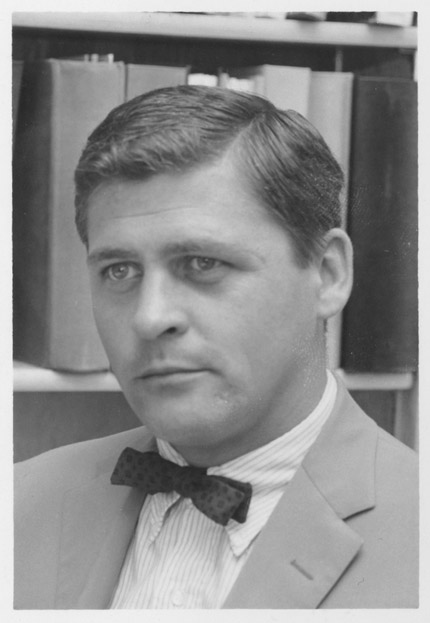
Depiction of Ervin H. Zube
Ervin H. Zube

Ervin H. Zube was the head of the University’s Landscape Architecture and Regional Planning department (LARP) from 1965-1977. His groundbreaking research on landscape architecture and assessment helped define the international importance and influence of the field and his consultancy work, most notably with the National Park Service, brought his intellectual achievements into practical application. Born on April 24, 1931 in Milwaukee, Wisconsin, Zube earned his B.S. at the University of Wisconsin in 1954. After a two year service in the United States Air Force, Zube enrolled in Harvard’s Graduate School of Design where he received his M.L.A in 1959. Zube held teaching positions at the University of Wisconsin and the University of California, Berkeley before beginning his ten year professorship at the University of Massachusetts in 1965. As the head of LARP, Zube established the Environmental Design program, which introduced a revolutionary cross-discipline approach to the study of landscape architecture. Zube became the director of the Institute for Man and the Environment in 1972 and restructured the institute to support academic research in new, important topics including community development and cooperation with the National Park Service, seeding important national and international institutions with progressively educated researchers. As a consultant, Zube helped the National Park Service develop their “master plan” for Yosemite and worked with numerous national and international institutions to manage and assess their environmental resources. Zube ended his career as a professor at the University of Arizona where he retired in 1983. He remained active in the field until his death in 2001.

The Ervin H. Zube papers include Zube’s lecture notes and academic correspondence, research materials and publications representing his work in landscape assessment and architecture, notes and reports from his consultancy work with many institutions and committees, correspondence from his role as a conference planner, as well as correspondence relating to his many book reviews. Zube’s papers also cover his research and teaching while at the University of Arizona and contain photographs from his research on the Connecticut River Valley.

Transferred from LARP, 2001

Subjects

Institute for Man and the EnvironmentUniversity of Massachusetts Amherst--FacultyUniversity of Massachusetts Amherst. Department of Landscape Architecture and Regional Planning

Contributors

Zube, Ervin H.