The University of Massachusetts Amherst
Robert S. Cox Special Collections & University Archives Research Center
CredoResearch digital collections in Credo

Archive

University of Massachusetts Amherst. Theses and Dissertations

University of Massachusetts Amherst. Theses and Dissertations

1894-2021
Call no.: RG 046

SCUA holds a nearly complete run of undergraduate honors theses, arranged chronologically by year and then alphabetically by author. A small selection of honors theses are available to view online at university’s institutional repository’s CHC Theses and Projects page. Honors theses can be viewed on site in the Special Collections and University Archives reading room. Starting in 2019, all undergraduate honors theses are submitted electronically.

  • Paper honors theses (pre-2019) may take up to one to two business days to retrieve.
  • Digital honors theses (2019 forward) must also be viewed on site in SCUA’s reading room, but they do not have a delay period from request to retrieval and access.

A spreadsheet list of honors theses can be consulted online. Email SCUA with your requests in advance of visiting. Please include the year, author’s full name, and the title for each thesis requested.

Masters theses and dissertations written by UMass Amherst students are not a part of the University Archives, but most are available in electronic form through the university’s institutional repository, ScholarWorks.

Contributors

University of Massachusetts Amherst
University of Massachusetts Amherst. University as a Whole

University of Massachusetts Amherst. University as a Whole

1849-2007
82.75 linear feet
Call no.: RG 001

Established under the Morrill Land Grant Act of 1863, the Massachusetts Agricultural College began with four faculty members and 56 students distributed among four wooden buildings and acres of farms, orchards, and fields. In keeping with the progressive educational principles of its early years, the College offered advanced instruction in the eminently practical pursuit of agriculture, while its fellow land grant college, MIT, covered the mechanical arts. Although “Mass Aggie’s” fortunes waxed and waned, it grew to become Massachusetts State College in 1931, and the University of Massachusetts in 1947.

Among the official publications of the University in Record Group 1 are institutional histories, annual reports, special reports, minutes, directories, catalogs, newsclippings, press releases, and memorabilia.

Contributors

University of Massachusetts Amherst
University of Massachusetts Amherst. University Outreach

University of Massachusetts Amherst. University Outreach

2000-2007
Call no.: RG 016

Helping to fulfill its land grant mission, outreach at UMass Amherst engages the university with the community in economic, social, cultural, environmental, and educational issues. Outreach applies the teaching, research, and knowledge resources of the university with benefit to the public throughout the Commonwealth, nation, and world. The office operates a number of programs, including Continuing & Professional Education, the Extension and Arts Extension Service, the University Without Walls, and WFCR radio.

The records of University Outreach document the initiatives originating with the Vice Chancellor for University Outreach. As a result of the evolution of responsibility for outreach activities, the records of individual programs may be located elsewhere in the archives.

Contributors

University of Massachusetts Amherst. Office of University Outreach
University of Massachusetts. Trustees

University of Massachusetts Amherst. Trustees

1864-2007
84.25 linear feet
Call no.: RG 002

When Massachusetts Governor John A. Andrew incorporated the Board of Trustees for the Massachusetts Agricultural College in 1863, the fourteen members of the board were charged with creating a new agricultural college. Since that time, the Board of Trustees (including student trustees) had governed the University, meeting regularly to act on University-wide matters of policy, mission, finance, and campus maintenance. Governance responsibilities in some areas (e.g., tuition, academic program review and approval) are shared with the statewide Board of Higher Education. The Board of Trustees maintains a Chair and six standing committees: Executive, Administration and Finance, Academic and Student Affairs, Athletics, Audit, and External Affairs. The President and the Five College Chancellors administer board policy.
The bulk of the Board of Trustees records consists of meeting minutes (1906-2007) and Trustee Documents (1963-2007), along with the papers of a small number of individual trustees and the records of the Trustees’ “Commission on the Future of the University of Massachusetts” (1988-1989), which resulted in the consolidation of the state’s five public university campuses under a single President and Board of Trustees. In partnership with the Board of Trustees, SCUA has digitized the complete minutes of the Board from chartering of the university in 1863 through 2004.

Contributors

Massachusetts Agricultural College. TrusteesMassachusetts State College. TrusteesUniversity of Massachusetts Amherst. Trustees

Types of material

Minutes
Váli, Ferenc A. (Ferenc Albert), 1905-

Ferenc A. Vali Papers

1964-1969
1 box 0.5 linear feet
Call no.: FS 137
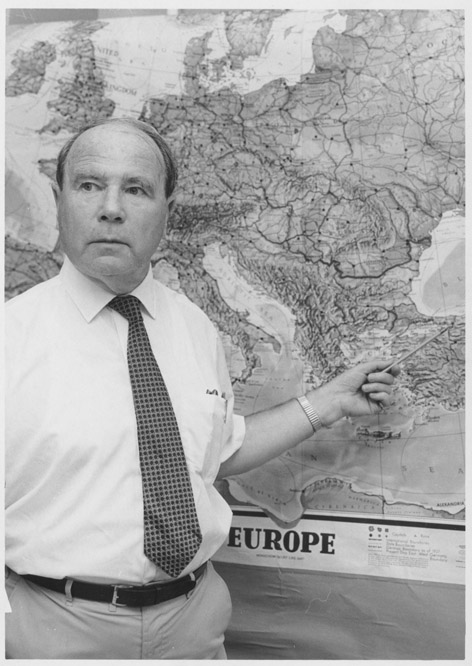
Depiction of Ferenc Vali
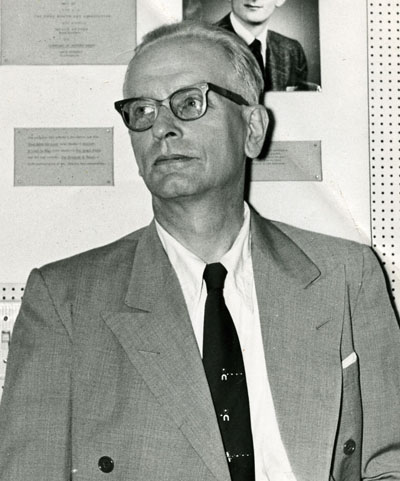
Ferenc Vali

A scholar of international politics, Ferenc Vali left his native Hungary during the revolution of 1956 after five years of imprisonment for his political activities. Born on May 25, 1905, Vali was educated at the University of Budapest and London School of Economics (PhD, 1932), and worked as a Professor of International Law at the University of Budapest until his arrest. Following his escape and a brief period as Fellow at Harvard, he joined the faculty in political science at UMass Amherst in 1961. A popular lecturer, he became the first member of the Political Science Department to receive emeritus status in 1975. He died at his home in Amherst in 1984.

The Vali collection includes both published and unpublished essays by Ferenc Vali on Hungary during the post-revolutionary years and idealism and realism in American foreign policy.

Subjects

Hungary--History--1945-1989United States--Foreign relationsUniversity of Massachusetts Amherst--FacultyUniversity of Massachusetts Amherst. Department of Political Science

Contributors

Váli, Ferenc A. (Ferenc Albert), 1905-
Van Meter, Ralph Albert, 1893-

Ralph Van Meter Papers

1919-1958
2 boxes 1 linear feet
Call no.: RG 003/1 V36
Depiction of Ralph Van Meter
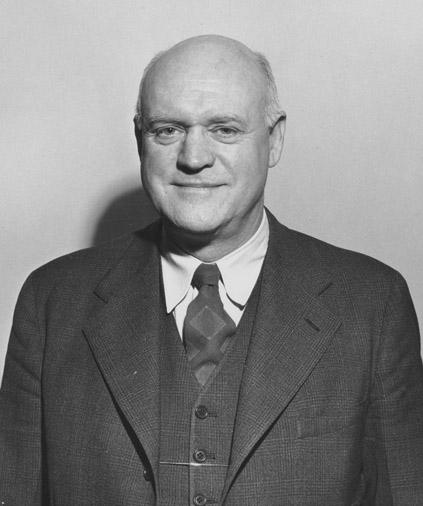
Ralph Van Meter

Ralph Van Meter, the first president of the University of Massachusetts after it changed its name from Massachusetts State College in 1947, spent nearly 40 years learning, teaching, and leading on the Amherst campus. A graduate of Ohio State University (B.S., 1917), he came to the Massachusetts Agricultural College as a specialist in Food Conservation in 1917, serving in the Pomology Department first as a professor, and then as the head from 1936 to 1948. The Board of Trustees appointed Van Meter as Acting President in 1947 and President in 1948. He was responsible for a number of innovations, including the creation of the position of Provost (first held by John Paul Mather) and the establishment of new schools of business administration and engineering.

Correspondence, memos, reports, clippings, and other papers, relating to matters at issue during Van Meter’s presidency of University of Massachusetts including the building program, World War II veterans, accreditation, and the university seal; together with published writings, biographical material, military records, and material from Van Meter’s inauguration as university president.

Subjects

University of Massachusetts Amherst. President

Contributors

Van Meter, Ralph Albert, 1893-
Vinal, William Gould, 1881-

William Gould Vinal Papers

1931-1963
3 boxes 1.25 linear feet
Call no.: FS 138
Depiction of Cap'n Bill Vinal
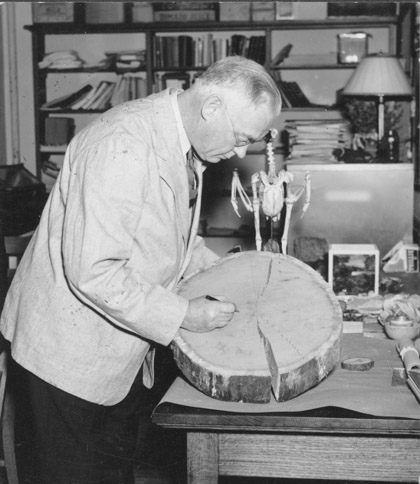
Cap'n Bill Vinal

William “Cap’n Bill” Vinal was the first instructor in nature education at Massachusetts State College and a pioneer in the field. A graduate of Bridgewater State (1904), Harvard (MA 1907) and Brown (PhD, 1922), Vinal worked for several years as a camp director on his native Cape Cod and held a variety of university appointments in nature education before joining the faculty at Massachusetts State College as Professor of Nature Education in the Nature Guide School in 1937. Spontaneous in the classroom and field, enthusiastic, and highly popular with his students, Vinal taught courses in conservation, outdoor leadership, outdoor recreation, and nature guiding, and was an important figure in the Massachusetts Audubon Society, the American Camping Association, the Camp Directors Association, and several conservation groups. After retiring from UMass in 1951, Vinal returned to his home in Norwell, Mass., remaining active as a nature writer and teacher until his death in 1973.

A valuable glimpse into the early growth of nature and conservation education, the Vinal collection includes dozens of scarce publications by the exceptionally prolific Cap’n Bill, along with a small quantity of correspondence, talks, and reports. As a collection, these document the origin and growth of the Nature Guide School and the program in nature recreation at MSC and UMass, and more generally the growth of nature, recreation, and conservation education in New England. Of local interest is an extensive report for the town of Amherst Recreation Survey Committee (1948) regarding recreational opportunities for youth. Nearly half of the collection consists of an extensive run of Vinal’s quirky, self-published Nature Guide Newsletter (1935-1951).

Subjects

Amherst (Mass.)--Social life and customsConservation of natural resources--Study and teachingNature Guide NewsletterOutdoor education--MassachusettsRecreation--Massachusetts--AmherstUniversity of Massachusetts Amherst--FacultyUniversity of Massachusetts Amherst. Nature Guide SchoolUniversity of Massachusetts Amherst. Program in Nature Recreation

Contributors

Vinal, William Gould, 1881-
Volbach, Walther R. (Walther Richard), 1897-

Walther R. Volbach Papers

1897-1996
2 boxes 1 linear feet
Call no.: FS 087
Depiction of Walther R. Volbach
Walther R. Volbach

Born in Mainz, Germany on December 24, 1897, the theater historian and stage director Walther R. Volbach began directing operas and plays at the age of 17. After his immigration to the United States in 1936, he worked for several colleges, coming to the University of Massachusetts Amherst for five years as a visiting professor following his retirement in 1965. Noted as a director of operas and plays and for his set design, Volbach was author of three books: The Problems of Opera Production (1953), Adolphe Appia : The Prophet of The Modern Theatre (1968), and Memoirs of Max Reinhardt’s Theaters (1972).

The Volbach collection includes personal and professional correspondence in English and German, mostly from Volbach’s later years, regarding family, publishing, lectures, and employment. The collection also includes photographs of set designs, an image of Volbach teaching a class, publications, and lecture and research notes on theater history.

Gift of Fritz B. Volbach, Aug. 1996

Subjects

Appia, Adolphe, 1862-1928Drama--Study and teachingSet designersUniversity of Massachusetts Amherst--FacultyUniversity of Massachusetts Amherst. Department of Theater

Contributors

Volbach, Walther R. (Walther Richard), 1897-
Waldbott, George L., 1898-

George L. Waldbott Papers

1930-1989 Bulk: 1957-1982
7 boxes 10.5 linear feet
Call no.: MS 609

After receiving his medical degree from the University of Heidelberg in 1921, George L. Waldbott accepted a residency at Henry Ford Hospital in Detroit, and embarked on a pioneering career in the study and treatment of allergic diseases. He is noted for his fundamental research on human anaphylaxis and penicillin shock, allergy-induced respiratory problems, and later in his career, the health impact of air pollutants. In 1955, Waldbott began conducting research in fluoride toxicity, becoming one of the first physicians to warn of the health effects of mass fluoridation. A founder of the International Society for Fluoride Research, he was considered one of the key figures in the antifluoridation movement for over two decades, contributing dozens of books and articles, including the influential The American Fluoridation Experiment (1957) and Fluoridation : The Great Dilemma (1978). He died in Detroit on July 17, 1982, from complications following open heart surgery.

The Waldbott Papers document one physician’s long struggle against the fluoridation of the American water supply. In addition to a considerable quantity of correspondence with other leading antifluoridation activists, the collection includes an array of subject files relating to fluoridation, air pollution, and allergens, as well as drafts of articles and offprints, newsclippings, and notes.

Separated from the papers of Martha Bevis, Jan. 2010

Subjects

Air--PollutionAntifluoridation movement--MichiganFluorides--Environmental aspectsFluorides--ToxicologyPublic health

Contributors

Waldbott, George L., 1898-
Watchmaker (Springfield, Mass.)

Watchmaker's Account Book

1882-1883
1 vol. 0.1 linear feet
Call no.: MS 623 bd

The mid-century success of the Waltham Watch Company set the stage for a period of innovation and corporate ferment in the manufacture and distribution of watches in the United States. As watchmakers and technologies spread and new companies sprouted and split at a rapid pace, Springfield emerged as a center for the production of high quality, mass produced watches. Perhaps best known among the large local corporations, the Hampden Watch Company was established in 1877 from the New York Watch Company and was bought out in turn by the Dueber Watch Company and relocated a decade later.

The unidentified owner of this slender account book maintained itemized records of income and expenses for a relatively small watchmaking concern in Springfield between May 1882 and September 1883. Most of the trade consisted of sales of accoutrements and repair work.

Acquired from Dan Casavant, 1999

Subjects

Springfield (Mass.)--Economic conditions--19th centuryWatchmakers--Massachusetts--Springfield

Types of material

Account books