The University of Massachusetts Amherst
Robert S. Cox Special Collections & University Archives Research Center
CredoResearch digital collections in Credo

Archive

Obear, Clark H.

Clark Hopkins Obear Diaries

1845-1888
4 vols. 0.5 linear feet
Call no.: MS 601

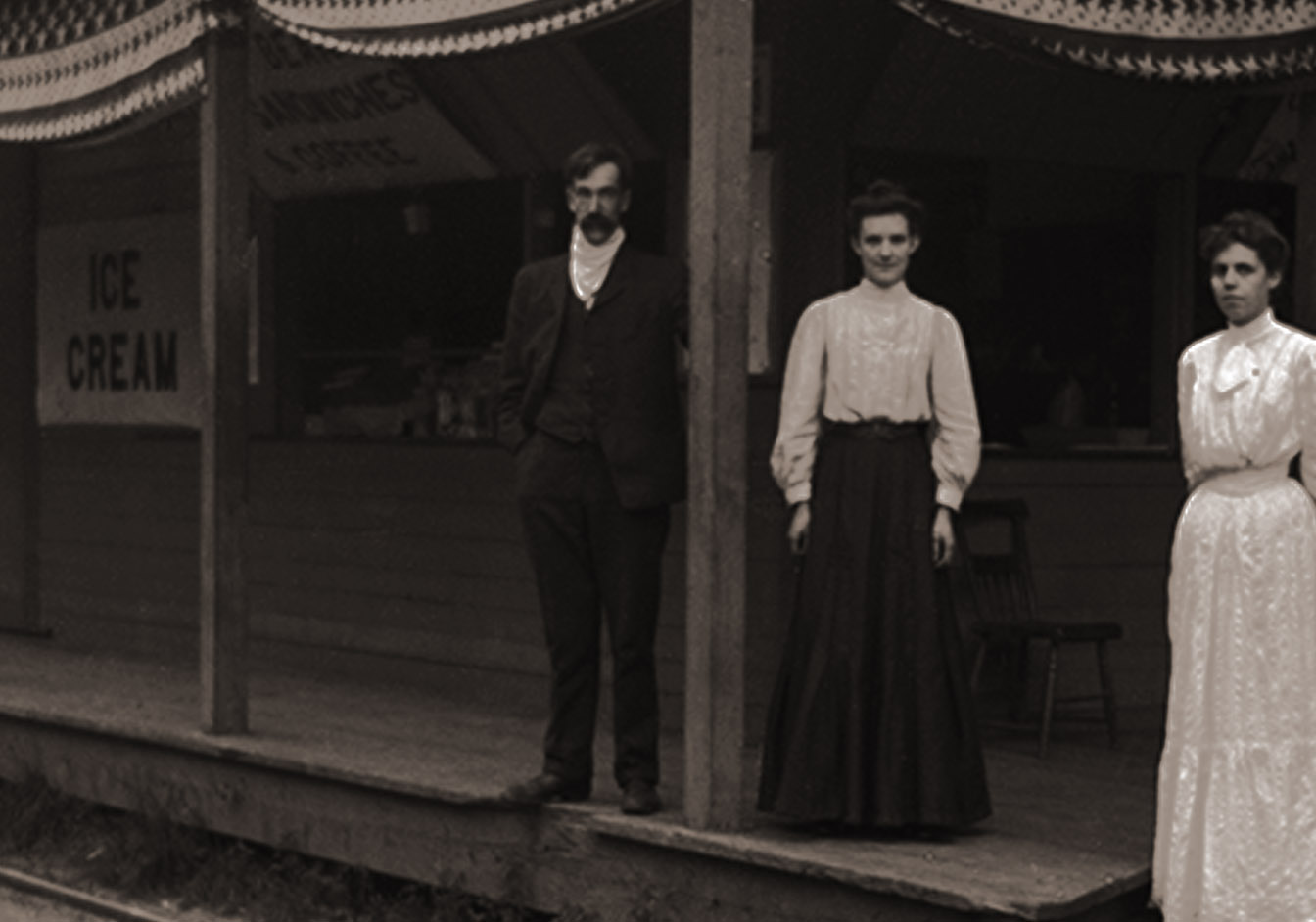
A resident of New Ipswich, N.H., Clark Obear was an ardent supporter of the temperance and antislavery movements, and was deeply involved in the affairs of his church and community. A teacher in Hillsborough County schools, Obear also worked as a farmer and insurance agent, and served in public office as a deputy sheriff, a Lieutenant Colonel in the militia, a fence viewer and pound keeper, and for several years he was superintendent of schools. Obear and his wife Lydia Ann (Swasey) had two children, Annabel and Francis.

The four diaries in this collection contain brief, but regular entries documenting Clark Obear’s daily life in New Ipswich, N.H. during the middle years of the nineteenth century. Despite their brevity, the diaries form a continuous coverage of many years and offer details that provide a compelling sense of the rhythms of life in a small New Hampshire village. Of particular note, Obear carefully notes the various lectures he attends in town and the organizations of which he is part, including reform movements like temperance and antislavery.
Acquired from Benjamin Katz, Apr. 2009

Subjects

Abolitionists--New HampshireAntislavery movements--New HampshireNew Ipswich (N.H.)--HistoryTemperance--New Hampshire

Contributors

Obear, Clark H.

Types of material

Diaries
Parker, Barbara

Barbara Parker History of the Book Collection

1508-1905
75 items 12 linear feet
Call no.: RB 007
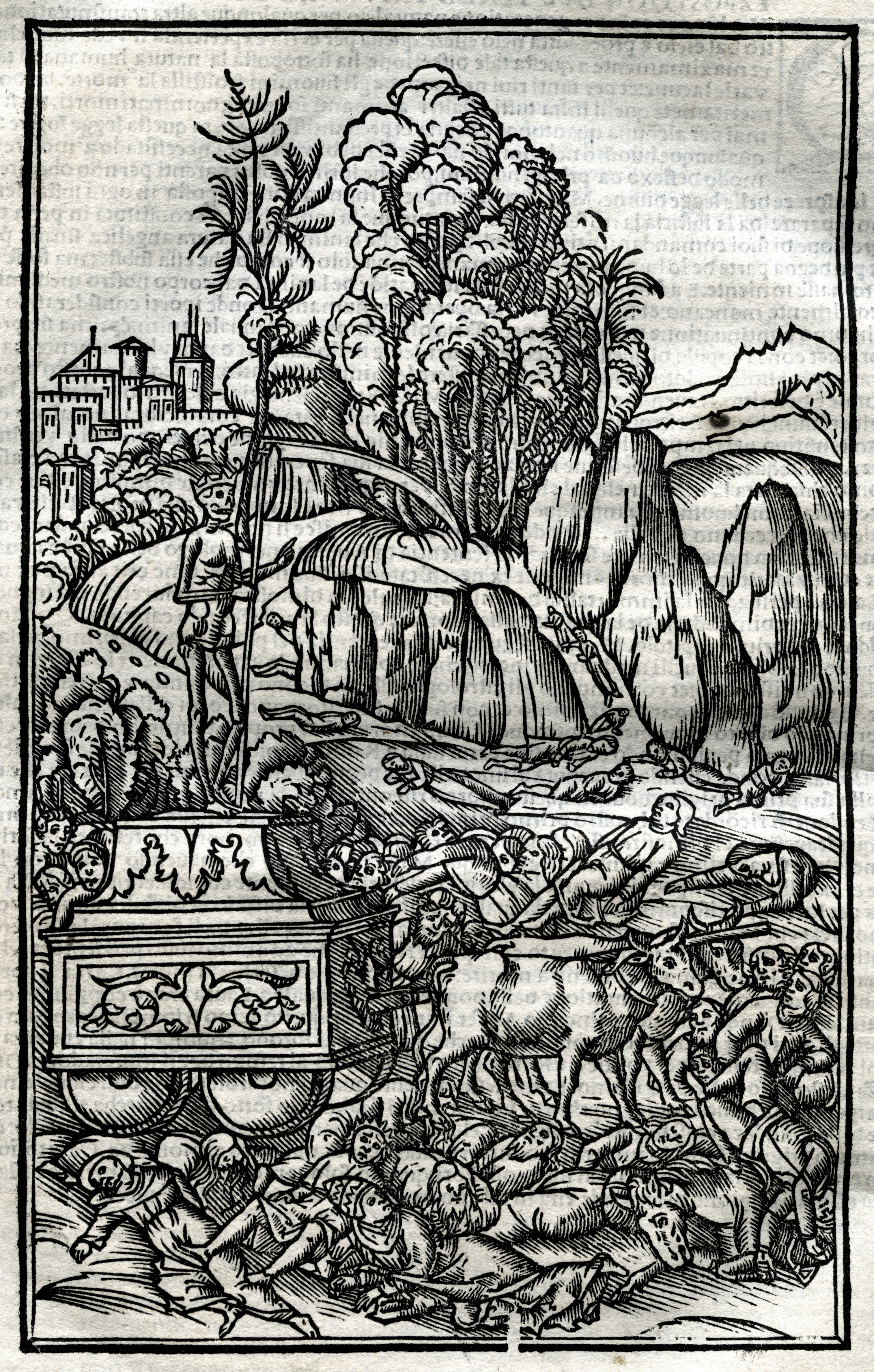
Depiction of Illustration from Petrarch, 1508
Illustration from Petrarch, 1508

A long-time librarian at UMass Amherst and Brown University, Barbara Parker was an avid collector of rare books. Interested in the history of printing, binding, and book design, and herself a bookbinder, Parker collected widely, from early printing to the Victorian book artists of the Chiswick Press.

The Parker Collection contains an eclectic mix of books to illustrate various aspects of the history of the book through 1900. Intended for hands-on instructional use, the collection includes eight volumes printed prior to 1600, a leaf from the Nuremberg Chronicles, and an assemblage of works by Charles Whittingham and the Chiswick Press. In addition to fine examples of binding and illustration, the collection includes works printed by Elsevier, Gregorium de Gregoris, and Domenico Farri, five by Joseph Barbou, and two each by the Aldine Press, Simon Colin, and John Baskerville.

View the Parker collection in the library’s catalog.

Gift of Barbara Parker, May 2009
Language(s): GreekFrenchItalianSpanishEnglishLatin

Subjects

Books--HistoryPrinting--History

Contributors

Parker, Barbara
Parker, George A.

George A. Parker Photograph Album

1876
1 vol., 90 images 0.5 linear feet
Call no.: RG 130 P37
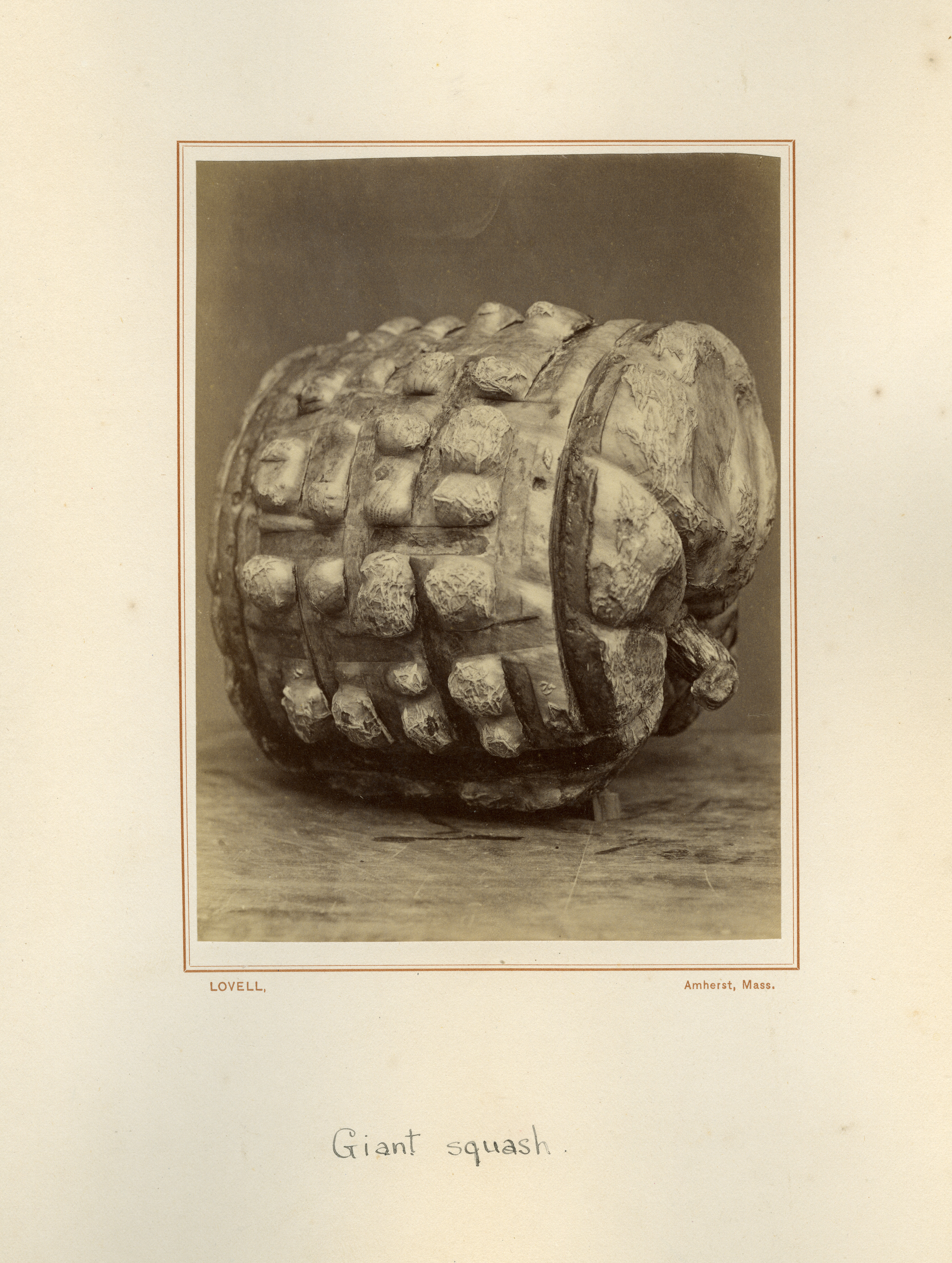
Depiction of The Giant Squash
The Giant Squash

A prominent member of the Massachusetts Agricultural College Class of 1876, George A. Parker (1853-1926) began a career in landscape gardening and the development of parks shortly after graduation. Shortly after the turn of the century, he was appointed Superintendent of Parks in Hartford, Conn., helping to develop Colt Park and a number of smaller properties that turned the city into one of the models for New England. He resigned from his post in January 1926 and died later that year from heart disease.

The Parker Album is a more extensive version of the standard class album for 1876, featuring not only albumen portraits mounted on thick stock of the faculty and students, but almost fifty views of campus. Among these are uncommon images of the major academic buildings, the chapel, and hash house, but also interior and exterior shots of buildings on campus, such as the Botanic Museum and the Durfee greenhouses, and images of the students in military drill. All photographs were taken by John L. Lovell of Amherst.

Gift of George A. Parker, Sept. 1915

Subjects

Massachusetts Agricultural College--Photographs

Contributors

Lovell, John L., 1825-1903Parker, George A

Types of material

Albumen printsPhotographs
Patterson, Charles H.

Charles H. Patterson Papers

1930-1958
2 boxes 1 linear feet
Call no.: FS 089
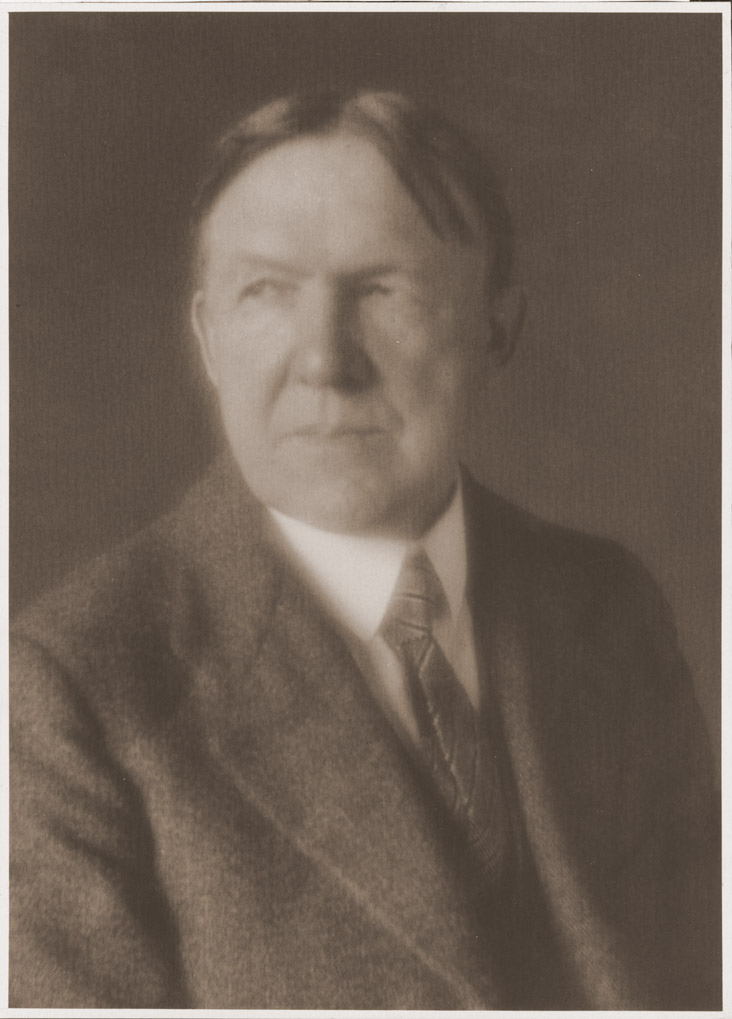
Depiction of Charles H. Patterson.<br />Photo by Frank A. Waugh, 1926
Charles H. Patterson.
Photo by Frank A. Waugh, 1926

For many years, Charles H. Patterson served as head of the Department of Language and Literature at Massachusetts Agricultural College. Born in Smithsonville, Ont., in 1863, Patterson received both a BA (1887) and MA (1893) from Tufts University before launching his teaching career. He joined the faculty at MAC as an assistant professor of English, in 1916, after 13 years at West Virginia University. A former professional actor, he taught courses in modern literature, with a particular interest in drama, and served as department chair for nearly a decade before his sudden death in 1933.

The Patterson Papers contain a small selection of correspondence and notes on English composition and literature as taught at Massachusetts Agricultural College. Most noteworthy, perhaps, is a draft of Patterson’s unpublished book, The Amazing Boucicault.

Subjects

Boucicault, Dion, 1820-1890Drama--Study and teachingMassachusetts Agricultural College--FacultyMassachusetts Agricultural College. Department of English

Contributors

Patterson, Charles H
Peasley, Alonzo A.

Alonzo A. Peasley Diaries

1861-1863
2 vols. 0.2 linear feet
Call no.: MS 608 bd
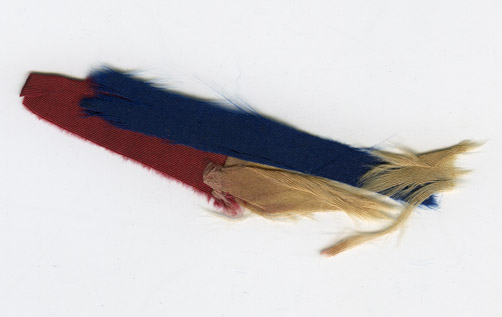
Depiction of Fragments of the 1st Massachusetts Infantry flag
Fragments of the 1st Massachusetts Infantry flag

Born in Dorchester, Mass., Alonzo A. Peasley enlisted in the 1st Massachusetts Infantry in May 1861, only weeks after the outbreak of the Civil War. Sent almost immediately southward, Peasley’s regiment was deployed in the Battles of Glendale and First Bull Run in July, and served with the Army of the Potomac throughout the Peninsular Campaign, Frederickbsurg, and Chancellorsville. As part of the 2nd Division, 3rd Army Corps on July 2, 1863, the 1st Massachusetts suffered a 40% casualty rate during fierce fighting along the Emmitsburg Road in Gettysburg, with Peasley sustaining serious wounds. Hospitalized for several months, he was transferred to the Veterans Reserve Corps to serve out his enlistment. In later life, Peasley worked as a letter carrier in Boston.

Exceptionally well-written, observant, and above all active, Peasley’s diaries offer a fine account of a private’s life in the Civil War. The two volumes include detailed descriptions of life in the 1st Massachusetts Infantry covering the entire period from the day the regiment left the state in June 1861 until the time of Peasley’s wounding at Gettysburg in July 1863. Among the highlights are a minutely detailed, thoroughly extended account of Peasley’s first major engagements (Blackburn’s Ford and First Bull Run), excellent account for the Peninsular Campaign, and a stunning account of the Second Battle of Bull Run.

Gift of William A. Carroll, June 2009

Subjects

Bull Run, 1st Battle of, Va., 1861Bull Run, 2nd Battle of, Va., 1862Peninsular Campaign, 1862United States--History--Civil War, 1861-1865United States. Army--Massachusetts Infantry Regiment, 1st (1861-1864)

Contributors

Peasley, Alonzo A

Types of material

Diaries
Penchina, Claude M.

Claude M. Penchina Papers

1963-2008
12 boxes 18 linear feet
Call no.: FS 129

A solid state physicist, Claude M. Penchina joined the faculty at UMass Amherst in 1965, one year after completing his doctorate at Syracuse and a postdoctoral fellowship at the University of Illinois. A productive researcher and prolific author, his research centered on opto-electronics, but over the years, he also contributed to fields as diverse as physics education, transportation research, and pediatrics.

The Penchina collection includes a range of correspondence, lecture notes, grant proposals, and manuscripts, reflecting every phase of Penchina’s career from graduate school through retirement. The collection includes valuable research notes and communications with other physical scientists, as well as a large quantity of material relating to Penchina’s interest in undergraduate education.

Gift of Claude M. Penchina, July 2005

Subjects

Physics--Study and teachingUniversity of Massachusetts Amherst--FacultyUniversity of Massachusetts Amherst. Department of Physics

Contributors

Penchina, Claude M
Peters, Charles A.

Charles A. Peters Papers

1853-1971 Bulk: 1894-1920
6 boxes 3 linear feet
Call no.: FS 066
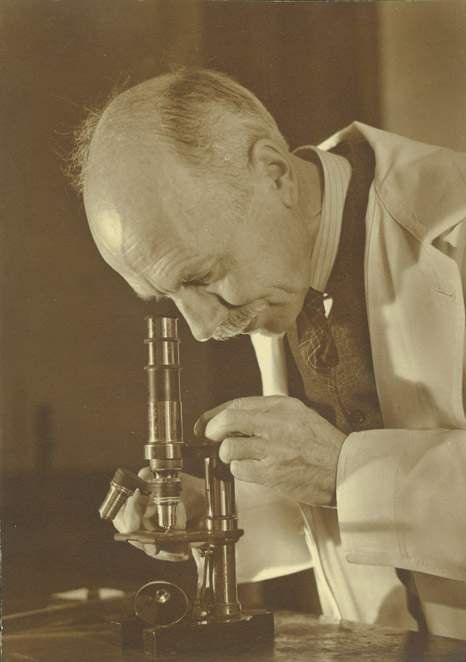
Depiction of Charles A. Peters
Charles A. Peters

Born in Worcester, Mass., in 1875, Charles A. Peters studied chemistry under Charles Goessmann at Massachusetts Agricultural College, graduating with the class of 1897. After receiving his doctorate at Yale in 1901, he joined the faculty at the University of Idaho for several years before completing his education with two years of post-doctoral work in Berlin (1908-1910). Offered the chance to return to his alma mater in 1912, Peters became a cornerstone of instruction in chemistry, teaching courses for many years in quantitative analysis, inorganic chemistry, and analytical chemistry, and serving as chair of the department. Although he retired when he reached the mandatory age in 1945, Peters remained in Amherst. In 1970, he was presented a gold cane by the Amherst selectmen as the town’s oldest man. He died on Oct. 4, 1973, at the age of 99.

A small, but diverse collection, the Peters Papers include an interesting assortment of materials from the early years of Charles Peters’ association with the Massachusetts Agricultural College. In addition to an assortment of correspondence, primarily from the turn of the 20th century, the collection includes a series of notes taken during undergraduate classes in economic botany, horticulture, chemistry, agriculture, and organic chemistry, some teaching materials, and personal photographs.

Subjects

University of Massachusetts Amherst--FacultyUniversity of Massachusetts Amherst. Department of Chemistry

Contributors

Peters, Charles A

Types of material

Photographs
Rapaport, Ionel Florian

Ionel Florian Rapaport Papers

1948-1971
7 boxes 10.5 linear feet
Call no.: MS 642

Born into a Jewish family in the town of Buzau, Romania, the endocrinologist and psychopathologist Ionel Florian Rapaport entered the University of Paris in 1937 to study under the eminent psychologists Maxime Laignel-Lavastine and Charles Blondel. Surviving the war by posing as a Christian, he completed a dissertation on ritual castration, Les Faits de castration rituelle, essai sur les formes pathologiques de la conscience collective (1945), which was published three years later as Introduction à la psychopathologie collective : la secte mystique des Skoptzy. In 1953, Rapaport emigrated to the United States and joined the faculty at the Psychiatric Institute of the University of Wisconsin, where he became noted for research into the social aspects of mental disorders and juvenile delinquency. It was there in 1956, that he discovered a statistical correlation between the incidence of Down Syndrome and exposure to fluorides, a study that became widely cited by opponents of fluoridation of the water supply and widely criticized by proponents. Rapaport died of cancer in 1972.

The Rapaport Papers contain a large quantity of raw data, research notes and correspondence relating to over two decades of research into mental disorders, centered largely upon his study of the link between Down Syndrome and fluoridation. Due to the potential sensitivities of some material in the collection, researchers must agree not to reveal the names of any patients before gaining access.

Gift of Paul Connett, Dec. 2009

Subjects

Down SyndromeFluorides--Physiological effectUniversity of Wisconsin--Faculty

Contributors

Rapaport, Ionel Florian
Ridlen, Susanne S.

Susanne S. Ridlen Photograph Collection

1985-1991
11 boxes 5.5 linear feet
Call no.: PH 025
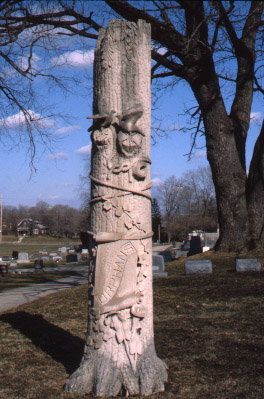
Depiction of In Memory of the Orphans
In Memory of the Orphans

A folklorist at Indiana University Kokomo for many years, Susanne S. Ridlen is noted for her research on grave markers in the Midwest. Her dissertation at Indiana University was on tombstones carved to mimic tree-stumps, a rustic form of funerary monument that enjoyed a vogue during the late nineteenth century. Ridlen’s research culminated in publication of her book Tree-Stump Tombstones: A Field Guide to Rustic Funerary Art in Indiana (Kokomo, 1999).

The Ridlen collection provides an extensive visual record of tree-stump tombstones in Indiana. Organized by county, town, and cemetery, the collection typically includes several views of each marker along with documentation of the individual(s) interred, the date of creation, inscriptions, and any other design motifs employed. These images and data form the basis for Ridlen’s Tree-Stump Tombstones.

Subjects

Sepulchral monuments--Indiana

Contributors

Association for Gravestone StudiesRidlen, Susanne S

Types of material

Photographs
Ross, Laura

Laura M. Ross Papers

1945-2003 Bulk: 1967-1990
13 boxes 6.5 linear feet
Call no.: MS 515
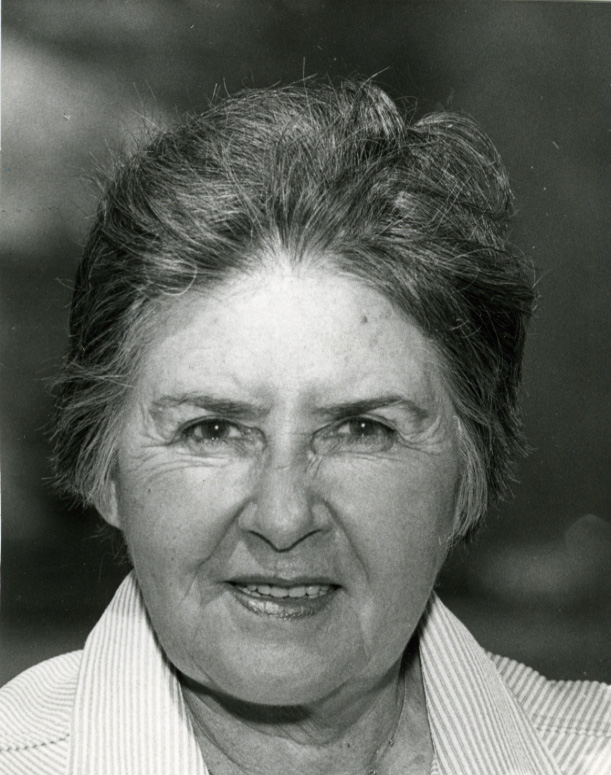
Depiction of Laura Ross
Laura Ross

Born in the coal mining town of Blossburg, Pa., in 1913, Laura Ross (nee Kaplowitz) grew up in poverty as one of seven children of Lithuanian immigrants. In about 1932, Ross married Harry Naddell, a wine merchant, and settled into a comfortable life Brooklyn, N.Y., raising a son and daughter. During the Second World War, however, she became intensely politicized through her work with Russian War Relief, joining the Communist Party and eventually divorcing her les radical husband. Moving to the Boston area, she married Max Ross in 1963, an attorney for the Massachusetts Bay Transportation Authority, and became a noted presence in a wide range of political activities, working for civil rights, the antiwar movement, and for many years, helping to run the Center for Marxist Education in Central Square , Cambridge. Perhaps most notably, between 1974 and 1984, Ross ran for Congress three times on the Communist Party ticket, taking on the powerful incumbent Tip O’Neill and winning almost a quarter of the vote. An activist to the end, Ross died in Cambridge on August 5, 2007.

The Ross papers are the legacy of a highly visible activist, organizer, educator, and member of the Communist Party USA. Heavily concentrated in the period 1967-1990, the collection includes material relating to her affiliation with CPUSA and her work with the Center for Marxist Education in Cambridge, Mass., including information on party membership, platforms, and conventions, minutes from various district committee meetings, material relating to the People’s Daily World, and course information and syllabi. Scattered throughout the collection are materials pertaining to contemporary political issues and elections, particularly the policies associated with Ronald Reagan. Ross was a vocal and persistent opponent of Reaganomics and the nuclear arms race that Reagan accelerated.

Gift of Eugene Povirk, 2007

Subjects

Center for Marxist Education (Cambridge, Mass.)Communist Party of the United States of AmericaPeace movements--MassachusettsPeople’s Daily WorldUnited States--Politics and government--1981-1989

Contributors

Ross, Laura