The University of Massachusetts Amherst
Robert S. Cox Special Collections & University Archives Research Center
CredoResearch digital collections in Credo

Archive

Mather, Jean Paul

Jean Paul Mather Papers
1932-1994
6 boxes 4.5 linear feet
Call no.: RG 003/1 M38
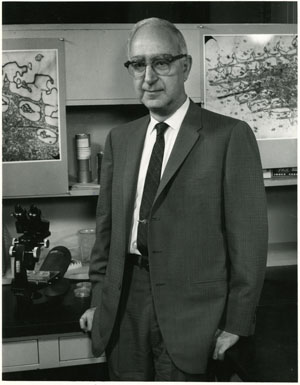
Depiction of Jean Paul Mather
Jean Paul Mather

Jean Paul Mather was the youngest president in his era to lead a land-grant university. He joined the University of Massachusetts in 1953 as Provost, and was appointed President in 1954, at the age of 39. During his tenure, he oversaw major academic restructuring and advocated fiscal autonomy for the University, struggling with state officials to raise salaries for the faculty. His work is credited with building a foundation for the academic strength of the University. Mather left UMass in 1960 to assume the Presidency of the American College Testing Program, and he later became President of the University City Science Center in Philadelphia from 1964 to 1969. In 1969, Mather returned to his alma mater, the Colorado School of Mines, to become head of the mineral economic department.

Correspondence, memos, speeches, reports, biographical material, clippings, memorabilia, photographs and other papers, relating chiefly to Mather’s work as President, University of Massachusetts. Includes material relating to the Freedom Bill (granting the university autonomy in personnel matters), establishment of an exchange program with Hokkaido University, Japan, and Mather’s inauguration (including minutes of the Committee on Inauguration).
Subjects

Hokkaidō DaigakuUniversities and colleges--AdministrationUniversities and colleges--Law and legislationUniversity of Massachusetts Amherst. President

Contributors

Mather, Jean Paul
McFall, Robert James, 1887-1963

Robert James McFall Papers

1918-1926
1 box 0.5 linear feet
Call no.: FS 133
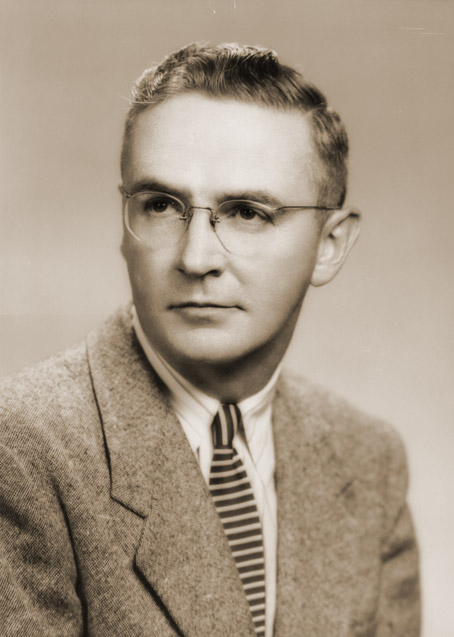
Depiction of Robert J. McFall<br />Photo by Frank A. Waugh, 1927
Robert J. McFall
Photo by Frank A. Waugh, 1927

A specialist in agricultural marketing, Robert J. McFall arrived at the Massachusetts Agricultural College in January 1920 to take up work with the Extension Service. A graduate of Geneva College and Phd from Columbia University (1915), McFall had worked with the Canadian Bureau of Statistics for two years before his arrival in Amherst.

The McFall collection includes a suite of published and unpublished works in agricultural economics, including an incomplete run of Economic Reports from MAC on business conditions (1921-1925), and papers on agricultural cooperation in Massachusetts, municipal abattoirs, business regulation in Canada, agriculture and population increase, and the New England dairy market. Of particular note is a monograph-length work co-authored by McFall and Alexander Cance, entitled “The Massachusetts Agricultural College in its Relations to the Food Supply Program of the Commonwealth.”

Subjects

Agricultural economicsCance, Alexander E. (Alexander Edmond), 1874-Dairy products industry--MassachusettsFood supply--MassachusettsMassachusetts Agricultural College--FacultyMassachusetts Agricultural College. Department of Agricultural Economics

Contributors

McFall, Robert James, 1887-1963
McNeal, Robert Hatch, 1930-

Robert Hatch McNeal Papers

1955-1986
8 boxes 4 linear feet
Call no.: FS 079

Robert H. McNeal, a renowned expert on the history of the Soviet Union, joined the University faculty in 1969 and served as the head of the History department from 1971 to 1975. McNeal wrote authoritative works on Soviet leadership, contributed to the World Book and a number of other reference works, and taught many History courses on Russian and Soviet history. His work, however, came to a tragic end in 1988 when his car was broadsided pulling out of a gas station near Princeton University. Born in 1930 in Newark, New Jersey, McNeal earned his B.A. From Yale University in 1952, his M.A. from Columbia in 1954, and Ph.D. from the same school in 1958.

Representing mainly his work as a teacher at the University of Massachusetts, McNeal’s papers include lecture notes, ordered alphabetically by topic as well as several folders of research and article manuscripts on Pushkanen. Also included in the collection are two years of professional correspondence from 1968-1970, biographical sketches and photographs of important historical figures, and several Soviet Christmas cards from the 1950s.

Subjects

University of Massachusetts Amherst--FacultyUniversity of Massachusetts Amherst. Department of History

Contributors

McNeal, Robert Hatch, 1930-
Miles, Manly, 1826-1898

Manly Miles Papers

ca.1882-1886
1 box 0.5 linear feet
Call no.: FS 134
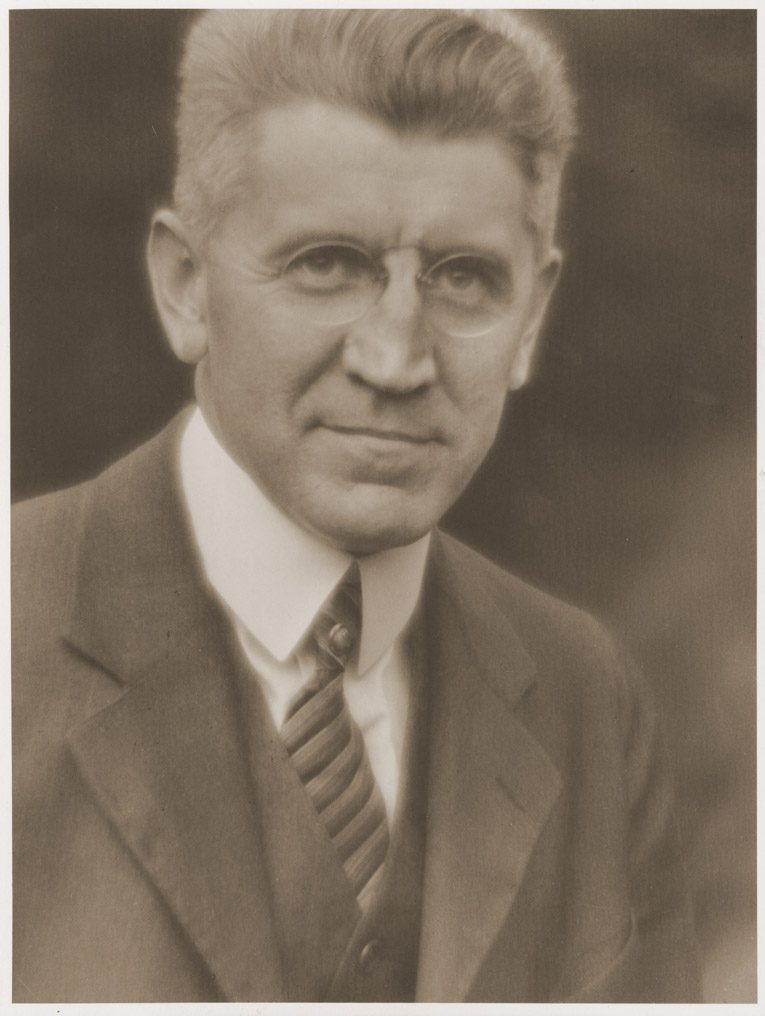
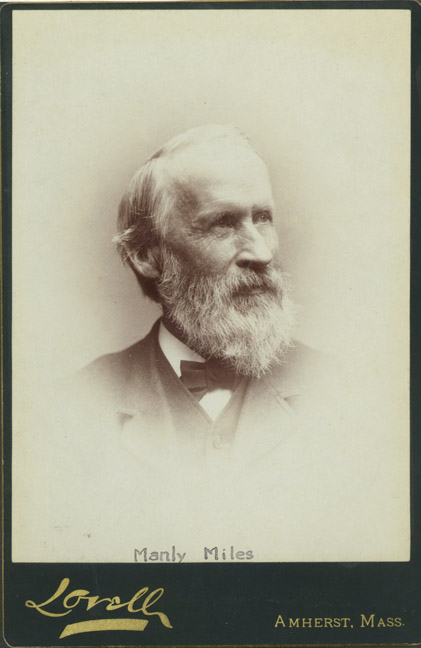
Depiction of Manly Miles
Manly Miles

A pioneer in scientific agriculture, Manly Miles was born in Homer, N.Y., in 1826. A naturalist by inclination with a strong practical streak, Miles took a degree in medicine at Rush Medical College (1850) and practiced as a physician for eight years. His interests in the natural sciences, however, soon left him to abandon medicine, and after accepting a position with the State Geological Survey in Michigan from 1858-1861, he turned to academia. An early member of the faculty at Michigan State College, and later Illinois State College, he was recruited to the agricultural faculty at Massachusetts Agricultural College by President Paul Chadbourne in 1882. Four years later, however, following Chadbourne’s untimely death, Miles returned to Lansing, Mich., where he remained until his death in 1898. During his career, he was noted for his interests in organic evolution and plant and animal breeding.

The Miles collection contains 8 notebooks containing notes on reading. In addition to a general notebook on scientific matters, the remaining seven are organized by subject: Breeds of animals, Farm buildings, Farm economy, Feeding and animals, Implements, Manures, and Stock breeding.

Subjects

Agriculture--Study and teachingAnimal breedingMassachusetts Agricultural College--FacultyMassachusetts State College. Department of Agricultural Economics

Contributors

Miles, Manly, 1826-1898

Types of material

Notebooks
Nanney, David Ledbetter, 1925-

David Ledbetter Nanney Papers

1948-2008
13 boxes 6.5 linear feet
Call no.: MS 592
Depiction of Tracy M. Sonneborn
Tracy M. Sonneborn

The experimental ciliatologist David L. Nanney spent much of his career studying the protozoan Tetrahymena. Under Tracy M. Sonneborn at Indiana University, he completed a dissertation in 1951 on the mating habits of Paramecium, but soon after joining the faculty at the University of Michigan, he turned his attention to Tetrahymena. During his subsequent career in Ann Arbor (1951-1959) and at the University of Illinois (1959-1991), Nanney made a series of fundamental contributions to the cytology, genetics, developmental biology, and evolution of ciliates, influencing the work of other biologists such as Joe Frankel, Janina Kaczanowska, Linda Hufnagel, and Nicola Ricci. Since his retirement in 1991, Nanney has remained in Urbana.

The Nanney Papers include a dense run of professional correspondence with ciliatologists, geneticists, students and colleagues regarding his pioneering research on ciliates and other professional matters. Of particular note is an extensive correspondence with Sonneborn, accompanied by several biographical essays written after Sonneborn’s death, and a large body of correspondence of the controversial reorganization of the biological sciences departments at the University of Illinois in the 1970s. The collection also includes a selection of Nanney’s writings and a handful of photographs.

Subjects

Developmental biologyEvolution (Biology)Protozoans--GeneticsTetrahymena--GeneticsUniversity of Illinois--Faculty

Contributors

Allen, SallyBleyman, Lea KCorliss, John OFrankel, Joseph, 1935-Kaczanowski, AndrzejMcKoy, J. WynneNanney, David Ledbetter, 1925-Nyberg, Dennis Wayne, 1944-Orias, EduardoRicci, NicolaSiegel, RichardSonneborn, T. M. (Tracy Morton), 1905-
Nash, William A.

William A. Nash Papers

ca.1945-2006
13 boxes 19.5 linear feet
Call no.: FS 125

Access restrictions: Temporarily stored offsite; contact SCUA in advance to request materials from this collection.

In 1944, William Nash graduated as valedictorian of Illinois Institute of Technology in civil and mechanical engineering and five years later he received his Ph.D. in mechanical engineering from the University of Michigan. Pursuing a career in naval engineering, Nash worked as a research engineer at the Naval Ship Research and Development Center in Washington, D.C. (1949-1954) and as a structural researcher at Bethesda Naval Institute (1953-1957), where he participated in the deepest recorded naval dive and reverse engineering of recovered Soviet submarines off the coast of Norway, the details of which remain classified. After nine years teaching mechanical engineering at the University of Florida, Nash joined the Department of Civil Engineering at UMass in 1967, where he remained until his retirement in 1992. During his career, Nash also served as a consultant for the U.S. Navy, U.S. Air Force, Lockheed International, General Electric and the Jet Propulsion Laboratory.

The Nash Papers contain correspondence, publications, and research notes documenting William Nash’s varied academic work and teaching as an engineer, along with selected work of his students.

Subjects

Marine engineersUniversity of Massachusetts Amherst--FacultyUniversity of Massachusetts Amherst. Department of Civil Engineering

Contributors

Nash, William A
Natural Farmer

The Natural Farmer

1999-2005
26 items (digital)
Call no.: Digital

Published quarterly by the Northeast Organic Farming Association, The Natural Farmer is a widely circulated newspaper devoted to the support of organic farming. These files are made available courtesy of the editors, Jack Kittredge and Julie Rawson of NOFA Massachusetts.

Subjects

Farming--United StatesOrganic farmersOrganic farming

Contributors

Northeast Organic Farming Association
Noffsinger, Mark G.

Mark G. Noffsinger Collection

1964-1969
1 box 0.5 linear feet
Call no.: FS 135

Mark G. Noffsinger’s tenure as Associate Dean of Students at UMass Amherst was relatively brief, but tumultuous. Brought in during the fall semester 1964 as coordinator of student activities, he was promoted to Director of the Student Union in 1966 and Associate Dean of Students in 1968. Although he earned a reputation as a supporter of the student press, he became a focal point of controversy during the school year 1967-1968, when he prohibited the sale of the underground “hippie” newspaper, Mother of Voices on campus. Published by UMass students, the paper drew wider fire when John Norton and David Bourbeau were arrested and convicted on charges of selling obscene matter to a minor. The Mother of Voices folded in March 1969. After resigning in 1969 to accept a position at Baldwin-Wallace College, Noffsinger went on to a distinguished career as a university administrator before his death in 1994.

Tightly focused on the controversy in 1968 over banning sale of the Mother of Voices in the UMass Student Union, the Noffsinger collection includes a folder of newspaper clippings relating to underground press publications at UMass and other colleges in the Commonwealth, along with a run of the offending periodical retained by the office of the Dean of Students’ office. Additional copies of the periodical are located in the Social Change Periodicals Collection.

Subjects

Freedom of the pressMother of VoicesUnderground press publications--MassachusettsUniversity of Massachusetts Amherst--FacultyUniversity of Massachusetts Amherst. Dean of Students

Contributors

Noffsinger, Mark G
North Hadley Farmers Club

North Hadley Farmers Club Records

1856-1863
1 vol. 0.25 linear feet
Call no.: MS 616 bd

At a December 1856 meeting, the farmers of North Hadley, Mass., approved the proposal that “the interest of Agriculture would be materially promoted by the formation of a farmers club.” Drafting a constitution, they elected Lewis Fish President, Joseph H. Shattuck Vice President, and Levi Stockbridge (a key figure in the early history of the Massachusetts Agricultural College) Secretary, and for several years thereafter, they met regularly to pursue their mission of elevating farming through education and the application of scientific principals to agriculture. The club appears to have folded during the later years of the Civil War.

The minute book contains a relatively detailed record of the meetings of a typical late-antebellum farmers’ society in New England. Typically held during the slower seasons, the meetings centered around discussions of new methods for improving the profitability of farming, from proper plowing to manuring, breeding, marketing, and the various “experiments they have tried” on their farms, but some discussions ran into debates over the morality of tobacco farming or general ideas for improving the social image and status of farming. The minute book includes relatively detailed synopses of each meeting, with the entries prior to 1861 tending to be a bit more extensive.

Subjects

Farming--Massachusetts--North HadleyNorth Hadley (Mass.)--HistoryTobacco

Contributors

North Hadley Farmers ClubStockbridge, Levi, 1820-1904

Types of material

Minute books
Norwich (Conn.) Ironmonger

Norwich (Conn.) Ironmonger's Account book

1844-1847
1 vol., 270p. 0.25 linear feet
Call no.: MS 540 bd

Straddling three rivers with easy access to Long Island Sound and the Atlantic, Norwich, Conn., was an important center during the mid-nineteenth century for the shipment of goods manufactured throughout eastern Connecticut.

Despite covering a limited period of time, primarily 1844 and 1845, the account book of an unidentified iron monger from Norwich (Conn.) provides insight into the activities of a highly active purveyor of domestic metal goods. The unidentified business carried a heavy trade in the sale or repair of iron goods, as well as items manufactured from tin, copper, and zinc, including stoves of several sorts (e.g., cooking, bricking, coal), ovens, pipes, kettles and coffee pots, ice cream freezers, lamps and lamp stands, reflectors, and more. The firm did business with individual clients as well as mercantile firms, corporations such as the Mill Furnace Co., organizations such as the Methodist Society, the city of Norwich and County of New London, and with local hotels.

Subjects

Hardware industry--ConnecticutIron industry and trade--ConnecticutNorwich (Conn.)--Economic conditions--19th centuryStoves

Types of material

Account books