The University of Massachusetts Amherst
Robert S. Cox Special Collections & University Archives Research Center
CredoResearch digital collections in Credo

Archive

Lederle, John William, 1912-

John W. Lederle Papers
1947-1983 Bulk: 1960-1970
32.5 linear feet
Call no.: RG 003/1 L43
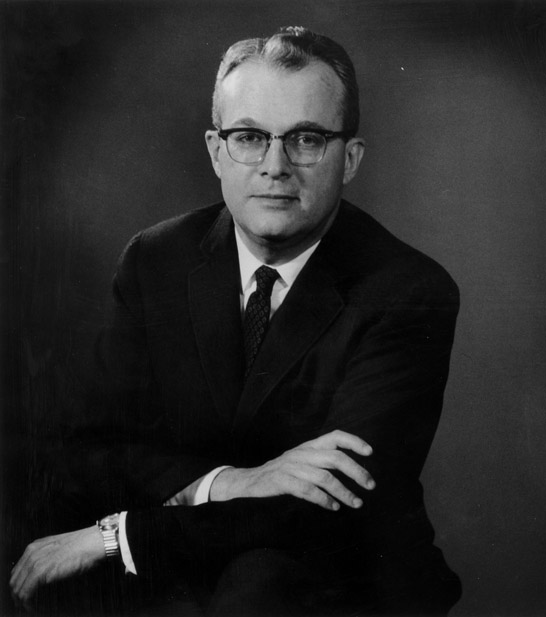
Depiction of John W. Lederle
John W. Lederle

John Lederle played a large role in shaping the Amherst campus as it looks today, transforming UMass Amherst into a nationally respected research university and “great public center for excellence in higher education.” Born in Royal Oak, Michigan, Lederle received his Ph.D. from the University of Michigan in 1942. Admitted to the Michigan Bar in 1936, he worked with a Detroit law firm from 1936 to 1940 before joining the political science department at Brown University from 1941 to 1944. He returned to the University of Michigan in 1944, filling a number of positions until 1960, when the University of Massachusetts elected him President. Under Lederle’s leadership, the Amherst campus enjoyed its greatest period of growth. From 1960 to 1970, student enrollment more than tripled and faculty salaries nearly doubled. The academic program expanded greatly, particularly at the graduate level, and under his watch, the university instituted an academic press, a public radio station, and collaborative arrangements between the local colleges. The University system also evolved in the Lederle years, with the establishment of the Boston campus in 1964 and the medical school in Worcester in 1962.

The Lederle Papers include professional correspondence, administrative records, subject files, committee notes, reports, and clippings; Extra-University records that document Lederle’s involvement and interactions with governmental and non-governmental organizations at the state, regional, and national levels; personal correspondence, speeches, bibliographies of his writings, biographical information, a transcript of an oral history describing his administration, and materials relating to his professional activities that followed his presidency; and a series of confidential records.
Subjects

University of Massachusetts Amherst. President

Contributors

Lederle, John William, 1912-
Leland, James

James Leland Daybook

1854-1855
1 vol. 0.25 linear feet
Call no.: MS 094

Owner of a general store in Enfield, Massachusetts. Includes notations for the sale of a wide variety of goods (notably Know Nothing hats), names of customers (both individuals, particularly Irish, and businesses), and types of payment (cash, barter, and services).

Subjects

Barter--Massachusetts--Enfield--History--19th centuryConsumers--Massachusetts--Enfield--History--19th centuryEnfield (Mass.)--Economic conditions--19th centuryEnfield (Mass.)--Ethnic relations--19th centuryGeneral stores--Massachusetts--EnfieldIrish American Catholics--Massachusetts--Enfield--History--19th centuryJ.M. Crosby (Firm)Leonard Woods (Firm)Minot Manufacturing CompanyNativism--History--19th centuryShopping--Massachusetts--Enfield--History--19th centurySwift River Company

Contributors

Leland and Smith Co.Leland, James

Types of material

Daybooks
Leonard, Samuel B., b. 1807

Samuel B. Leonard Account Book

1833-1845
1 vol. 0.25 linear feet
Call no.: MS 206 bd

Blacksmith from Foxborough, Massachusetts. Documents the various kinds of work performed, such as mending chain links, shoeing horses, bolting and riveting wagons, repairing stoves, and the prices charged for such work. Includes customers arranged by surname and notations of the settlement of long-standing debts (without mention of the methods of payment).

Subjects

Blacksmithing--Massachusetts--Foxborough--History--19th centuryBlacksmiths--Massachusetts--Foxborough--Economic conditions--19th centuryFoxborough (Mass.)--Economic conditions--19th centuryFoxborough (Mass.)--History--19th century

Contributors

Leonard, Samuel B., 1807-

Types of material

Account books
Lesinski-Rusin family

Lesinski-Rusin Family Papers

1908-1925
2 boxes 1 linear feet
Call no.: MS 131
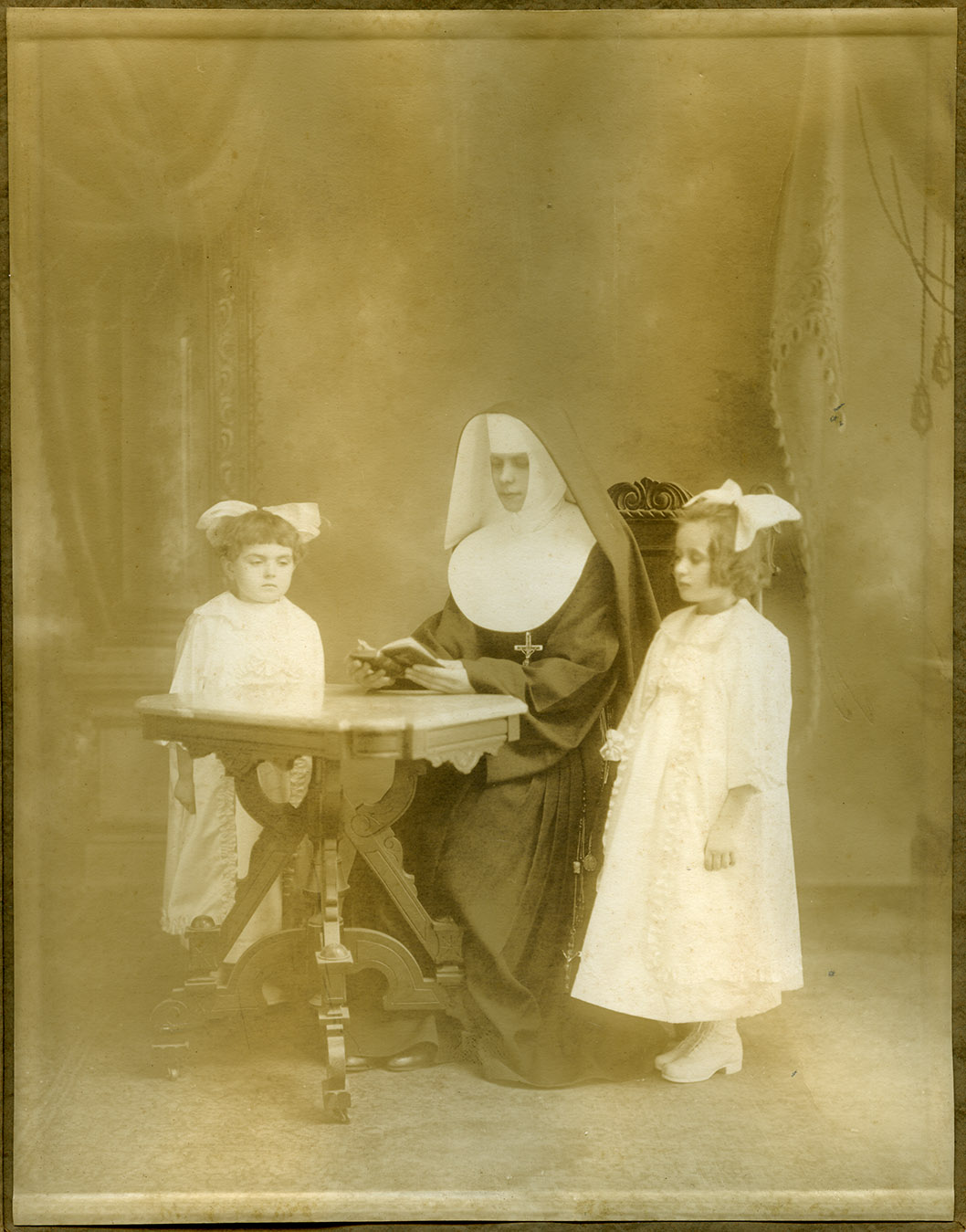
Depiction of Nun and two girls at first communion, ca.1920
Nun and two girls at first communion, ca.1920

Polish immigrants Jan Lesinski and his wife Weronika (Rusin) settled in Easthampton, Massachusetts, in 1909 and worked in the textile mills there for decades. Married in 1922, the couple raised a son and daughter in their home on Franklin Street. Weronika Lesinski died in Northampton in 1961, her husband following twelve years later.

The Lesinski and Rusin family collection reflect the lives of an average working-class Polish family from Easthampton, Mass., during the early twentieth century. Numerous family photographs document important occasions for the families, such as baptisms, first communions, and weddings, and the photographic postcards and commercial postcards document their relationships, interests, and travel.

Gift of Mary Ryan, June 1990
Language(s): Polish

Subjects

Lesinski familyPolish Americans--Massachusetts--EasthamptonRusin familySoldiers--Massachusetts--Easthampton--PhotographsWorld War, 1914-1918--Photographs

Types of material

PhotographsPostcardsScrapbooks
Levasseur, Raymond Luc

Raymond Luc Levasseur Trial transcripts

1989
12 linear feet
Call no.: MS 334

For over a decade, the radical United Freedom Front waged a concerted revolutionary campaign, confronting U.S. imperialism in Central America, apartheid, and other issues. Led by Raymond Luc Levasseur (b. 1940), the UFF carried out a string of bank robberies and bombings in the northeast, usually providing forewarning to avoid casualties. On November 4, 1984, following an intense nationwide manhunt, the FBI succeeded in apprehending Levasseur and his wife Patricia Gros near Deerfield, Ohio, and within a year, most of the remaining members of the UFF were under arrest. Levasseur and six of his comrades were eventually sentenced to long terms for the robberies and bombings and (two of them) for the death of a New Jersey state trooper. The government’s attempt in 1989 to bring charges of seditious conspiracy and violations of the RICO act, however, ended in an acquittal on most charges and a hung jury on the rest. Having served nearly half of his 45 year sentence, Levasseur was released from prison in November 2004.

The Levasseur Collection consists of the complete transcripts of the 1989 sedition trial of the “Ohio Seven” (US v. Levasseur).

Subjects

Political prisoners--United StatesSeditionUnited Freedom Front

Contributors

Levasseur, Ray Luc
Lewin, Julie

Julie Lewin Papers

1947-2003
11 boxes 5.5 linear feet
Call no.: MS 454

Julie Lewin began her career as a freelance writer and newspaper journalist, and went from writing articles about sexual abuse of children and women’s prison reforms to lobbying for the protection and treatment of animals. The collection documents Lewin’s efforts to uphold the rights of animals, and in particular focuses on her opposition to the pet industry and to the use of animals in research.

Subjects

Animal rights--ActivismAnimal rights--AdvocatesAnimal rights--Law and legislationAnimal welfare--RescueConnecticut Humane SocietyGreyhound racingHuntingPet industryTrapping--LegholdVivisection-Animal research

Contributors

Lewin, Julie
Lewin, Leonard C.

Leonard C. Lewin Papers

1930s-1994
20 boxes 28.5 linear feet
Call no.: MS 491

When Leonard Lewin’s satire Report from Iron Mountain was published in November 1967, as the U.S. was ramping up its involvement in Vietnam, it struck an immediate chord. Purporting to be a document leaked from a special study group in the highest level of the government, the Report examined the peril that would result to the economy and social stability of the nation should a condition of “permanent peace” break out.

The Lewin Papers offer insight into the history of the reception of Report from Iron Mountain and on Leonard Lewin’s career as a writer. Included in the collection are materials relating to his education at Harvard, his social and political background, his writing, and the copyright infringement legal case concerning the Report. Of additional interest are letters from his wife Iris, a union organizer during the late 1930s and early 1940s, and from his father, who ran sugar plantations in Puerto Rico and the Dominican Republic and a refinery in Indianapolis.

Subjects

Labor unions--ConnecticutVietnam War, 1961-1975

Contributors

Lewin, Leonard C
Lewis, Edward M.

Edward M. Lewis Papers

1910-1936
6 boxes 2.5 linear feet
Call no.: RG 003/1 L49

A one time baseball player, Edward M. Lewis was hired as a Professor of Language and Literature at the Massachusetts Agricultural College, serving as the College’s President from 1924 to 1927.

Includes personal and official correspondence primarily while Dean and President of Massachusetts Agricultural College, particularly with President Kenyon Leech Butterfield (1868-1935); administrative memoranda; student records; other records generated while Dean and President of MAC on such subjects as relations of the college with state officials, curriculum, purpose of the college, desirability of compulsory chapel, establishment of Jewish fraternities, and women’s education; also, transcripts of addresses, newspaper clippings, and biographical material. The collection includes nothing relating to Lewis’s baseball or teaching careers.

Subjects

Massachusetts Agricultural College. FacultyMassachusetts Agricultural College. President

Contributors

Lewis, Edward M
Lewis, Gertrude Minnie, 1896-

Gertrude M. Lewis Papers

ca.1920-2001
6 boxes 3 linear feet
Call no.: FS 096
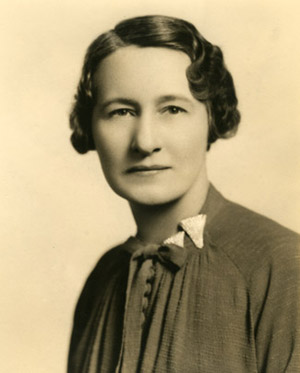
Depiction of Gertrude
Gertrude "Jean" Lewis, ca.1935

Overcoming a deeply impoverished childhood, Gertrude Lewis struggled to build a career in education, putting herself through college and graduate school. At the age of 32, she earned a bachelor’s degree from Ohio State, continuing on to a masters degree at New York University (1933), and finally, at age 51, a PhD from Yale (1947). For many years after receiving her doctorate, Lewis was employed as a Specialist for Upper Grades with the U.S. Office of Education in Washington. Among other career highlights, Lewis spent two years in Japan (1950-1951) as a Consultant in Elementary Education in the Education Section of the Allied Occupation government (SCAP). Lewis outlived her life partner, Ruth Totman, dying at home on December 10, 1996, a few months after her one hundredth birthday.

The Lewis Papers document the work and life of an educator of the masses, a traveler of the world, and a woman of the twentieth century. Documents pertaining to her work as an educator of both young students and veteran teachers show the changes within the theory and practice of pedagogy over time, over various geographic locales, and also highlight her role in that change. This collection also documents the numerous on-going side projects on which Lewis worked, including fostering creativity in schoolchildren, a biography of Franklin D. and Eleanor Roosevelt, and her own poetry and prose.

Subjects

Education, Elementary--JapanEducation, Elementary--United States--HistoryEducation--EvaluationEducation--United States--HistoryHealth Education--United StatesJapan--Civilization--American influencesStudents--Health and hygiene

Contributors

Lewis, Gertrude Minnie, 1896-Totman, Conrad DTotman, Ruth J

Types of material

Motion pictures (Visual work)Photographs
Lewis, J. Roy

J. Roy Lewis Papers

1910-1949
1 box 0.25 linear feet
Call no.: MS 024

A native and long-time resident of Holyoke, Mass., J. Roy Lewis was a prominent businessman in the lumber trade and a model of civic engagement during the decades prior to the Second World War. A 1903 graduate of Phillips Academy, Lewis worked as an executive with the Hampden-Ely Lumber Company and was active in trade associations as well as civic and political groups such as the Kiwanis Club, the Chamber of Commerce, the Tax Association, and the Holyoke Planning committee. Locally, he may have been best known as the writer of hundreds of letters and opinion pieces to the editors of the Holyoke Transcript-Telegram and the Springfield Republican. An ardent conservative, Lewis was a vocal opponent of women’s suffrage, prohibition, and anything he deemed contrary to the interests of business.

This small collection, consisting of a scrapbook and a handful of miscellaneous letters from J. Roy Lewis are a testament to the mindset of a conservative businessman during a progressive age. Lewis’s letters to the editor and his small surviving correspondence touch on a wide range of political and social issues of the day, most notably women’s suffrage, prohibition, business support, the New Deal, and the Depression.

Subjects

Depressions--1929Holyoke (Mass.)--HistoryUnited States--Economic policy--1933-1945

Contributors

Lewis, J. Roy

Types of material

Letters to the editorScrapbooks