The Pioneer Valley chapter of Parents & Friends of Lesbians and Gays (PFLAG) was established in 1986 by Jean and James Genasci, parents of a gay son and advocates of civil rights for gays and lesbians. As the group’s local coordinators, the Genascis conducted workshops on homosexuality and homophobia, and offered support to gays and lesbians and their families.
The collection consists chiefly of newspaper clippings containing articles about the work of PFLAG as well as announcements for upcoming meetings and events. Bulletins and newsletters issued by PFLAG document their activities, in particular their support of the 1989 Massachusetts gay rights bill, as do photographs featuring demonstrations and exhibits.
Subjects
Gay rightsGays--Family relationshipsLesbians--Family relationshipsParents of gays--Massachusetts
Contributors
Parents & Friends of Lesbians and Gays (Pioneer Valley, Mass.)
In the years following the Civil War, Alfred A. Parker operated a stove and tinware shop in Orange, Mass., trading with individuals and business in the nearby towns of New Salem and Erving. A native of New Hampshire and resident of Missouri in the years prior to the war, Parker had four children with his wife Frances (Whipple), two of whom survived him at his death in 1907.
Alfred Parker’s daybooks document his business transactions with local residents and firms, including the Gold Medal Sewing Machine Co., the Orange Manufacturing Co., and the Rodney Hunt Machine Co. The entries note charges for labor (especially soldering), the cost of stoves, pipe, kettles of various sorts, roofing material, and information about shipping costs.
Subjects
Freight and freightage--Rates--Massachusetts--19th centuryGold Medal Sewing Machine CompanyKettles--Prices--Massachusetts--Orange--19th centuryNew Salem (Mass.)--HistoryOrange (Mass.)--Economic conditions--19th centuryOrange Manufacturing Company (Orange, Mass.)Pipe--Prices--Massachusetts--Orange--19th centuryRodney Hunt Machine CompanyRoofing--Prices--Massachusetts--Orange--19th centurySolder and soldering--Costs--19th centuryStove industry and trade--Massachusetts--Orange--19th centuryStoves--Prices--Massachusetts--Orange--19th centuryTinsmithing--Massachusetts--Orange--19th centuryTinsmiths--Massachusetts--Orange--Economic conditions--19th century
The son of Stephen and Abigail (Bailey) Parker, Amos Parker was born in Bradford, Mass., on Jan. 2, 1792, but lived most of his adult like in neighboring Groveland. Although his father died when he was young, Parker came from a family that had been settled in the region for at least a century, and enjoyed some success as a trader and proprietor of a general store.
Parker’s accounts include goods for sale (such as lumber and hardware) and the methods and form of payment (principally cash but also in exchange for labor or commodities like butter or eggs). The volume also documents Parker’s role in the burgeoning shoe industry exchanging and receiving shipments of shoes, and supplying local shoemakers with tools..
Acquired from Charles Apfelbaum, 1987
Subjects
Aaron P. Emerson Co. (Orland, Me.)Barter--Massachusetts--Essex County--History--19th centuryGeneral stores--Massachusetts--GrovelandHardware--Massachusetts--Essex County--History--19th centuryLumber trade--Massachusetts--Essex County--History--19th centuryMerchants--Massachusetts--Essex County--Economic conditions--19th centuryShoe industry--Massachusetts--Essex County--History--19th century
Named for Joseph Hawley, a local leader in the American Revolution, the town of Hawley was first settled in 1760 by residents of Hatfield, Massachusetts. Situated in Franklin County, Hawley was officially incorporated as a town in 1792. Today the town is host to a few small businesses, farms, and fewer than 500 residents.
The collection consists of copies of manuscripts, publications, and genealogical notes all related to the history of Hawley collected by researcher Harrison Parker.
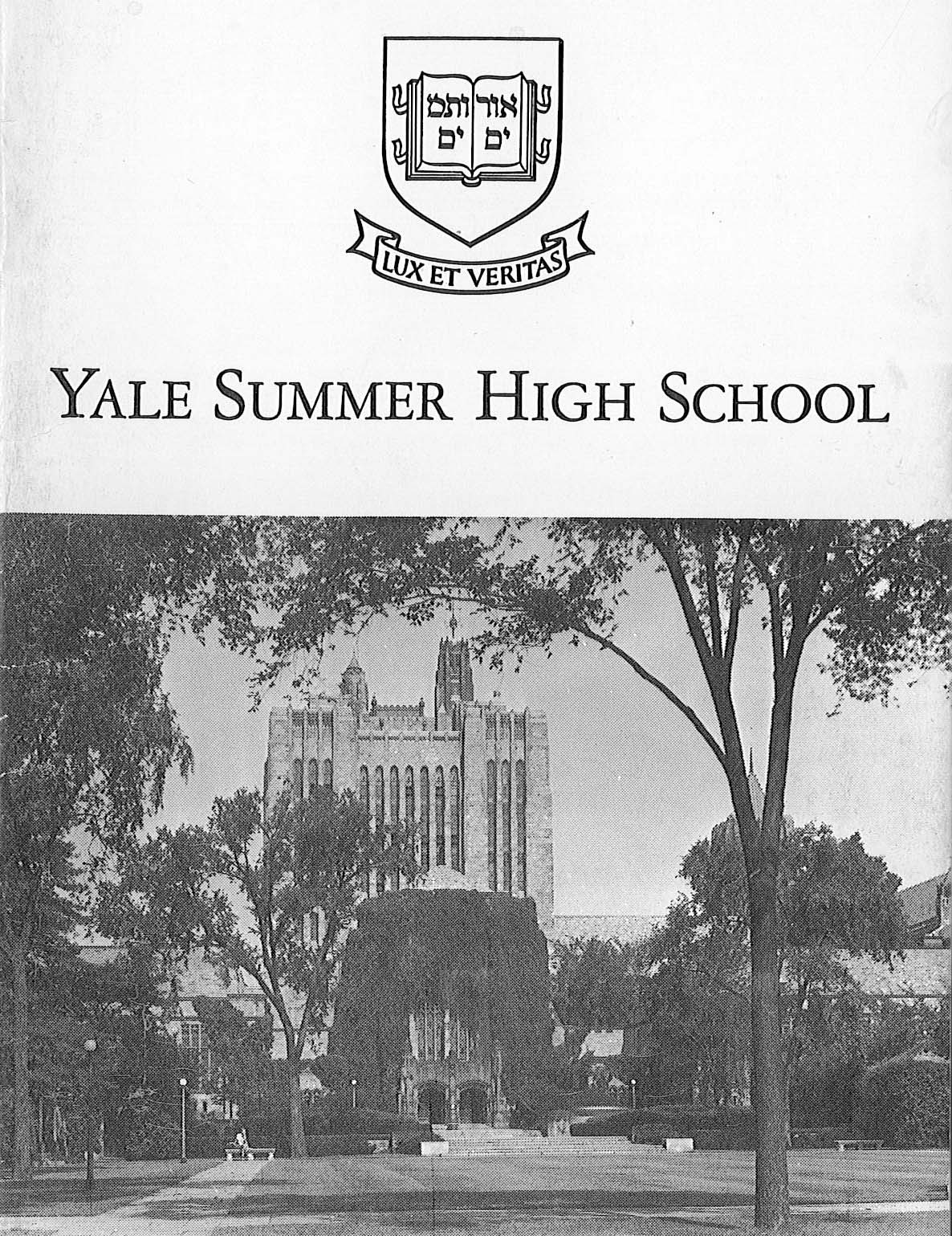
The educator and writer, Lawrence “Larry” Paros was born in Springfield, Mass., in 1934. After undergraduate work at UMass Amherst (1958), Paros earned his masters degree from Yale in American Diplomatic History and Russian Studies, and began teaching high school in Connecticut, where he became a lightning rod for promoting discussions of the Vietnam War among his students. The Yale Summer High School came calling in 1967, giving Paros the reins to a three-year old program that brought underprivileged youth from across the country for rigorous pre-collegiate study at the Yale Divinity School. Begun as a progressive response to the federal “War on Poverty,” Paros soon sought to move the school in a more radical direction. Along with a small group of concerned educators, he redesigned the curriculum to deal directly and deeply with the most challenging contemporary issues in America and to address fundamental questions about the human condition, race, and the future of the country. Paros subsequently founded and led two experimental schools in Providence, R.I., and has written prolifically on topics ranging from education to etymology.
The Paros papers are the product of an innovator in alternative education and a advocate for social justice, and are particularly rich in documenting the efforts of educators in the 1960s and 1970s to make education relevant to contemporary students. The collection includes a rich record of Paros’s brief time as director of the Yale Summer High School (YSHS), including organizational, pedagogical, and administrative documents, dozens of photographs, and an important set of DVDs and transcripts of interviews with former students, teacher, and administrators from the 1968 cohort, recorded for the film Walk Right In. Paros’s work in alternative education is also well represented, with materials from his two schools in Providence (School One and the Alternative Learning Project).
Subjects
African American high school studentsAlternative EducationAlternative educationYale Summer High School
In 1801, the Limington (Maine) Preparative Meeting–the forerunner of the Parsonsfield Monthly Meeting–was launched, under the care of the Falmouth (Maine) Monthly Meeting. In 1888, the Parsonsfield Preparative Meeting, begun in 1846, became the Parsonsfield Monthly Meeting, and joined the newly-formed Parsonsfield Quarterly Meeting including Parsonsfield in Maine, and Sandwich in New Hampshire. By 1938, this quarterly meeting returned to the Falmouth Quarterly Meeting, and the Parsonsfield Monthly Meeting went with it. By the late 1990’s, the monthly meeting had moved to Kezars Falls (Maine), and was laid down a few years later.
The collection includes a single folder of four newsletters from 1984 (Feb, Mar, Apr, Jul).
Gift of New England Yearly Meeting of Friends, April 2017
Subjects
Parsonsfield (Me.)--Religious life and customsQuakers--MaineSociety of Friends--Maine
A distinguished scholar of contemporary Japan, Herbert Passin was born in Chicago on Dec. 16, 1916. After completing a doctorate in anthropology in 1941, Passin was inducted into the Army and sent to the Army’s Japanese language school in Ann Arbor, Michigan, for training. Assigned to duty in Tokyo in December 1945, he became chief of the Public Opinion and Sociological Research Division under Gen. Douglas MacArthur. During his tour of duty, Passin coordinated a series of sociological studies of Japanese village life to help guide U.S. Occupation policy, particularly as it dealt with land and labor reform.
The Passin Collection contains reports and notes of sociological surveys of two Japanese villages, Yuzurihara and Yawatano, conducted by U.S. Occupation authorities in 1946 and 1947, along with a wartime report by Arthur Meadow of “Japanese character structure based on Japanese film plots and thematic apperception tests on Japanese Americans,” and a post-war letter from the novelist Takami Jun.
In 1921-1922, Chilean workers on sheep ranches in Patagonia rebelled violently against their conditions, egged on by anarchist agitators. Under pressure from Conservatives to act decisively, the Radical government in Buenos Aires ordered the 10th Cavalry Regiment under Hector Benigno Varela to quell the disturbance, which they did with a heavy hand.
The Patagonian Rebellion Collection consists of typescripts and photocopies of materials relating to the suppression of the workers’ revolt of 1921-1922. The most significant items include the official diaries and reports of cavalry officers sent to quell the uprising, but the collection also includes correspondence after the fact, news clippings documenting public reaction, and photocopies of photographs depicting the principle individuals involved and the damage wrought. .
Gift of Robert Potash, 1988
Language(s): Spanish
Subjects
Argentina--HistoryArgentina--History--RevolutionVarela, Hector B.
Born in Allentown, Pa., on Jan. 19, 1938, Carol Lazo Patton became an ardent activist in the antifluoridation movement, and one of its great supporters. After studying at the Allentown Hospital School, Patton became a registered nurse at Columbia Presbyterian Medical Center in New York city. Both professionally and personally concerned about health issues and the environment, Patton became involved in the antifluoridation movement by the mid-1970s, and became a major supporter of the Fluoride Action Network and other antifluoridation groups, playing a particularly important role in the struggle in her home states of Florida and Pennsylvania. Patton died on March 17, 2009, at her home in Jupiter, Florida.
The Patton Papers contain a record of over 35 years of antifluoridation activism, including valuable correspondence between Patton and other antifluoridation activists, publications and correspondence on fluoride toxicity and public policy, legal challenges to fluoridation, and materials issued by antifluoridation groups. Of particular significance is approximately 1.5 linear feet of material on the early antifluoridation fight in Virginia that Patton, probably associated with Landon B. Lane, apparently acquired as a result of her own work in that state.
Gift of Kathy Douglass, July 2010
Subjects
Antifluoridation movement--PennsylvaniaDrinking water--Law and legislation--United StatesDrinking water--Law and legislation--VirginiaFluoride Action NetworkFluorides--Environmental aspectsFluorides--Toxicology
Traprock Peace Center and PDF arms race flip chart
Access restrictions: Temporarily stored offsite; contact SCUA in advance to request materials from this collection.
First conceived in 1980, the Peace Development Fund (PDF) was founded by a small group of activists and donors with a vision: to raise money to fund grassroots organizations promoting peace, global demilitarization, and non-violent conflict resolution. During the foundation’s first funding cycle, PDF awarded 19 grants to projects designed to increase understanding of the arms race; some to organizations as nearby as Deerfield and Northampton and others to organizations as far away as California. With the end of the Cold War in the late 1980s, PDF changed focus. Instead of thinking of peace as the absence of war, the Foundation began to see peace as “the presence of equitable relationships among people, nations, and the environment.” Since that time, PDF has developed a new perspective on peacework, one centered on fostering social, environmental, and economic justice.
The records of the Peace Development Fund consist chiefly of grant-making files documenting the many organizations that submitted and received awards. Also included is a nearly complete run of PDF’s annual reports, newsletters, and other publications, which together offer a full picture of the foundation’s funding and programmatic history. Exchange Project files record PDF’s efforts to provide training, not just money, to organizations lacking the skills necessary for effective fund-raising, strategic planning, instituting sound organizational structures, and dismantling racism.
Gift of the Peace Development Fund, 2001, 2011
Subjects
Antinuclear movementCharitable uses, trusts, and foundations--United StatesPeace movements--United StatesSocial change--United StatesSocial justice--United States