The University of Massachusetts Amherst
Robert S. Cox Special Collections & University Archives Research Center
CredoResearch digital collections in Credo

Collections: M

Melcher, Dale

Dale Melcher Papers

1975-1981
2 boxes 3 linear feet
Call no.: FS 178

The labor educator and activist Dale Melcher was both a graduate of UMass Amherst and a longtime member of staff and faculty. Melcher began her career at UMass Amherst as a student and then staff member in the newly formed program in Women, Gender, and Sexuality Studies, before joining the Labor Relations and Research Center in 1987 as its Labor Extension Coordinator. Interested in leadership development for union women, she taught courses over the years on women and work, immigration, and race and gender. She also maintained an array of other commitments to social justice organizations, including the Northeast Summer School for Union Women, the Women’s Institute for Leadership Development (WILD), and the Professional Staff Union/MTA.

Focused on the year just prior to the Reagan era, this collection contains an assortment of manuscript and printed materials relating to Melcher’s involvement with Socialist feminism and the women’s movement, economic justice, and he movement for Puerto Rican independence. The collection includes particularly valuable materials on feminism in the Pioneer Valley and the Valley Women’s Union, records of the People for Economic Survival, and a significant body of material for the Puerto Rican Solidarity Committee.

Gift of Dale Melcher, Aug. 2016

Subjects

Feminism--MassachusettsPeople for Economic SurvivalPuerto Rico--History--Autonomy and independence movementsSocialism--MassachusettsValley Women's Union
Memorial Society of New Hampshire

Memorial Society of New Hampshire Records

1993-2000 Bulk: 1995-1999
1 .25 linear feet
Call no.: MS 1243

Formed in the wake of investigative journalist Jessica Mitford’s 1958 book exposé of exploitative funeral industry practices, The American Way of Death the Memorial Society of New Hampshire was registered as a non-profit organization on Dec 12, 1963 in Epping, NH as a watchdog and consumer advocacy organization for consumers of funeral services. Like similar organizations around the country, the Memorial Society was federated with other similar organizations to create the Continental Association of Funeral and Memorial Societies (CAFMS). When Canadian groups separated from CAFMS, the federation name changed to Funeral and Memorial Societies of America (FAMSA), and later (2000) the Funeral Consumers Alliance (FCA). As part of their work, they: conducted surveys of funeral home prices, generated newsletters, informational pamphlets, and end of life planning documents, organized informational programs, lobbied local and state legislatures to reform laws around funeral and burial practices. Their tax exempt status was revoked in 2011 after not filing 990 tax forms for three consecutive years.

This small collection consists of records from the early 1990s to early 2000s and contains meeting minutes, financial reports, and materials produced by the group such as: newsletters, pamphlets, planning documents, and funeral home surveys.

See also:
Funeral Consumer’s Alliance of Western Massachusetts

Gift of Sandra Ward, 2024

Subjects

Consumer Protection--New HampshireDeath care industry--New HampshireFuneral Homes--New HampshireFuneral service--New HampshireFuneral supplies industry--New Hampshire

Types of material

Agendas (administrative records)BookletsBrochuresFinancial statementsFliersInstructional materialsLeaflets (printed works)Membership applicationsMembership listsMinutes (administrative records)NewslettersPrice listsSubscription listsSurveys (documents)
Restrictions: none none
Memory Corps

Memory Corps oral histories

2011-2012
Call no.: Digital

Memory Corps was launched in 2011 to collect brief oral histories of the alumni of UMass Amherst. Interviews will include alumni from throughout the history of the university and center on memories of their experiences at UMass and their careers since.

Subjects

University of Massachusetts Amherst--Alumni

Types of material

Oral histories
Men's Resource Center for Change

Men's Resource Center Records

ca. 1982-2007
6 boxes 7.5 linear feet
Call no.: MS 813

In 1982, Steven Botkin, who had done his doctoral work in the social justice program at UMass Amherst’s School of Education, co-founded the Men’s Resource Connection (MRC) in Amherst, Mass., to promote healthy ideas of masculinity and male leadership by challenging harmful stereotypes involving violence, sexism, and oppression and creating a local network of men as well as of men and women. In 1983 MRC started a newsletter, Valley Men, which became the magazine Voice Male, with a circulation of 10,000. Incorporated as a nonprofit in 1988, MRC developed programs to serve and educate men, with a focus on violence and domestic violence in particular, notably Men Overcoming Violence (MOVE), later called Moving Forward. In 1993 the MRC changed its name to the Men’s Resource Center of Western Massachusetts, and by 2005 it was known as the Men’s Resource Center for Change. Both a social service agency and a social justice organization, MRC made an impact in communities around and far beyond western Massachusetts. It offered workshops, classes, support groups, trainings, and consultations for adult men and youths, on issues relating to violence, anger, surviving abuse, emotional well-being, race, fatherhood, sexuality, and more. In 2016, after several years of financial struggle in the wake of the recession of the late 2000s, MRC announced its plans to merge with Men’s Resources International (MRI), founded by Botkin in 2004, to form MERGE for Equality, Inc. Voice Male, now a national magazine, has a robust online presence as an independent publication.

The MRC Records span most of the organization’s history and include correspondence and memos, background reading and training material, fliers and other ephemera, annual reports, newsletters and copies of Voice Male, clippings (including Voice Male articles organized by subject), and audio and video tapes.

Subjects

MasculinityMen’s movementViolence in men

Contributors

Okun, Rob A.

Types of material

Annual reportsClippings (information artifacts)Fliers (printed matter)Newsletters
Mercantile House (Portland, Me.)

Mercantile House Ledger

1792-1804
1 vol. 0.25 linear feet
Call no.: MS 285

Firm based in Portland, Maine, that supplied “merchandize” to local merchants in Maine, as well as in several locations in New Hampshire, Massachusetts, and northeastern Massachusetts. Firm undertook international “adventures” as well. Ledger includes general accounts for merchandise, bills receivable and payable, cash, profit and loss, storage, and truckage, as well as accounts generated with certain ships.

Subjects

Maine--Commerce--18th centuryMaine--Commerce--Massachusetts--18th centuryMaine--Commerce--New Hampshire--18th centuryMassachusetts--Commerce--Maine--18th centuryMerchants--Maine--Portland--18th centuryNew Hampshire--Commerce--Maine--18th centuryPortland (Me.)--Commerce--18th centuryShipping--Accounting--18th centuryStorage and moving trade--Maine--18th century

Types of material

Account books
Metcalf, Frank

Frank Metcalf Papers

1862-1866
1 box 0.25 linear feet
Call no.: MS 529

Of the six letters that make up this collection, five date from 1862-1863 and are addressed to Frank Metcalf, teacher and soldier in the Union Army during the Civil War. These letters are from friends and family in New York, and relay local news, in particular updates on area schools and students. The final letter dated June 30, 1866 is from Hannah J. McLintock, to her brother, John.

Subjects

Education--New York (State)United States--History--Civil War, 1861-1865

Contributors

McLintock, JohnMetcalf, Frank

Types of material

Letters (Correspondence)
Mexican Playwrights

Mexican Playwrights Collection

1967-1978
1 box 0.5 linear feet
Call no.: MS 399

Photocopies of typescripts of plays by Mexican playwrights, such as Carlos Ancira, Wilberto Canton, Marcela del Rio, and Margarita Urueta.

Subjects

Plays--Mexican

Types of material

Plays
Meyer, Helen C.

Helen C. Meyer Collection

ca.1911-2020 Bulk: ca. 1940-1995
13 boxes 9 linear feet
Call no.: MS 1084

Adolph and Helen Meyer, Mass. Federation Presentee Ball, at Hotel Statler Hilton Boston, 1959 Nov.

A founding member of the Massachusetts Federation of Polish Womens’ Clubs, holding every post in the organization, Helen (Gorecka) Meyer (1908-2003) was incredibly active in the Polish community in Boston, Cambridge, and later Cape Cod. Born in Poland, Helen came to America at the age of three, living with her parents in Lynn and Wilmington, before moving to Cambridge. She married Adolph Meyer in 1928, and both were important business owners (establishments included the White Eagle Restaurant in Cambridge, the Log Cabin Restaurant in Waltham, South Boston Liquors, and Al’s Bottled Liquors) and community members. Honored by the Mass. Federation of Polish Womens’ Clubs in 1963 as their “Woman of the Year,” Helen was also actively involved in the St. Joseph and Sacred Heart Societies of St. Hedwig’s Parish, local and national Polish Roman Catholic Union groups, and the Kosciuszko Foundation Presentation Balls.

Compiled from Helen Meyer’s papers by her nephew Stan Bartosiak, this collection of personal, family, and community papers – including published materials, photographs, slides, correspondence, audiovisual material, news clippings and ephemera – documents the Polish community in the Boston area from the 1930s through the 1990s. Some records concerning the Meyer, Gorecka, and connected families are from earlier. Various Polish clubs and organizations are represented through society badges, souvenir programs, financial records, correspondence, and photographs, with the Kosciuszko Foundation Presentation Balls particularly well documented. Additional audiovisual recordings document Bartosiak and his work an educator.

Gift of Stan Bartosiak, 2019-2020.

Subjects

Boston (Mass.)--Social life and customsPolish Americans--Massachusetts

Types of material

Audiovisual materialsPhotographsSouvenir programs
Meyer, Norman

Norman and Mary-Louise Meyer Papers

1942-1984 Bulk: 1960-1980
3 boxes 4 linear feet
Call no.: MS 778
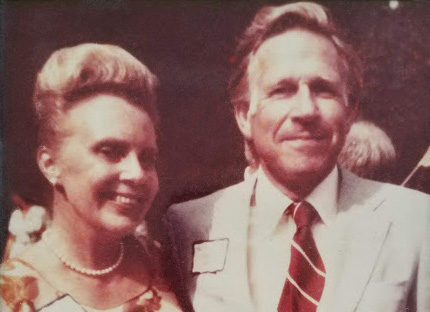
Depiction of Norman and Louise Meyer
Norman and Louise Meyer

Opposition to fluoridation of public water supplies in Massachusetts swelled in the 1950s, culminating in passage of a law in 1958 mandating that towns that wished to fluoridate would first put the proposal to public referendum. The primary force advocating for this law was the Massachusetts Citizens Rights Association, an organization founded and directed by Norman and Mary-Louise (Shadman) Meyer of Wellesley and which remained the leading anti-fluoridation group in the Boston area for twenty years. Having met and married while students at Harvard (1943) and Wellesley, respectively, the Meyers were tireless supporters of civic activities ranging from educational and environmental causes to public television (through the Citizens for Public Television in Boston), and disability (Norman served as director of the Protestant Guild for the Blind in Watertown), and they were stalwart members of the Wellesley town meeting. Norman Meyer died in Tortola in 1986, with Mary-Louise following in 1999.

The Meyer collection is a rich assemblage of letters and other materials documenting the Massachusetts Citizens Rights Association and the struggle against fluoridation in Wellesley, Newton, and other communities in eastern Massachusetts. Central figures in the movement, the Meyers maintained a wide correspondence with other activists throughout the region and published and disseminated information on the dangers of flourides in the water supply.

Subjects

Antifluoridation movement--MassachusettsDrinking water--Law and legislation--MassachusettsWater--Fluoridation--Law and legislation--Massachusetts
Meyer, Richard E., 1939-

Richard E. Meyer Collection

1948-2007 Bulk: 1980-2007
31 boxes 15.5 linear feet
Call no.: PH 072
Depiction of

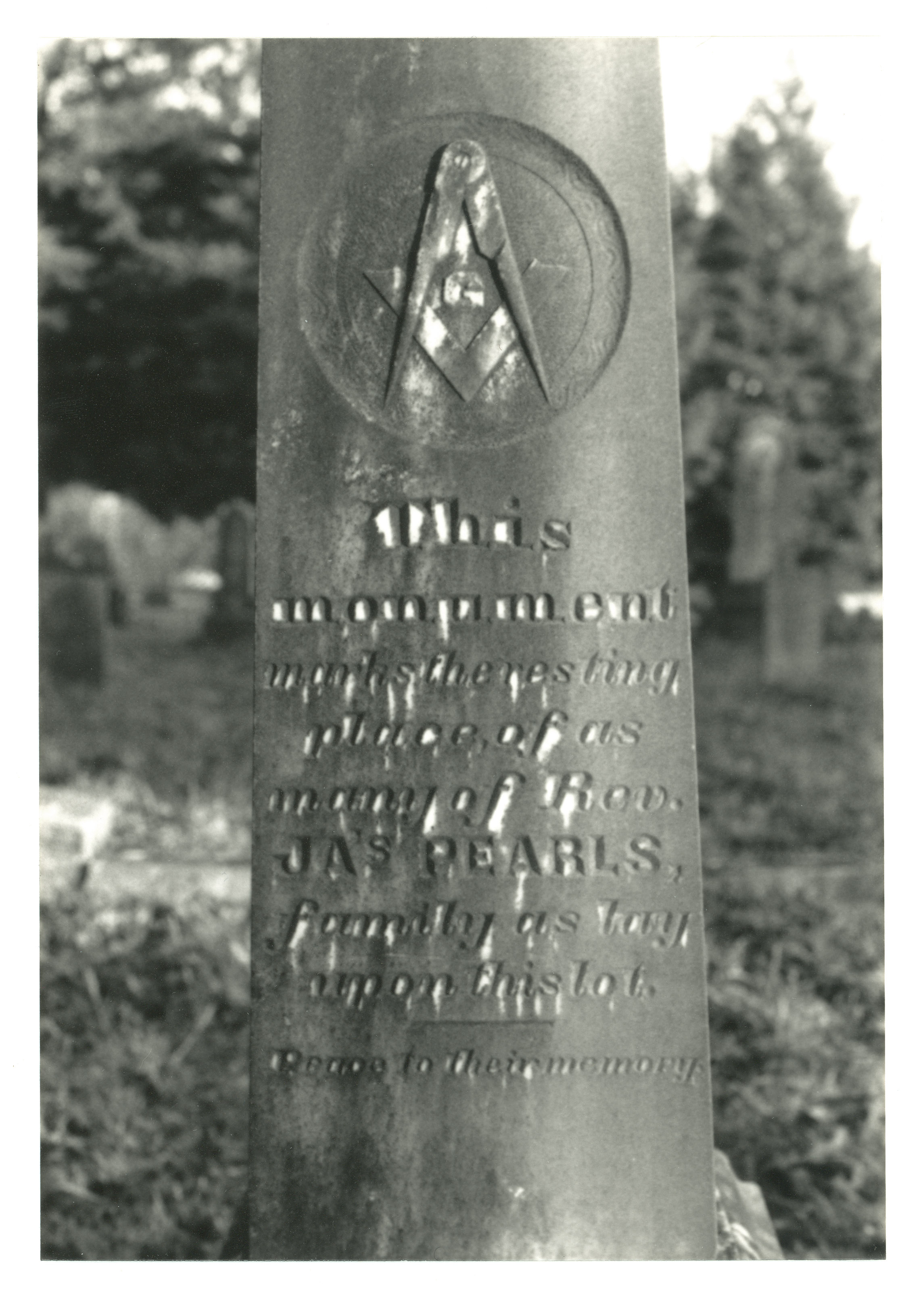
A member of the English and Folklore faculty at Western Oregon University, Richard E. Meyer studied at Northwestern University and the Universities of Washington and Oregon. A prolific author, he has published on topics ranging from British and American literature to American folklore, but particularly on the culture and history of the American cemetery and gravemarkers. A founder of the Cemeteries and Gravemarkers section of the American Culture Association (1986) and longtime member of the Association for Gravestone Studies, serving as editor of its journal, Markers, for twelve years, Meyer has delivered dozens of talks on the subject, is co-author (with Peggy McDowell) of The Revival Styles in American Memorial Art (1994), and editor of Cemeteries and Gravemarkers: Voices of American Culture (1989) and Ethnicity and the American Cemetery (1993).

During the course of his extensive research in cemeteries throughout the United States and Europe, Meyer documented over 20,000 grave monuments. His collection consists of over 16,000 color slides and 200 black and white photographs, all meticulously well-identified, of gravestones and cemeteries. Meyer also collected ephemera and realia relating to the Tomb of the Unknown Soldier and to commemoration of the dead of the First World War.

Gift of Richard E. Meyer, May 2016

Subjects

CemeteriesSepulchral monumentsSoldiers' monumentsTomb of the Unknowns (Va.)

Types of material

Photographs