The University of Massachusetts Amherst
Robert S. Cox Special Collections & University Archives Research Center
CredoResearch digital collections in Credo

Page 88 of 168

Anglin family

Anglin Family Papers
1874-1955 Bulk: 1914-1926
2 boxes 1 linear feet
Call no.: MS 699
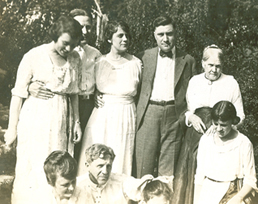
Depiction of Anglin family and friends, ca.1921
Anglin family and friends, ca.1921

Born in Cork, Ireland to a prosperous family, the Anglin siblings began immigrating to Canada and the United States in 1903. The first to relocate to Canada, brothers Will and Sydney pursued vastly different careers, one as a Presbyterian minister and the other as a salesman at a Toronto slaughterhouse. George and Crawford both served in the military during World War I, the former in the British Infantry as a medical officer and the latter in the 4th University Overseas Company first in France and later in Belgium where he died saving the life of a wounded soldier. Gladys Anglin trained as a nurse, but worked in a Canadian department store and at the Railway Office before suffering a mental breakdown and entering the Ontario Hospital as a patient. Ethel remained in Ireland the longest where she taught Domestic Economics at a technical school. The only Anglin to immigrate to the United States and the only female sibling to marry, Ida and husband David Jackson settled in Monson, Massachusetts where they raised four daughters.

The Anglin siblings were part of a close knit family who stayed in contact despite their geographic separation through their correspondence. Siblings wrote and exchanged lengthy letters that document not only family news, but also news of local and national significance. Topics addressed in their letters include World War I, the Irish revolution, medicine, religious ministry, and domestic issues from the ability of a single woman to support herself through work to child rearing.
Subjects

Anglin family--CorrespondenceIreland--Emigration and immigration--HistoryIreland--History--War of Independence, 1919-1921Irish--Canada--HistoryIrish--United States--HistoryWorld War, 1914-1918
Massachusetts Governmental Activities Exposition

Massachusetts Governmental Activities Exposition Photograph Album

1930
88 images 0.25 linear feet
Call no.: PH 043
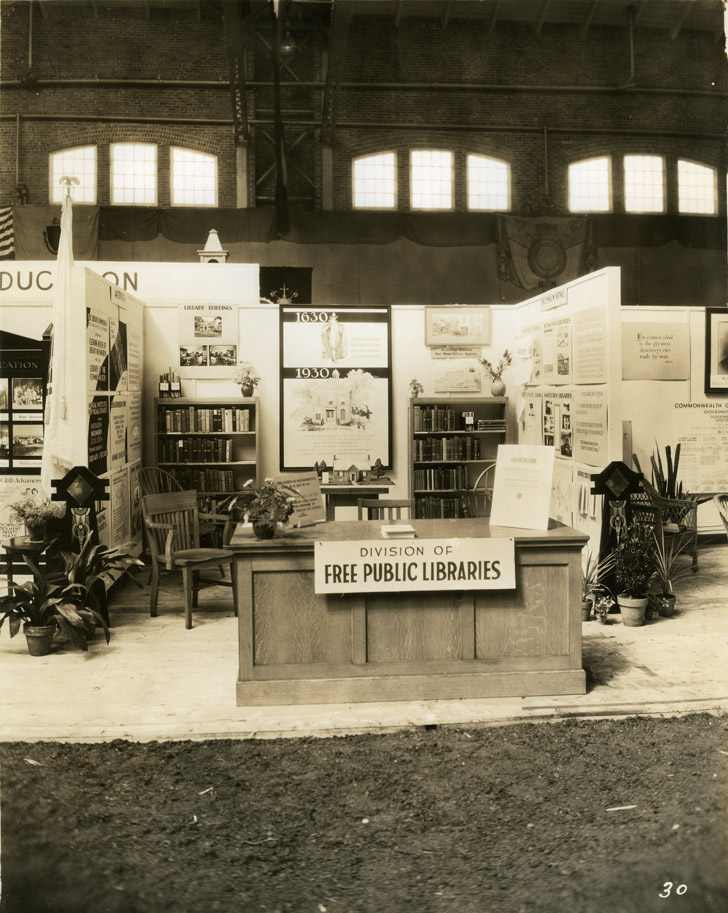
Depiction of Library exhibit
Library exhibit

To celebrate its tercentenary in 1930, the Commonwealth of Massachusetts organized over two thousand events in 253 communities, drawing over eleven million visitors. One of the most elaborate of these events was the Exposition of Governmental Activities held at the Commonwealth Armory in Boston between September 29 and October 11. A celebration more of contemporary governmental activity than the historical precedents, the exposition featured displays representing nearly every branch of government, from the Department of Education to the state police, mental and public health, public welfare, transportation, agriculture, labor, and industry.

P.E. (Paul) Genereux (1892-1977), a commercial photographer from East Lynn, was hired to document the exhibits and displays in the Exposition of Governmental Activities, producing commemorative albums containing silver gelatin prints, carefully numbered and backed on linen. This disbound album includes 88 of the original 175 prints, including interior and exterior shots, with an additional image by Hildebrand.

Subjects

Massachusetts Governmental Activities Exposition--PhotographsMassachusetts--Centennial celebrations, etc.

Contributors

Genereux, P. E.

Types of material

Photographs
Mountain House (South Deerfield, Mass.)

Mountain House Photograph Collection

ca.1865
3 photographs 0.1 linear feet
Call no.: PH 042
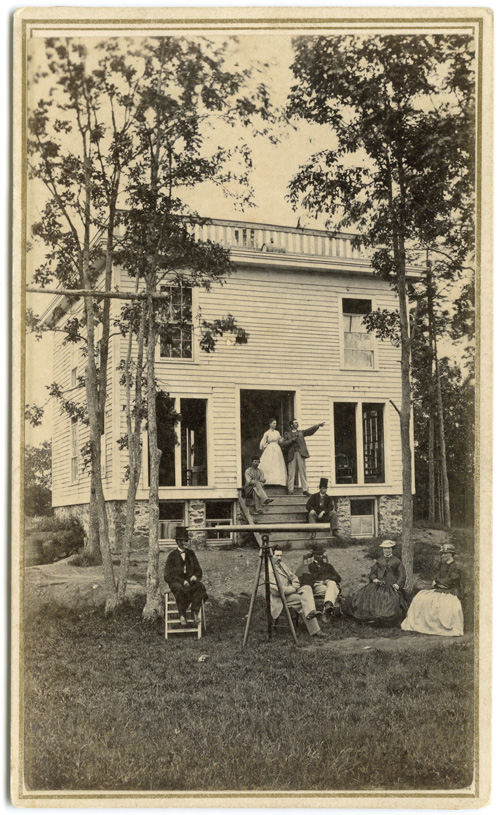
Depiction of Mountain House, ca.1865
Mountain House, ca.1865

A popular tourist destination during the post-Civil War years, the Mountain House hotel was built on the summit of Sugar Loaf Mountain, in South Deerfield, Mass., by Granville Wardwell in 1864 on property owned by his father-in-law Dwight Jewett. Positioned near the southern end of the mountain, the hotel provided tourists with a stunning panoramic vista of the Connecticut River Valley.

This small collection consists of three scenic cartes de visite from a larger series featuring views from the Mountain House. The images include No. 6, a view of five persons perched on the southeast promontory of Sugar Loaf with a view to the northeast across the Connecticut River to Mt. Toby; No. 10, Mountain House with a group of nine men and women posed on the lawn with telescope and tripod; No. 18, view of barns at the southern base of Sugar Loaf Mountain.

Subjects

Mountain House (South Deerfield, Mass.)--PhotographsSouth Deerfield (Mass.) -- Pictorial worksSugar Loaf Mountain (Mass.)--Photographs

Contributors

Wardwell, Granville

Types of material

Photographs
Mount Toby Meeting of Friends

Mount Toby Meeting of Friends Collection

1977-1991
1 box 1.5 linear feet
Call no.: MS 694

The Northampton Monthly Meeting of the Society of Friends (later the Middle Connecticut Valley Monthly Meeting) was formally established in 1939, bringing together the small community of Friends in Western Massachusetts. In 1959, the small preparative meetings in Amherst, Greenfield, Northampton, and South Hadley agreed to consolidate to create a more vital gathering. After five years without a fixed location, a Friend was moved to donate three acres of land on Long Plain Road in Leverett on which to build a proper meetinghouse. When that building opened in 1964, the meeting was renamed the Mt Toby Meeting.

Reflecting a strong history of promoting peace social justice, the Mt. Toby collection documents Friends’ involvement in a wide variety of issues ranging from war tax resistance (Randy Kehler and Betsy Corner), the “Colrain action” when the Kehler/Corner house was seized by the IRS), peace education and civil disobedience, refugee resettlement, the Sanctuary movement, and support for LGBT issues and racial equality. The collection consists largely of fliers and newsletters, ephemera, and newspaper clippings.

Subjects

Corner, BetsyKehler, RandyMount Toby Meeting of Friends (Quakers)PacifistsPeace movements--MassachusettsSanctuary movementSociety of Friends--MassachusettsWar tax resistance--Massachusetts
Loomis Communities

Loomis Communities Records

1909-2015 Bulk: 1980-2000
11 boxes 15.75 linear feet
Call no.: MS 685
Loomus House logo
Loomis House logo

Temporarily stored offsite; contact SCUA to request materials from this collection.

In 1902, a group of residents of Holyoke, Mass., secured a charter for the Holyoke Home for Aged People, wishing to do “something of permanent good for their city” and provide a “blessing to the homeless.” Opened in March 1911 on two acres of land donated by William Loomis, the Holyoke Home provided long-term care of the elderly, and grew slowly for its first half century. After changing its name to Loomis House in 1969, in honor of the benefactor, Loomis began slowly to expand, moving to its present location in 1981 upon construction of the first continuing care retirement community in the Commonwealth. In 1988, the Board acquired a 27-acre campus in South Hadley on which it established Loomis Village; in 1999, it became affiliated with the Applewood community in Amherst; and in 2009, it acquired Reeds Landing in Springfield.
The Loomis Communities Records offer more than a century perspective on elder care and the growth of retirement communities in western Massachusetts. The collection includes a nearly complete run of the minutes of the Board of Directors from 1909 to the present, an assortment administrative and financial records, and some documentation of the experience of the communities’ residents, with the bulk of materials dating from the 1980s to the present. An extensive series of oral histories with residents of Loomis Village was conducted in 2010.

Subjects

Holyoke (Mass.)--HistoryHolyoke Home for Aged PeopleLoomis CommunitiesLoomis VillageOlder people--Care--MassachusettsRetirement communities--Massachusetts
Stockwell, E. Sidney

E. Sidney Stockwell Papers

1910-1928
7 boxes 3.5 linear feet
Call no.: MS 691
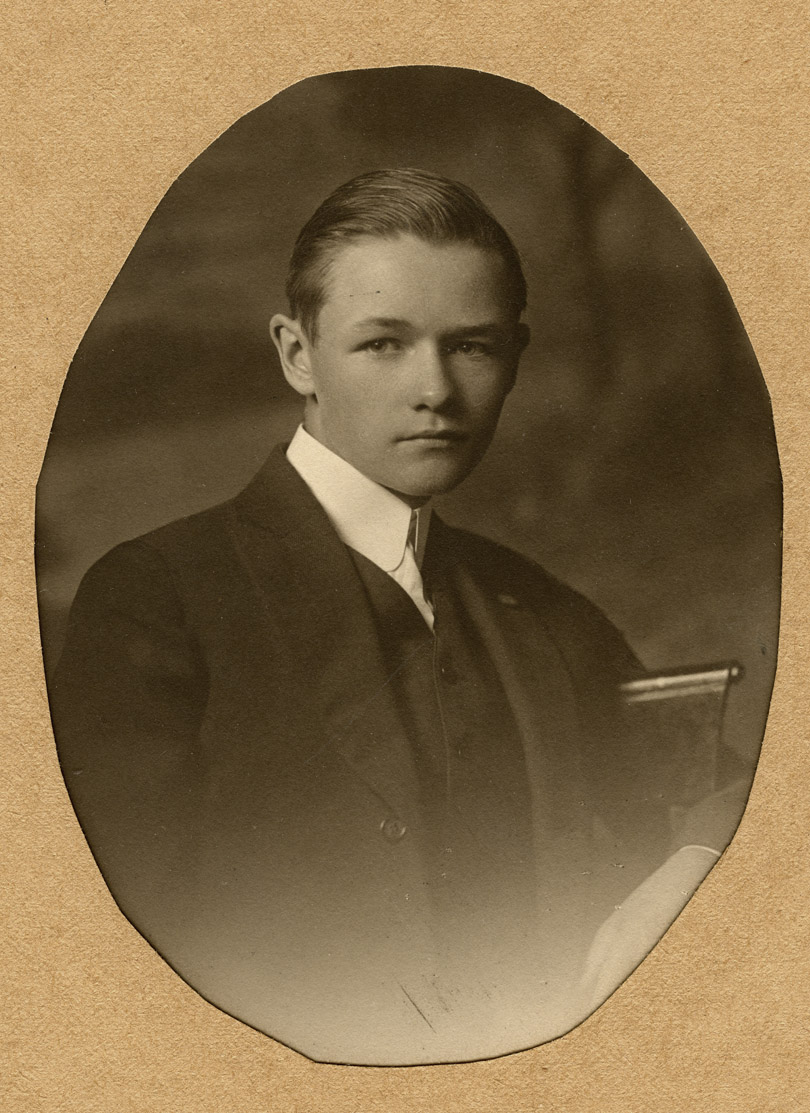
Depiction of Sid Stockwell
Sid Stockwell

A member of the Massachusetts Agricultural College class of 1919, Ervin Sidney Stockwell, Jr. (1898-1983) was born in Winthrop, Mass., to Grace Cobb and E. Sidney Cobb, Sr., a successful business man and owner of a wholesale dairy. Entering MAC as a freshman in 1915, Stockwell, Jr., studied agricultural economics and during his time in Amherst, took part in the college debate team, winning his class award for oratory, and dramatics with the Roister Doisters. He performed military service in 1918 at Plattsburgh, N.Y., and Camp Lee, Va. Stockwell went on to found a successful custom-house brokerage in Boston, E. Sidney Import Export, and was followed at his alma mater by his son and great-grandson.

The extensive correspondence between Sidney Stockwell and his mother, going in both directions, provides a remarkably in-depth perspective on a typical undergraduate’s life at Massachusetts Agricultural College during the time of the First World War, a period when MAC was considered an innovator in popular education. The letters touch on the typical issues of academic life and social activity, Stockwell’s hopes for the future, his military service and the war. Following graduation, Stockwell undertook an adventurous two year trip in which he worked his way westward across the country, traveling by rail and foot through the Dakotas, Wyoming and Montana, Washington state and California, taking odd jobs to earn his keep and writing home regularly to describe his journey. An oral history with Stockwell is available in the University Archives as part of the Class of 1919 project.

Subjects

Agricultural education--MassachusettsMassachusetts Agricultural College--StudentsMontana--Description and travelNorth Dakota--Description and travelWashington--Description and travelWorld War, 1914-1918

Contributors

Stockwell, E. SidneyStockwell, Helen Cobb
Historic Burying Grounds Initiative

Historic Burying Grounds Initiative Collection

1876-1985
2 boxes 0.75 linear feet
Call no.: MS 690

With the approach of the American Bicentennial in 1976, concern grew among historic preservationists in Boston that the city’s old cemeteries and grave markers were showing the damage of many decades of harsh weather and poor maintenance. Led by the Boston Parks and Recreation Department, the Boston Landmarks Commission, and The Bostonian Society, with the collaboration of the Massachusetts Historical Commission, and the Association for Gravestone Studies, among others, the Historic Burying Grounds Initiative was established to develop a plan to inventory over 15,000 markers and assemble a master plan (1985, updated 1998) to care for the cemeteries in the long term. Supported by both public and private funds, the HBGI focused initially on stabilization, preservation, and restoration of historic artifacts, tomb structures, and retaining walls, and their efforts continue today.
The HBGI Collection contains reports and inventories from the first phase of work carried out by the Initiative, focusing on the Dorchester North, Central, Copp’s Hill, Eliot, Granary, Kings Chapel, and Phipps Street Burying Grounds. The collection also contains two editions of the Manual for Preservation prepared by the HBGI.

Subjects

Sepulchral monuments--Conservation and restorationSepulchral monuments--Massachusetts

Contributors

Historic Burying Grounds Initiative
Jenks, Margaret R.

Margaret R. Jenks Collection

1983-1994
2 boxes 1 linear feet
Call no.: MS 689

Margaret R. Jenks has been a family genealogist since 1964 and a cemetery transcriber since 1978. A prolific writer, she has published books listing all the cemetery inscriptions of the twenty-seven towns in Rutland County, Vermont, and of Granville, Washington County, New York, and she has conducted research on the stonecarvers of Rutland County. She served six years as a trustee of the Association for Gravestone Studies.

The Jenks collection is comprised of eighteen volumes containing exhaustive documentation of gravestone inscriptions from the following cemeteries in Vermont: Benson, Brandon, Castleton, Chittenden, Clarendon, Danby, Fair Haven, Granville (Washington County), Hubbardston, Ira, Mendon, Middleton, Mount Holly, Mt. Tabor, Pawlet, Pittsfield, Pittsford, Poultney, Proctor, Putney, Rutland, Sherburne, Shrewsbury, Sudbury, Tinmouth, Wallingford, Wells, West Haven, West Rutland.

Subjects

Sepulchral monuments--Vermont

Contributors

Jenks, Margaret R.
McVeigh, Kevin

Kevin McVeigh Papers

1974-2010
15 boxes 22.5 linear feet
Call no.: MS 668

Temporarily stored offsite; contact SCUA to request materials from this collection.

A lifelong activist for social and environmental justice, Kevin McVeigh was among the founders of two prominent antinuclear and environmental organizations in Northern California, the Pelican Alliance (1978) and Interhelp (1981). After relocating to Massachusetts, he continued in environmental activism, founding the Green River Center in Greenfield in 1987, but in response to the intense public health crisis, he gradually shifted his focus to become an advocate for persons with HIV/AIDS. As a founder of the AIDS Community Group of Franklin County (Mass.), he has coordinated AIDS services for Tapestry Health, a not-for-profit organization providing affordable health care to in Western Massachusetts.

The McVeigh Papers document a career as a committed antinuclear activist and advocate for persons with HIV/AIDS. The collection includes organizational materials from each of the groups McVeigh helped found: The Pelican Alliance, Interhelp, the Green River Center, the AIDS Community Group of Franklin County, and Tapestry Health, as well as correspondence, newspaper clippings, journals and magazines related to the issues concerning, notes from HIV/AIDS caregivers’ conferences, materials relating to men’s support groups, and other material related to environmental protection and anti-war activism. Finally, the collection includes audio files of an oral history (approximately two hours) conducted with McVeigh in July 2010, and a small collection of antinuclear books from small publishing houses.

Subjects

AIDS (Disease)AIDS Community Group of Franklin CountyAIDS activists--MassachusettsAntinuclear movement--CaliforniaGreen River Center (Greenfield, Mass.)InterhelpPelican AlliancePublic health--MassachusettsTapestry Health

Contributors

McVeigh, Kevin

Types of material

Oral histories
Clagg, Charles F.

Charles F. Clagg Photograph Collection

1930 June-July
1 folder 0.1 linear feet
Call no.: PH 016
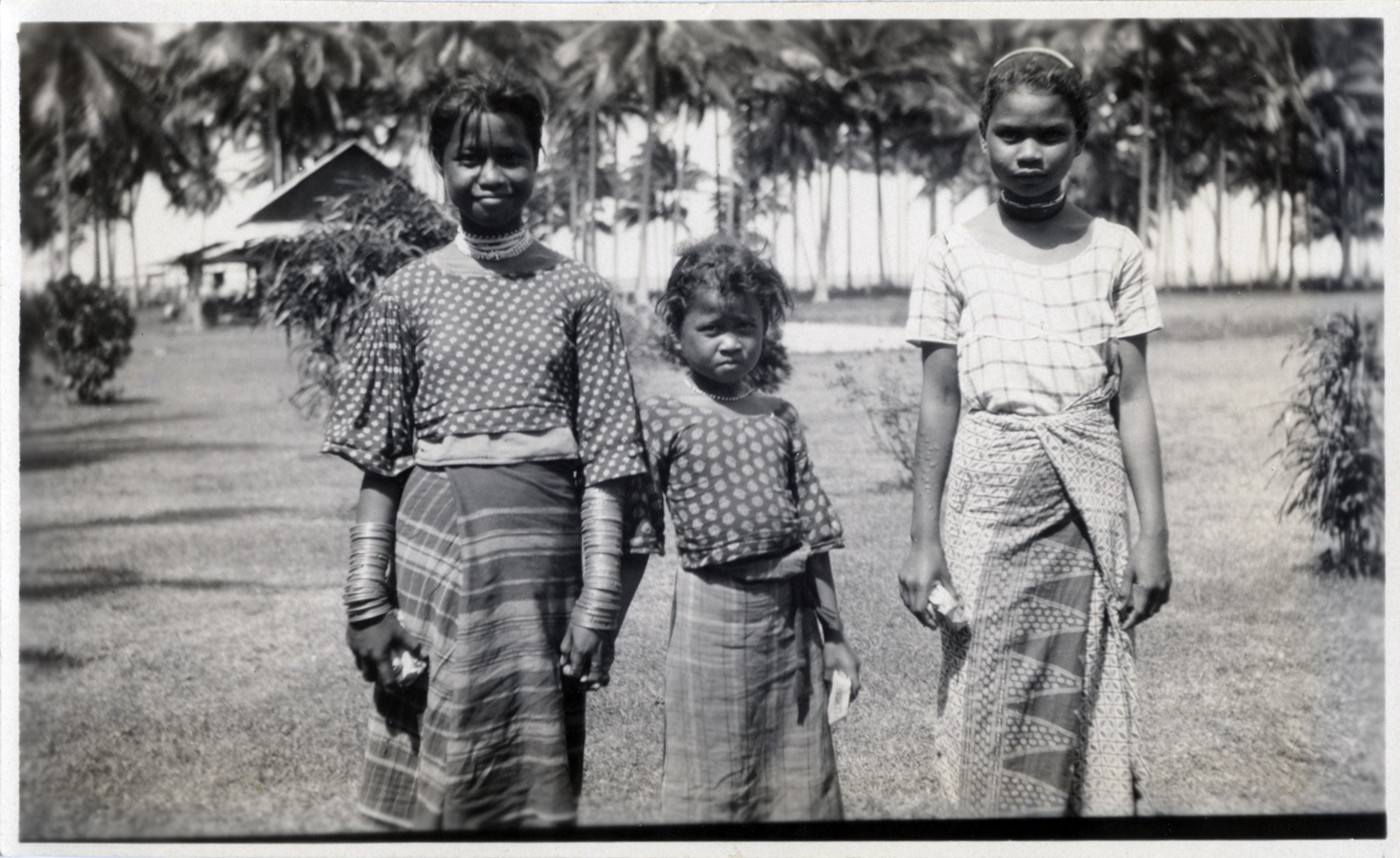
Depiction of Three Manobo girls
Three Manobo girls

The entomologist Charles F. Clagg was born in Barnstable, Mass., in 1904 and received his bachelor of science degree from the Massachusetts Agricultural College in 1927. Although never able to complete his graduate degree, Clagg enjoyed a long and productive career in entomology. Listed as a graduate student at MAC in 1929-1930, Clagg took part in an extensive collecting trip to the Philippines in 1930 and 1931. Beginning in June 1930 near Calian in Davao del Sur (Mindanao), Clagg spent several months collecting flies in and around the active Mount Apo volcano, in the Lawa and Calian river valleys, and in the Lalun mountains, traveling to the eastern peninsula of Davao early in 1931. He remained in the Pacific region later in his career, working as an entomologist for the U.S. Navy.

The twenty photographs taken by Charles F. Clagg in 1930 document his entomological collecting trip to Davao, Mindanao, in the Philippines. Primarily personal in nature, rather than professional, they were taken on Clagg’s visit to a coconut plantation run by American expatriates Henry and George Pahl and illustrate the local sights in Davao, including work in harvesting coconuts and the production of copra, the production of Manilla hemp, a horse fight at Calian, and Manobos who came to the plantation trade. Also included are three photographs of Clagg’s quarters while collecting high in the Lalun Mountains. The captions provided by Clagg on the back of each photograph have been transcribed verbatim.

Subjects

Copra industry--Philippines--PhotographsDavao (Philippines)--PhotographsManobos (Philippine people)--PhotographsPahl, GeorgePahl, George AustinPahl, HenryPalms--PhotographsPhilippines--PhotographsPlantations--Philippines--Photographs

Contributors

Clagg, Charles F.

Types of material

Photographs
« Older posts Newer posts »