The University of Massachusetts Amherst
Robert S. Cox Special Collections & University Archives Research Center
CredoResearch digital collections in Credo

Page 38 of 167

Wasserman, Harvey, 1945-

Harvey Wasserman Papers
ca.1965-2017
46 boxes 45.5 linear feet
Call no.: MS 1082
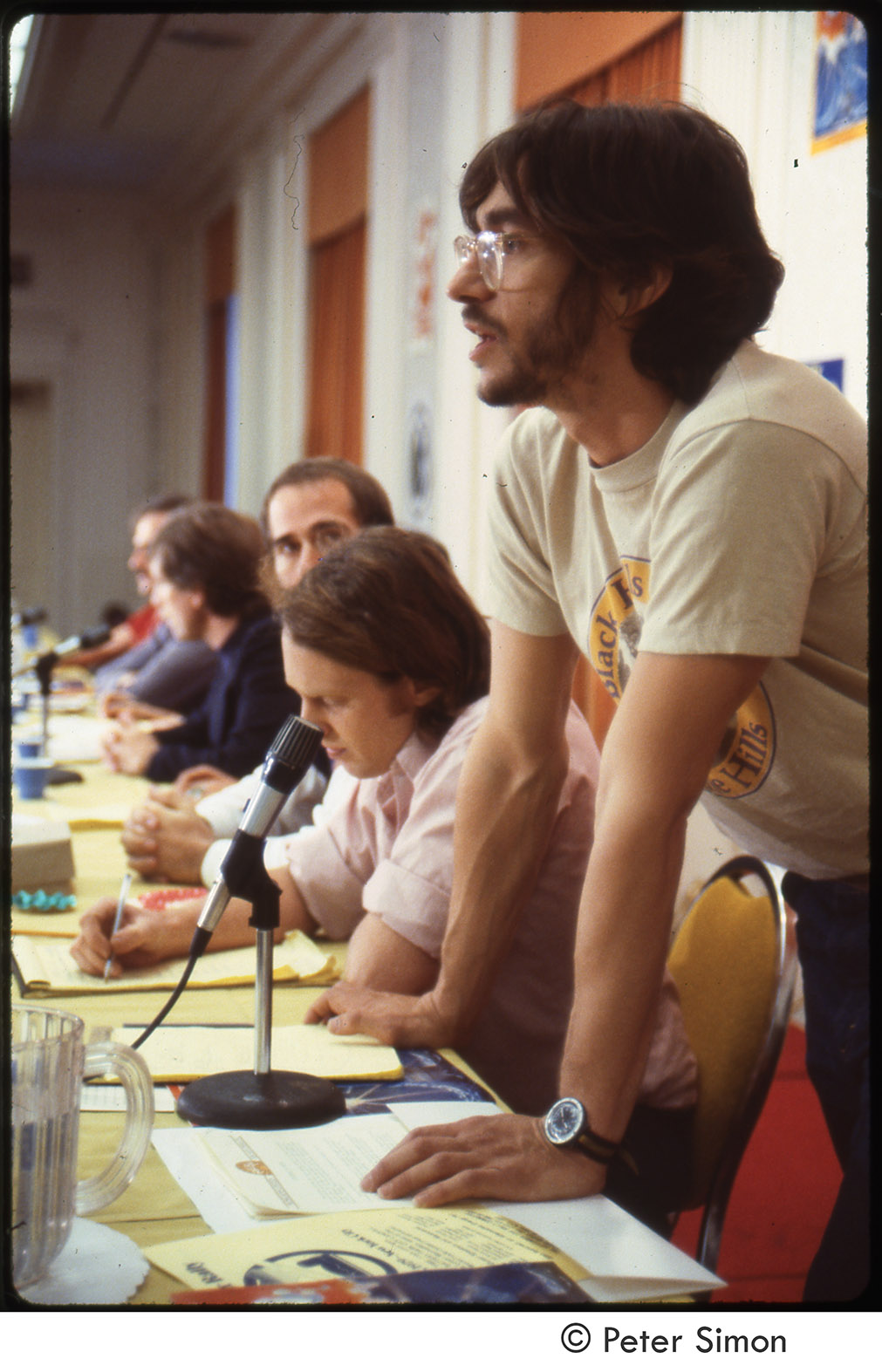
Depiction of Harvey Wasserman at MUSE press conference, 1979
Harvey Wasserman at MUSE press conference, 1979

A journalist, writer, and historian, Harvey Wasserman has been an activist for radical democracy and alternative energy for over five decades. Influenced by civil rights activism as a child, Wasserman became seriously involved in journalism while on the staff of the Michigan Daily at the University of Michigan. After graduating in 1967, he joined the Liberation News Service supplying news to underground and alternative media outlets, remaining with the LNS branch that eventually settled on the Montague Farm Commune in Montague, Mass. During more than a decade at the Farm, Wasserman and his fellow communards helped ignite the modern movement opposing nuclear power. Helping to found two vital antinuclear groups, the Alternative Energy Coalition and the Clamshell Alliance, he became a key strategist and organizer of the mass protests at the Seabrook Nuclear Power Plant and was a motive force behind the Musicians United for Safe Energy concerts in 1979. His activism has since expanded into a broad range of environmental issues, alternative energy, election protection, and politics. A prolific writer, he is author of Harvey Wasserman’s History of the United States (1972) and Solartopia (2007), among other books, and his articles have appeared in both the mainstream and alternative press.

The Wasserman Papers document the career of a key figure in antinuclear and alternative energy activism. The collection includes a nearly comprehensive set of Wasserman’s writings, materials on the antinuclear movement, solar power, the Montague Farm Commune, and materials relating to his efforts to protect the American electoral system.
Gift of Harvey Wasserman, 2017

Subjects

Antinuclear movementsCommunal living--MassachusettsEnvironmentalismLiberation News ServiceMontague Farm CommunityRenewable energySolar energyUnited States--History--20th century
Mount Ida College

Mount Ida College Records

ca. 1899-2018
95 141 linear feet
Call no.: MS 1028
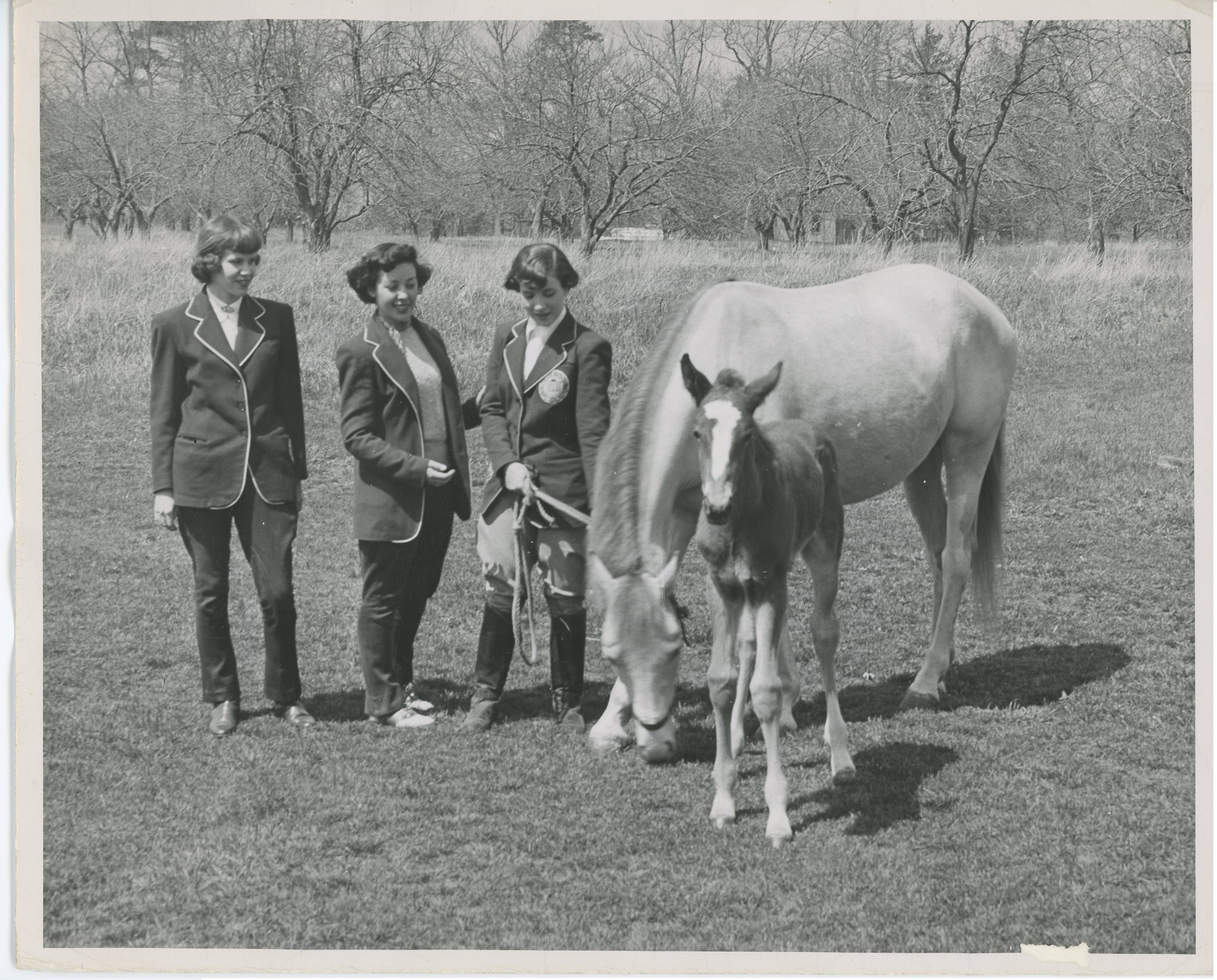
Depiction of Three Mount Ida College students with a mare and foal
Three Mount Ida College students with a mare and foal

Mount Ida College was a regional, co-educational college with 1500 students, over forty majors, and a graduate program designed for working adults. The college began in 1899 when George Franklin Jewett and his wife Abigail Fay Jewett purchased a property on a hill in Newton Corner named Mount Ida and began a college prep and finishing school program, the Mount Ida School for Girls, that steadily grew, adding a junior college curriculum in 1917. Under the financial stress of the Great Depression, the school closed in 1935, but was purchased four years later by William F. Carlson and reopened on the newly acquired Robert Gould Shaw II estate in Newton Centre. Mount Ida officially became a college in 1967, began admitting men in 1976, and in the late 1980s it merged with Chamberlayne Junior College and the New England Institute of Funeral Service Education. However, after a period of protracted financial difficulties in the early 2000s, Mount Ida College closed its doors on May 17, 2018, and the land and campus buildings were purchased by the University of Massachusetts Amherst.

The Mount Ida College Records contain the historical records of the college, including photographs, yearbooks, course catalogs, student scrapbooks and memorabilia, publicity materials, the college’s web and social media presence, and artifacts that document Mount Ida’s athletic programs. The records of the New England Institute of Funeral Service were moved with the program itself to Cape Cod Community College.

Subjects

Education, Higher--Massachusetts--NewtonSingle-sex schools--United StatesUniversities and colleges--Massachusetts--NewtonWomen--Education--United States

Contributors

Mount Ida College
Borchers, Kathy

Kathy Borchers Photojournalism Collection

1977-2018
7 boxes 2.75 linear feet
Call no.: PH 083
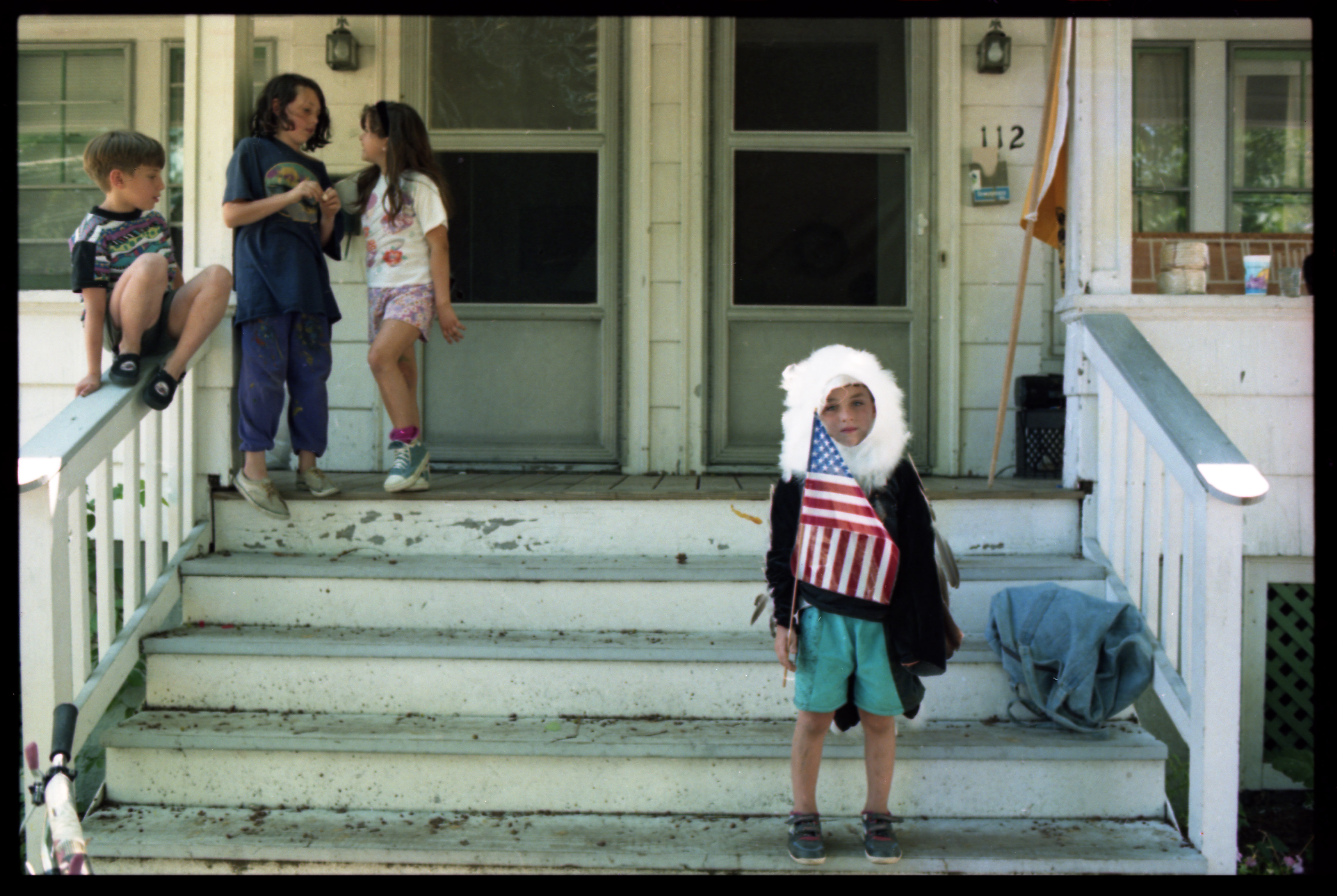
Depiction of Boy dressed as an eagle for the Fourth of July parade, Bristol, R.I., 1993
Boy dressed as an eagle for the Fourth of July parade, Bristol, R.I., 1993

An award-winning photojournalist, Kathy Borchers began a thirty year career with the Providence Journal in the mid-1980s. A native of Dayton, Ohio, she and her twin sister Karen (also a photojournalist) took up photography in high school and refined their technique as undergraduates at Bowling Green State University. After receiving her master’s degree at the Indiana University School of Journalism in 1981, Borchers worked for three years with the Topeka Capital-Journal before landing in Providence. In addition to covering general news and sports, she took on a number of special assignments and longer-form photoessays over the years in southern New England. She retired in 2015.

A rich sampling from a long career in photojournalism, the collection includes photographic negatives and prints along with associated published materials. Centered primarily on her time with the Providence Journal, the collection reflects the breadth of Borchers’ assignments, including general news, sports coverage, and longer-form photoessays, in both black and white and color. The collection also includes five self-made books: three on long-term photographic projects for the Journal and two career retrospectives.

Gift of Kathy Borchers, July 2018

Subjects

Photojournalists--Rhode IslandRhode Island--Photographs

Contributors

Providence Journal

Types of material

Photographs
Gardner, Leonard F.

Gardner/Wilson Collection of the USS Reid 369

ca. 1936-2015
1 box, 1 website 1.5 linear feet
Call no.: MS 1047
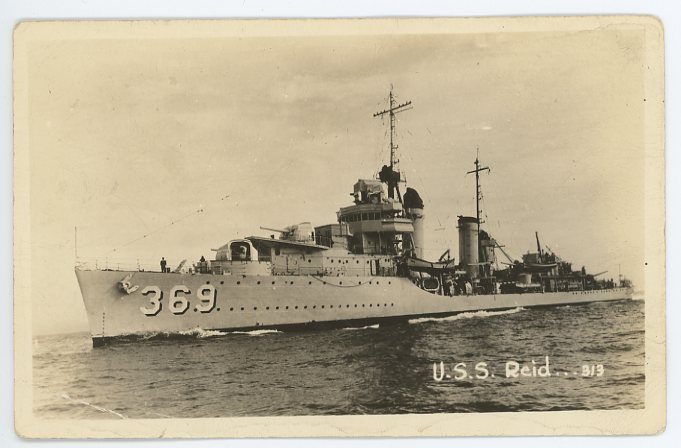
Depiction of Postcard featuring the USS Reid
Postcard featuring the USS Reid

A destroyer commissioned in 1936, the USS Reid was assigned to the Pacific Fleet and in 1939 was moved to Pearl Harbor, Hawaii. The Reid was being serviced in port on December 7, 1941, when the Japanese attack on Pearl Harbor occurred. The Reid survived and was re-assembled so quickly it was out patrolling later that morning. Between 1941 and 1944, the Reid served on numerous patrol and escort missions, including in the Aleutian Islands and Solomon Islands and joined forces fighting in Guadalcanal. During the Reid’s involvement in the battle of Leyte Gulf, it was attacked by twelve kamikaze fighters, several of which made contact with the Reid, including one that crashed into the port quarter and exploded, blowing the ship apart and killing 103 of the 268 aboard.

The Gardner/Wilson Collection represents the efforts of Leonard F. Gardner (BA ’49), Pearl Harbor survivor, who served on the Reid from 1941-1944. Gardner collected photographs and documents from former shipmates and produced a newsletter from 1997 to 2015 that recorded the lives of shipmates and included photographs and information about the USS Reid. In addition to the original materials Gardner collected, a full run of the newsletter and other documents related to the Reid’s service in World War II, the Gardner/Wilson collection includes a website curated by Gardner and designed, created, and maintained by James M. Wilson III (MBA ’86, MS ’86, PhD ’00), whose father, James M. Wilson, Jr., served on the USS Reid from 1940 and survived its sinking in 1944. Wilson also conducted oral histories of remaining USS Reid 369 members in 2006. The original website can be found at http://ussreid369.org. SCUA also maintains an archived version of the site. Several documents and photographs relating to the sinking of the Reid were added to the collection by Gordon Seastrom, a Pearl Harbor survivor and Reid shipmate.

Gift of Leonard F. Gardner and James M. Wilson III, 2018

Subjects

Destroyer escorts--United StatesKamikaze pilotsPearl Harbor (Hawaii), Attack on, 1941Warships--United StatesWorld War, 1939-1945 -- Naval operations

Contributors

Gardner, Leonard F.
Ferre, Marie

Marie Ferre Collection

1971-2013
2 boxes 0.75 linear feet
Call no.: MS 1040
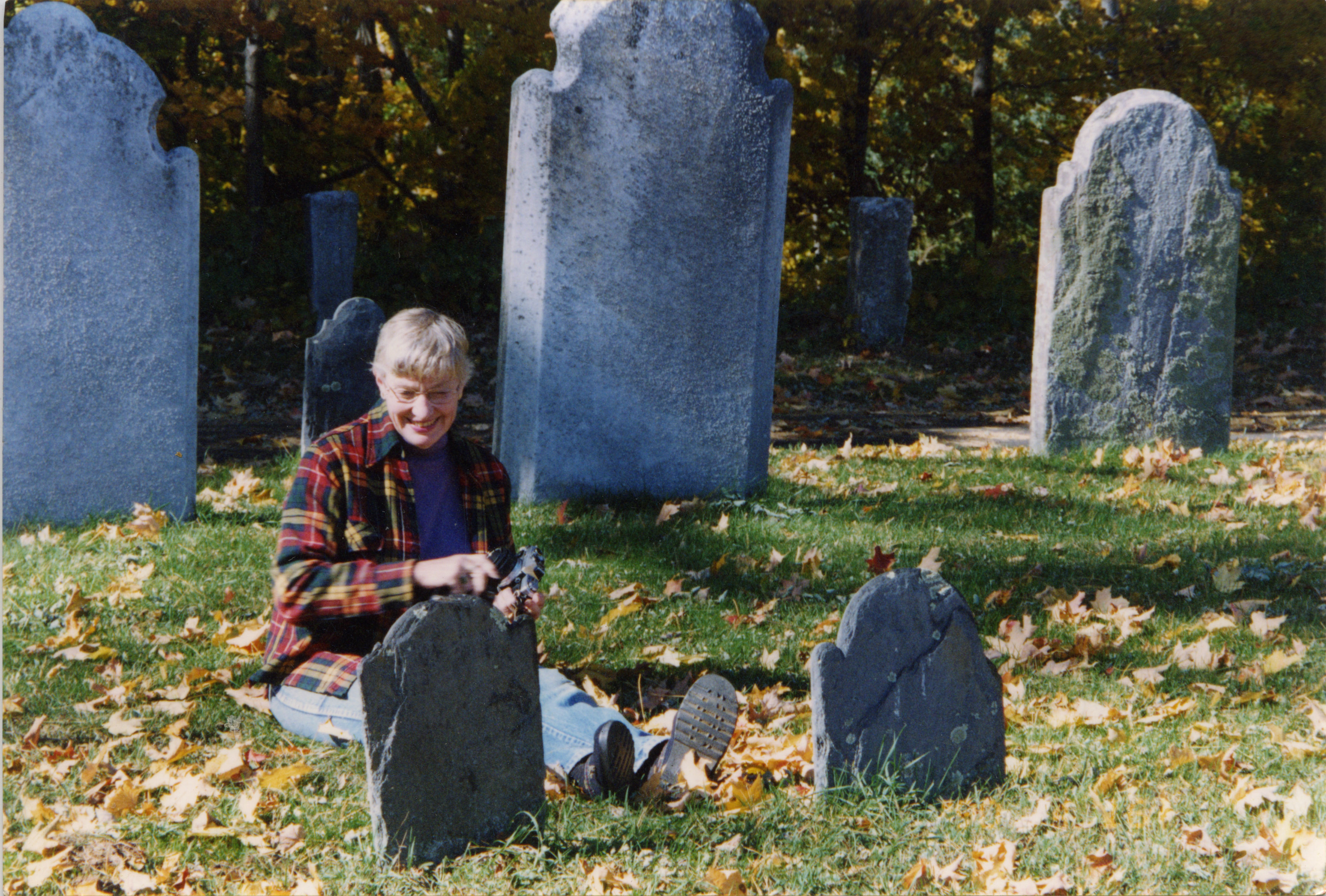
Depiction of Marie Ferre among the headstones, ca.2004
Marie Ferre among the headstones, ca.2004

Esma-Marie N’Doi Booth was born into a missionary family in the Belgian Congo in Dec. 1932, and attended school there until entering Boston University. She earned her degree in art and art history in 1954, the same year she married the philosopher Frederick Feree, and for much of the next four decades, she worked as an archivist at the colleges and universities where her husband found an academic home: Vanderbilt, Mount Holyoke, and Dickinson. After retiring to Northfield, Mass., in 2000, she became active in local history and historic preservation, including working as archivist for the Association for Gravestone Studies. She died in Greenfield, Mass., in 2016 at the age of 83.

The Ferre collection contains articles, news clippings, and notes on New England gravestones, along with several dozen images taken by Ferre in graveyards during the early 2000s, primarily in Massachusetts.

Gift of the Association for Gravestone Studies, June 2018

Subjects

Sepulchral monuments--ConnecticutSepulchral monuments--Massachusetts

Types of material

Photographs
Keith, Bill, 1939-2017

Bill Keith Collection

1960-2013
1 box 0.25 linear feet
Call no.: MS 1037
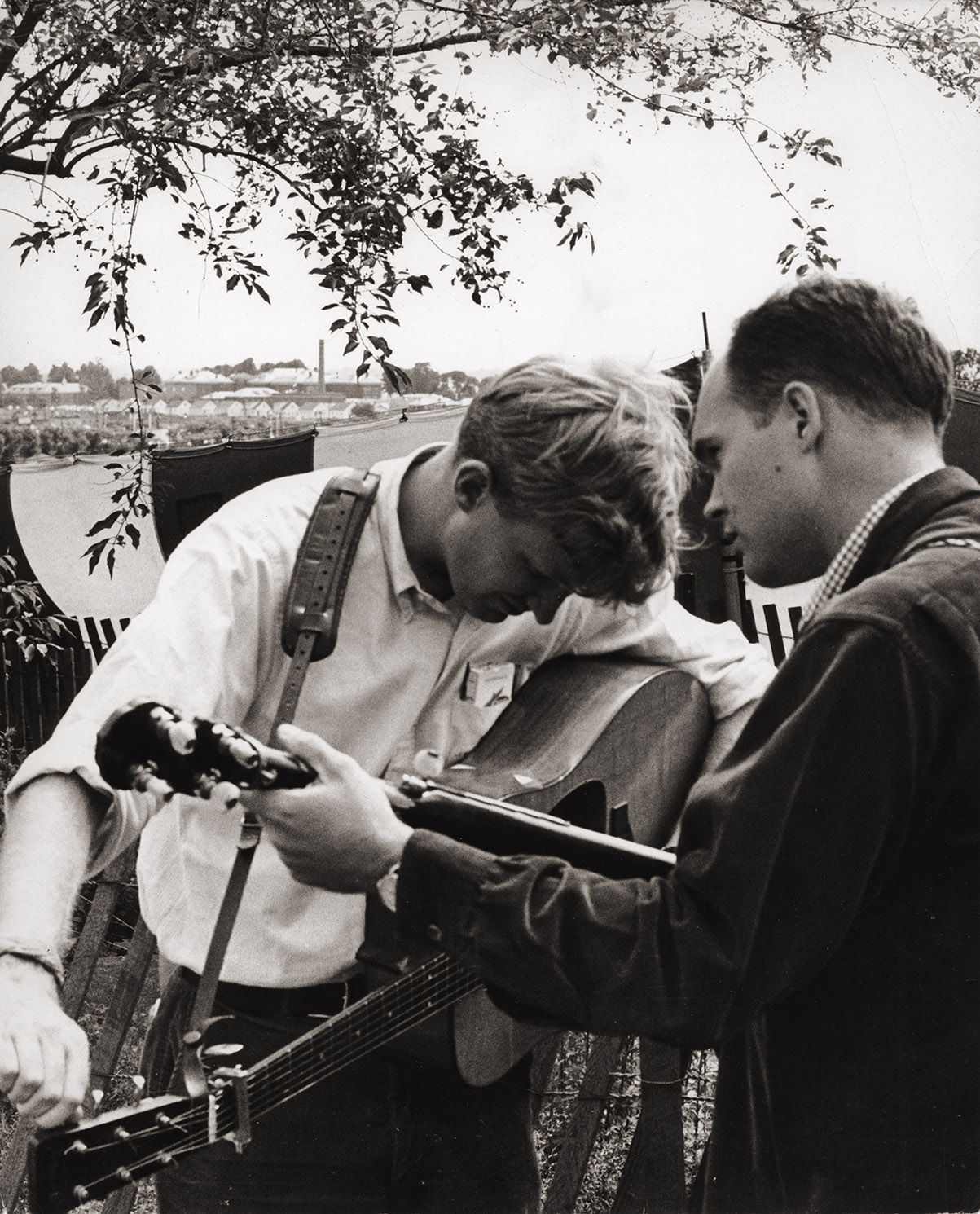
Depiction of Bill Keith (r.) and Jim Rooney at the Newport Folk Festival, 1965
Bill Keith (r.) and Jim Rooney at the Newport Folk Festival, 1965

A stylistic innovator and influential performer on the five string banjo, Bill Keith is credited with transforming the instrument from a largely percussive role into a one where it carried the melody. A native of Boston and 1961 graduate of Amherst College, Keith cut his teeth as a performer in New England clubs during the hey day of the folk revival, often partnering with his college roomate Jim Rooney, and he spent the better part of the decade as a member of two high profile acts: Bill Monroe’s Bluegrass Boys, with whom he played for eight critical months in 1963, and the Jim Kweskin Jug Band. Adding the pedal steel guitar to his repertoire, Keith performed on stage and in studio with a stylistically and generationally diverse range of acts including Ian and Sylvia, Judy Collins, Richie Havens, Loudon Wainwright, and the Bee Gees. Keith continued performing nearly to the time of his death by cancer in October 2015.

This small collection of photographs and ephemera documents the musical career of bluegrass legend Bill Keith, including early images playing in coffee houses and at Newport Folk Festival and images of Keith with musical collaborators throughout the 1970s and 1980s. The collection includes a series of photographs and ephemera taken during the 50th anniversary Jug Band Reunion tour of Japan in 2013.

Subjects

Folk music--New England

Types of material

EphemeraPhotographs
Elders Share the Arts

Elders Share the Arts Records

ca.1975-2018
14 boxes 17 linear feet
Call no.: MS 1034
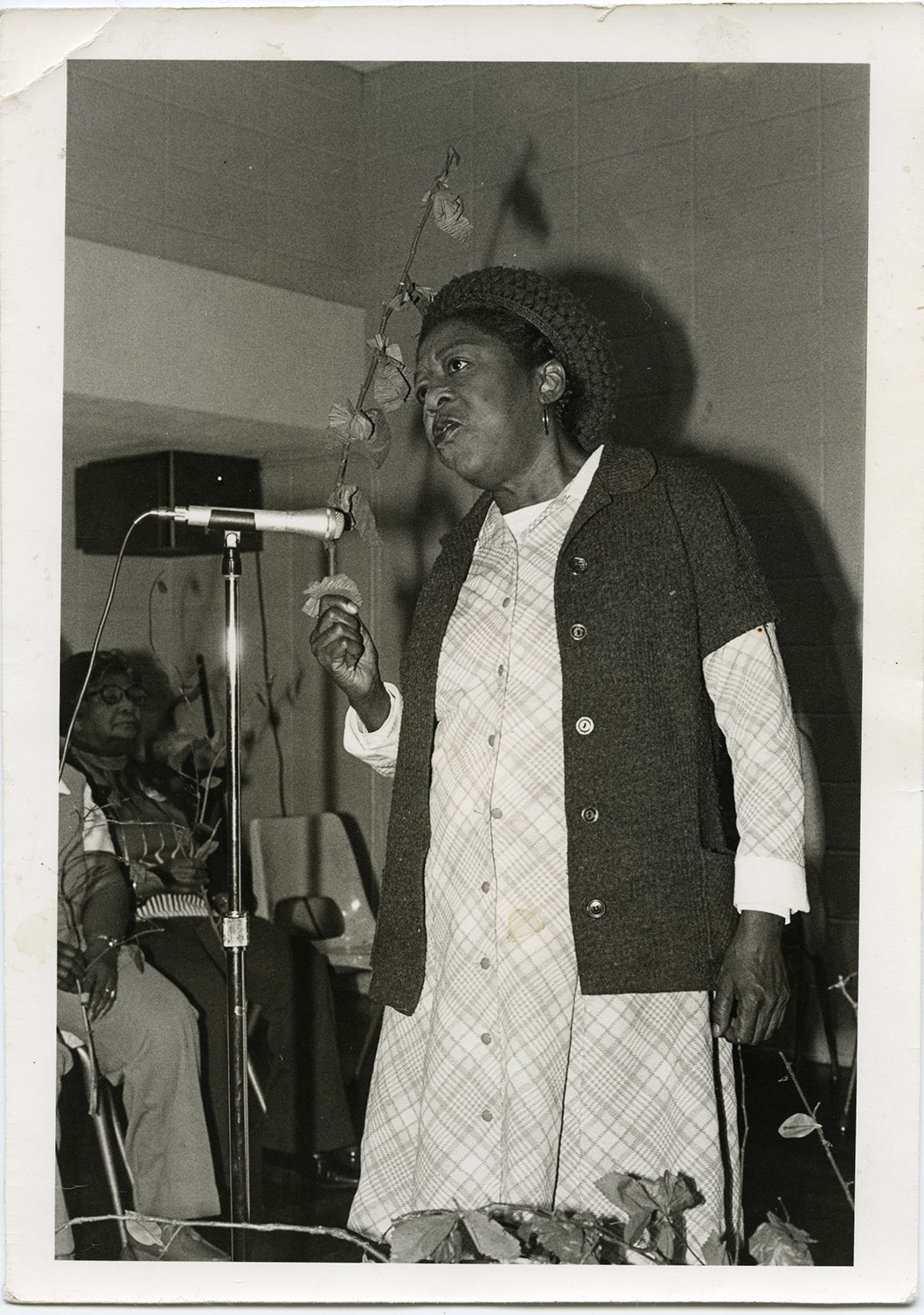
Depiction of Hodson Drama Group, Grandma's home remedy show, 1982 (photo by A. Heppenheimer)
Hodson Drama Group, Grandma's home remedy show, 1982 (photo by A. Heppenheimer)

A community arts organization founded by Susan Perlstein in 1979, Elders Share the Arts was a pioneer and national leader in the field of creative aging. Beginning as a single living-history theater workshop in the South Bronx, ESTA grew into a citywide organization with national impact that engaged older adults in participatory arts programing. The performing groups that emerged from ESTA typically drew upon the experiences of its members, with the programs running from storytelling and theater to writing, dance, and the visual arts. With the rapid growth of the field, ESTA ceased operations in June 2018, transferring their programs to other organizations.

The records of Elders Share the Arts offer vital documentation of the origins and development of the field of creative aging and the growth of one of the innovators. The collection includes a full set of board minutes, action plans, and by-laws, marketing materials, photographs and media, and a relatively complete record of grants sought and won. Of particular importance are files for ESTA’s senior programs and intergenerational programs, and a thick series of matierlas relating to the National Center for Creative Aging and the history of creative aging as a field.

Gift of Lynn Winters and Susan Perlstein, July 2018

Subjects

AgingArts and older peopleCreative agingTheater--New York (State)--New York

Contributors

National Center for Creative AgingPerlstein, Susan

Types of material

PhotographsVideotapes
Esperanto League for North America

Esperanto League for North America Collection

ca.1920-2015
18 boxes 27 linear feet
Call no.: MS 1035

The Esperanto League for North America was founded in Emeryville, Calif., in 1952 as an affiliate of the Universal Esperanto Association. Operating primarily within the United Sates, the League serves as a point of connection and education for speakers of Esperanto, an international constructed language, and holds annual congresses for speakers at all levels of fluency. The League adopted the informal name Esperanto-USA in 2007, though officially retaining Esperanto League for North America.

The records of the Esperanto League for North America (Esperanto USA) are an important resource for documenting the growth and development of the Esperanto movement in the United States from the end of the First World War to the present. Varied in both scope and content, the collection includes a significant body of correspondence from ELNA officers, documentation of world and natioanl congresses, and a range of publications promoting the League and language. Of particular note, the collection includes several hurdred audiocassette tapes distributed by ELNA, including tapes for Esperanto learners, recordings of Esperanto conversations, music, recordings of Esperanto congresses, and Esperanto radio broadcasts from Switzerland, Poland, and China.

Gift of Esperanto-USA, June 2018
Language(s): Esperanto

Subjects

Esperanto--CongressesEsperanto--Study and teaching

Contributors

Esperanto USA

Types of material

AudiocassettesPhotographs
Shultis, Newton

Newton Shultis Papers

ca.1880-1938 Bulk: 1893-1896
10 boxes 10 linear feet
Call no.: RG 050/6 1896 S58
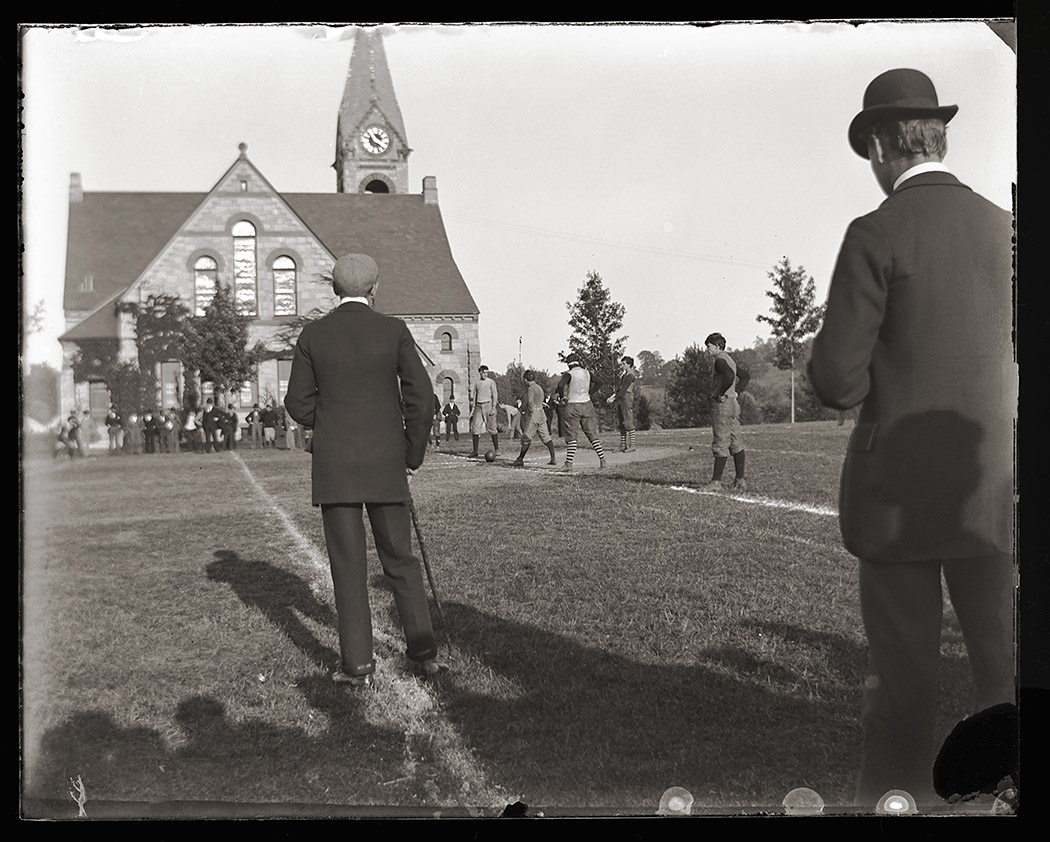
Depiction of Football game by Old Chapel, ca.1894
Football game by Old Chapel, ca.1894

Born on New Year’s Day 1876 to Mark and Katie Shultis, Newton Shultis became a member of the Massachusetts Agricultural College Class of 1896. A resident of Medford, Mass., at the start of his college career, Shultis was described by his classmates in the yearbook as “the only man in the class who has not an enemy in college.” An avid fan of the baseball and football teams, the former of which he was manger, Shultis was also a member of the Washington Irving Literary Society, DGK fraternity, and the YMCA, and he was known to have brought a Hawkeye camera with him to campus. After graduation, Shultis joined his father in the family grain shipping business in Boston where for many years he was a member of the Chamber of Commerce. Shultis died in Hopkinton, N.H. in 1956.

The Shultis papers include a selection of correspondence from Shultis to his parents during his college years, along with a remarkable array of ephemera, including his cadet’s uniform with hat, belt, and bayonet scabbard; his graduation robes; a three-volume herbarium; three volumes of class notes and essays; 16 dry plate glass negatives; a Class of 1896 photograph album; and miscellaneous photographs, school books, and ephemera.

Gift of Sally Harris, June 2018

Subjects

Massachusetts Agricultural College--AlumniMassachusetts Agricultural College--Students

Types of material

HerbariaMilitary uniformsPhotographs
Broadside

Broadside and Poster Collection

1798-2012
5 folders, tube 1 linear feet
Call no.: RB 034
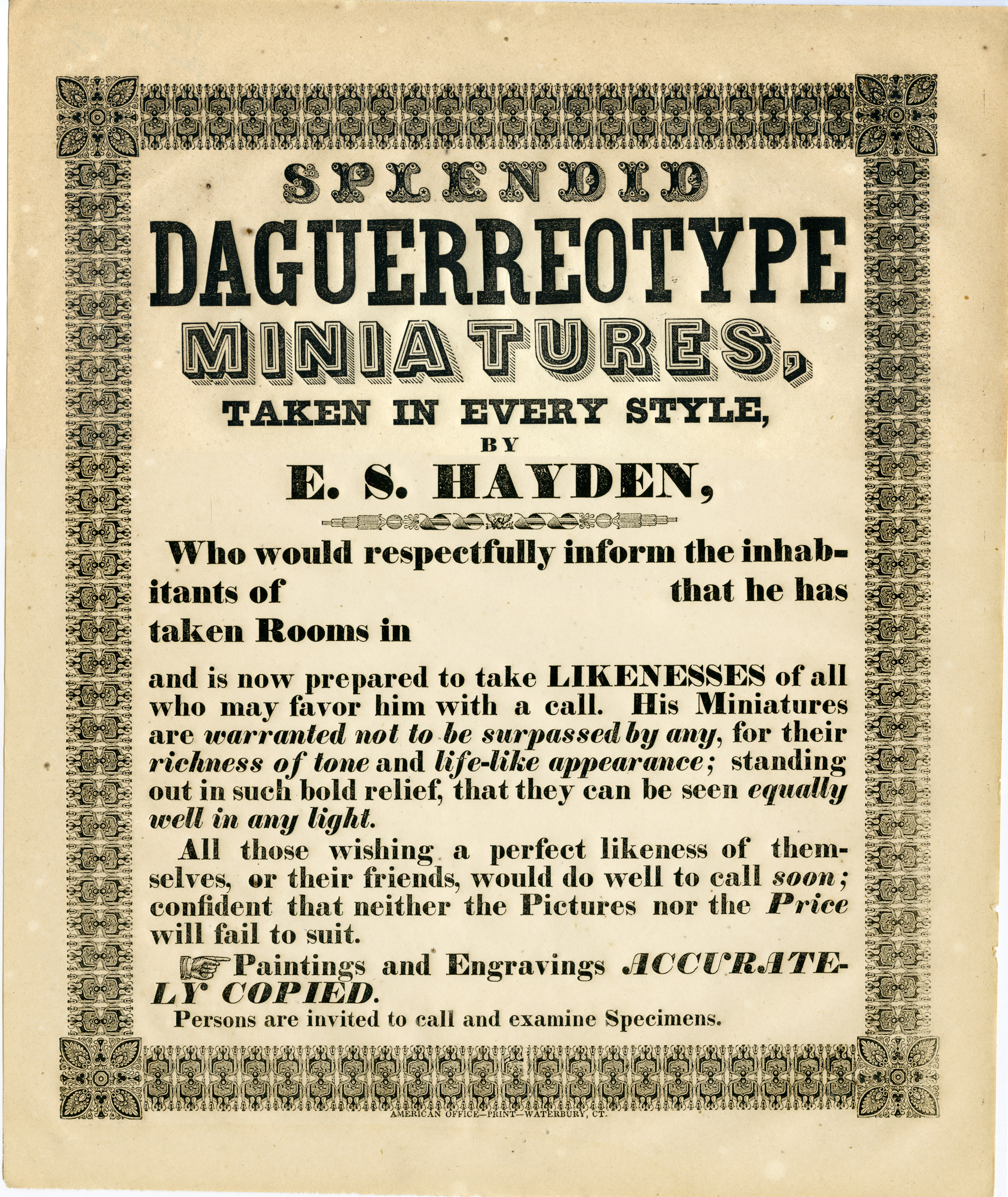
Depiction of Advertisement for E. S. Hayden's daguerreotypes, ca.1850
Advertisement for E. S. Hayden's daguerreotypes, ca.1850

Printers and bibliographers use a bevy of terms to refer to works printed on one side (or sometimes both sides) of a single sheet, classified primarily by size. From large to small, posters, broadsides, and fliers refer to works used to convey a more or less focused message to an audience, often using illustrations or inventive typography to grab the attention.

Posters from Communist world, with an emphasis on the political and cultural transformations of the late 1980s through mid-1990s. The majority of posters originated in the Soviet Union, although there are examples from East Germany, China, and elsewhere.

Gift of various donors
Language(s): YiddishRussian

Subjects

Antiwar movements--PostersCommunism--PostersSoviet Union--History--1985-1991Vietnam War, 1961-1975--Protest movements--Posters

Types of material

Broadsheets (Formats)Broadsides (Notices)Fliers (Printed matter)Posters
« Older posts Newer posts »