The University of Massachusetts Amherst
Robert S. Cox Special Collections & University Archives Research Center
CredoResearch digital collections in Credo

You searched for: "Science " (page 3 of 20)

Mainzer, Lewis C. (Lewis Casper), 1928-

Lewis C. Mainzer Papers

1953-2000 Bulk: 1965-1985
4 boxes 4 linear feet
Call no.: FS 160

Since his arrival at UMass in 1953, Lewis Mainzer has been an affable, influential, and well-respected member of the university community. He joined the faculty of four that at the time made up the department of government, later the department of political science. A dedicated educator, he was instrumental in the expansion of that department and demonstrated a profound commitment to education reform and social engagement against the backdrop of campus upheaval during the 1960s and 1970s. Mainzer retired in 1997 and is now a professor emeritus and author of several books of poetry.

The Lewis C. Mainzer papers consist of personal notes, correspondence, meeting minutes, memoranda, and other materials documenting Mainzer’s activities as a member of numerous Faculty Senate and other committees, and the administrative responses to such events as the Vietnam War protests, the civil rights movement, the expansion of the UMass system, and higher education reform in Massachusetts. There are also materials relating to his interests as a poet, his professional work as an educator, and documents relating to various campus events of the late twentieth century.
Subjects

Educational Change--United StatesPoets--MassachusettsUniversity of Massachusetts Amherst--FacultyUniversity of Massachusetts Amherst. Department of Political Science
Crowe, Frances, 1919-

Frances Crowe Photograph Collection

ca.1969-1987
1 box 0.25 linear feet
Call no.: PH 092
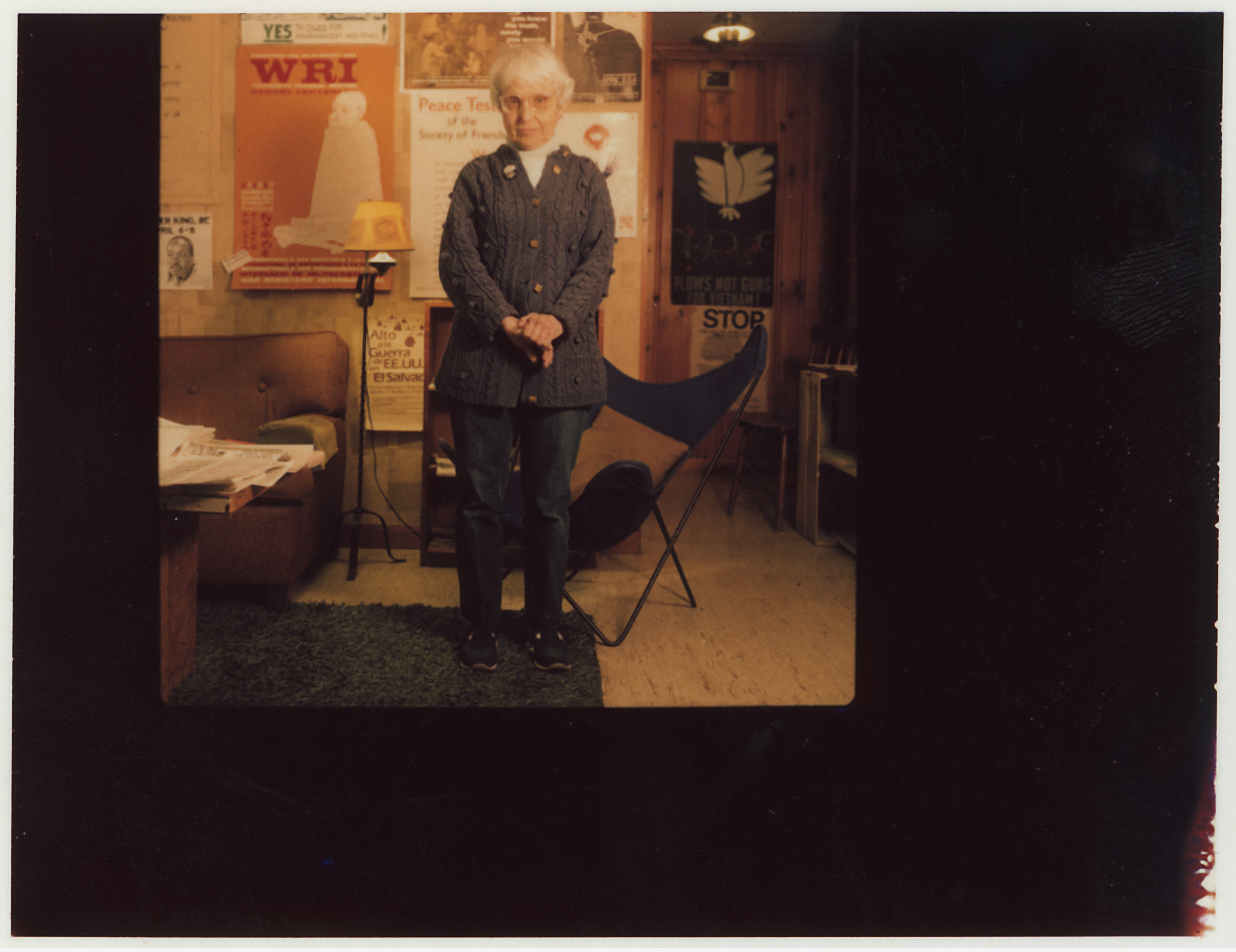
Depiction of Frances Crowe, ca.1983
Frances Crowe, ca.1983

A founder of the Western Massachusetts branch of the American Friends Service Committee and the Traprock Peace Center, Frances Crowe was a legendary peace activist. Born in Missouri in March 1919, Crowe became a committed pacifist in 1945 after learning of the devastation of the bombings in Dresden, Hiroshima, and Nagasaki. Moving to Northampton in 1951 with her husband Thomas, a physician, she began organizing for peace and against nuclear weapons, increasing her peacework during the Vietnam War, she she worked as a draft counselor in Northampton. A member of the Society of Friends, she joined the War Resisters League, SANE, and the Women’s International League for Peace and Freedom, among many other organizations, and was arrested dozens of times for civil disobedience during protests opposing war and militarism, nuclear energy, American imperialism in Central America, and apartheid, and she became a war tax resister after the first Iraq War. An activist to the very end, she died on Aug. 27, 2019, at the age of 100.

This small collection of photographs was kept by Frances Crowe in her role as contributor to Peace Work, the newsletter of the American Friends Service Committee, or for inclusion in the AFSC files. Concentrated in the early 1980s, they depict a range of peace and antinuclear protests in western Massachusetts. The majority of the images were taken by Crowe’s associate, Miriam Leader.

Gift of Eugene Povirk, Oct. 2019

Subjects

Anti-war demonstrations--Massachusetts--PhotographsAntinuclear movements--Massachusetts--PhotographsDemonstrations--Massachusetts--PhotographsPeace movements--Massachusetts--Photographs

Contributors

Leader, Miriam

Types of material

Photographs
Cleveland, L. R. (Lemuel Roscoe), 1892-

L. R. Cleveland Collection

1936-1958
1 box 1.6 linear feet
Call no.: MS 1092
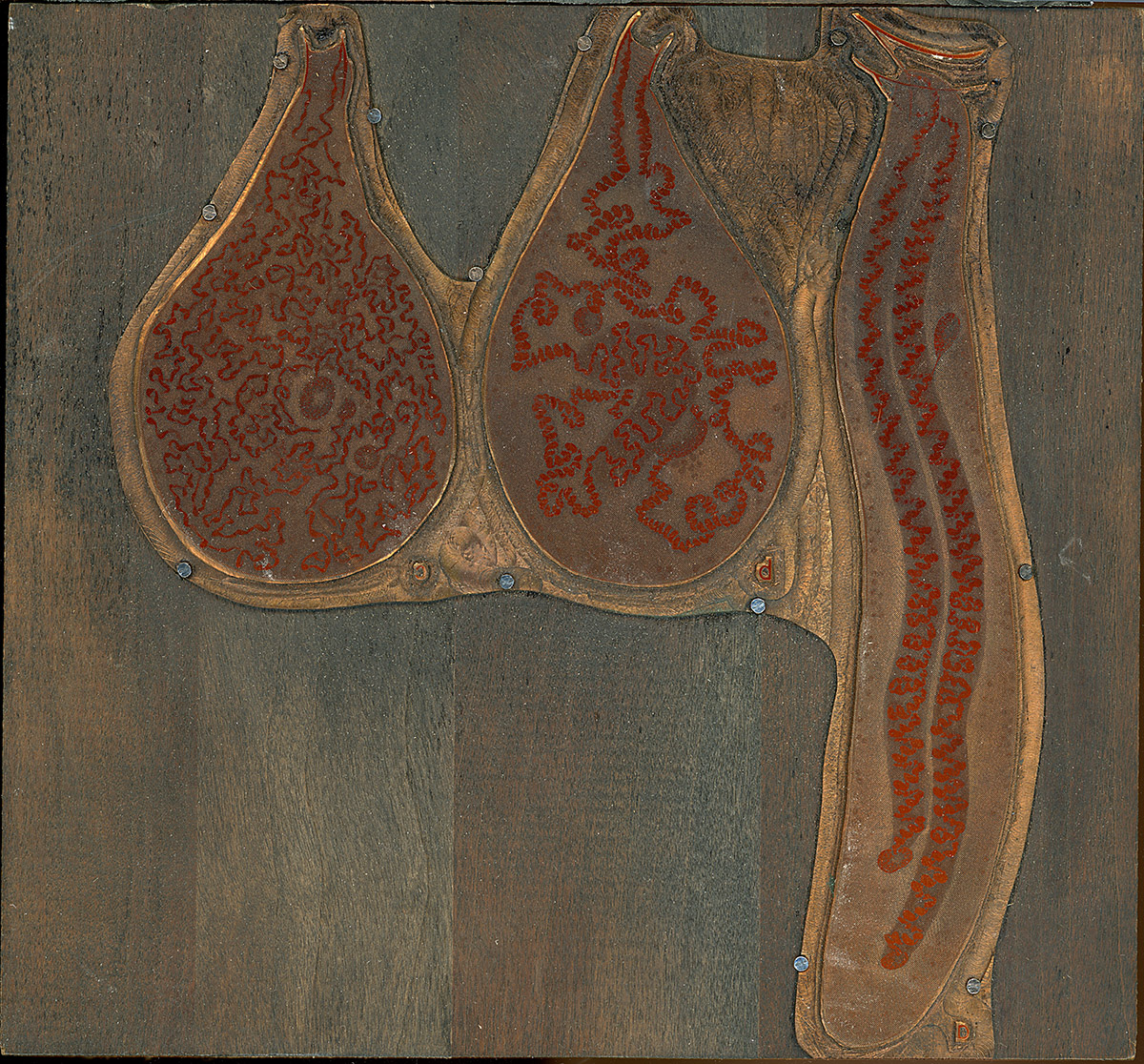
Depiction of Printing plate
Printing plate

The protistologist Lemuel R. Cleveland is credited with providing the first convincing evidence of the endosymbiotic relationship between protists and their metazoan hosts. A Mississippian by birth and graduate of University of Mississippi and Johns Hopkins, Cleveland spent the majority of his career at Harvard, specializing in study of the flagellates inhabiting the guts of termites and the wood-dwelling cockroach Cryptocercus.

This small collection consists of two papers by Cleveland (one in manuscript), four wood-mounted printing blocks, published color and black and white plates, and original paste-up figures for publications by protistologist L. R. Cleveland.

Gift of Michael Dolan, May 2015.

Subjects

Cytology--Pictorial worksFlagellata--Pictorial works

Types of material

Printing plates
Brewer, D. Chauncey

D. Chauncey Brewer Account Book

1848-1869
1 vol. 0.1 linear feet
Call no.: MS 1089 bd

Born into a wealthy and prominent family from Springfield, Mass., Daniel Chauncey Brewer became a prodigy in the antebellum nursery trade. While still in his teens, he was running a substantial traffic in fruits trees and ornamentals. After marrying in 1853, Brewer moved to Boston, where he died of an infection in 1862.

The accounts of Chauncey Brewer’s Springfield-based nursery operation record substantial sales of cherry, peach, apple, and fruit trees, ornamentals such as arbor vita, spruce, and rose, and seeds, vegetables, and grapes. The sales appear to have extended throughout southern New England, as far as Providence, and include charges from grafts and labor.

Acquired from M&S Rare Books, May 2006 (2006-072).

Subjects

Nurseries (Horticulture)--Massachusetts--SpringfieldSpringfield (Mass.)--Economic conditions--19th century

Types of material

Account books
Gibbons, Ian R.

Ian R. Gibbons Papers

ca.1965-2018
3 boxes 4.5 linear feet
Call no.: MS 1069

The cell biologist and biophysicist Eugene R. Gibbons was widely noted for his discovery of microtubule-associated motor proteins. For his doctoral research at Cambridge University in 1957 , Gibbons used an electron microscope to analyze chromosomal organization during mitosis and meiosis, earning him a call from Harvard University to help establish an electron mcircoscopic laboratory. While working on Tetrahymena to answer the question of how simple proteins can push cells through the water, he isolated and described a motor protein he called dynein, which moves cargos along microtubules and powers ciliar and flagellar motility. Relocating to the University of Hawaii at Manoa in 1967 to become head of the Kewalo Marine Laboratory, and switching his organismal focus to sea urchin sperm, he and his collaborator and wife, Barbara, contined to make fundamental contributions to understanding the role of microtubule sliding in ciliar motility. Gibbons shared the Shaw Prize in Life Science and Medicine with Ron Vale (2017) and the E.B. Wilson Medal from the American Society of Cell Biology (1994). He died in January 2018 at the age of 86.

The Gibbons papers contain two boxes of laboratory notebooks, a box of his offprints with a small quantity of correspondence. A collection of Gustaf Retzius’s periodical Biologische Untersuchungen (1890-1914) has been transferred to printed materials.

Gift of Wendy Gibbons, Mar. 2019

Subjects

Cell biologistsCilia and ciliary motionTetrahymena
Lerner, Frederick Andrew, 1945-

Frederick Andrew Lerner Science Fiction Collection

1939-1996
304 titles 15 linear feet
Call no.: RB 016

Fred Lerner is a librarian, bibliographer, and historian who has written extensively on American science fiction. After earning three degrees from Columbia University, including his MLS and DLS (1981), Lerner worked for many years in information science for Spectra, Inc., and the National Center for Posttraumatic Stress Disorder. His diverse including work in radio, writing about the history of psychiatry, libraries, Rudyard Kipling, and science fiction.

The Lerner collection contains a cross-section of American science fiction writing concentrated largely in the 1960s through mid-1980s.

Gift of Frederck Andrew Lerner, 2010-2011

Subjects

Science fiction
Yih, Chia-Shun, 1918-1997

Chia-Shun Yih Collection

1972-1981
1 box 0.5 linear feet
Call no.: PH 085
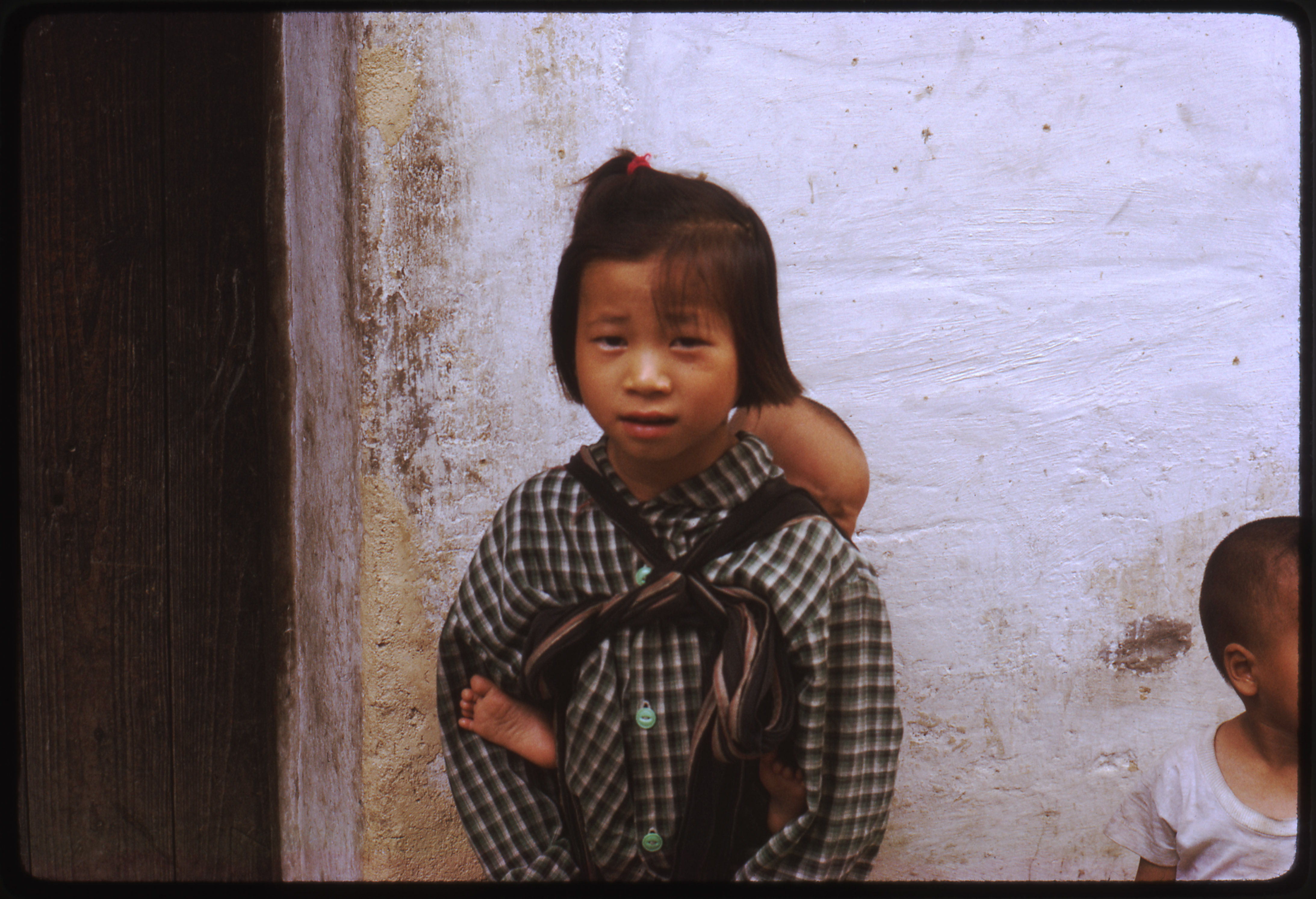
Depiction of Chinese girl and infant, 1972
Chinese girl and infant, 1972

An important scholar of field of fluid dynamics, Chia-Shun Yih was born in Guizhou Province, China, in 1918. Despite the disruptions of war, he completed his undergraduate work in engineering at National Central University in Nanjing in 1942 and was working in Sichuan Province when he received a governmental scholarship to continue his education in the U.S. in 1945. His theoretical work in nonhomogeneous fluid dynamics that began with his dissertation at the University of Iowa (1948) fueled a long and distinguished career, primarily at the University of Michigan. Yih died of heart failure in 1997.

This small collection features slides taken by Yih, an early member of Science for the People, during two trips to the People’s Republic of China. He and his wife Katherine traveled to PRC as guests of the Chinese Academy of Sciences in June and July 1972, shortly after the Nixon-era detente between the countries, but during the Cultural Revolution, and he returned in 1981.

Gift of Katherinw Yih, Jan. 2019.

Subjects

China--Photographs

Types of material

PhotographsSlides (Photographs)
Richardson, Mary Ann Moore

Mary Ann Moore Richardson Collection

1842-1854
1 folder 0.1 linear feet
Call no.: MS 1072 bd
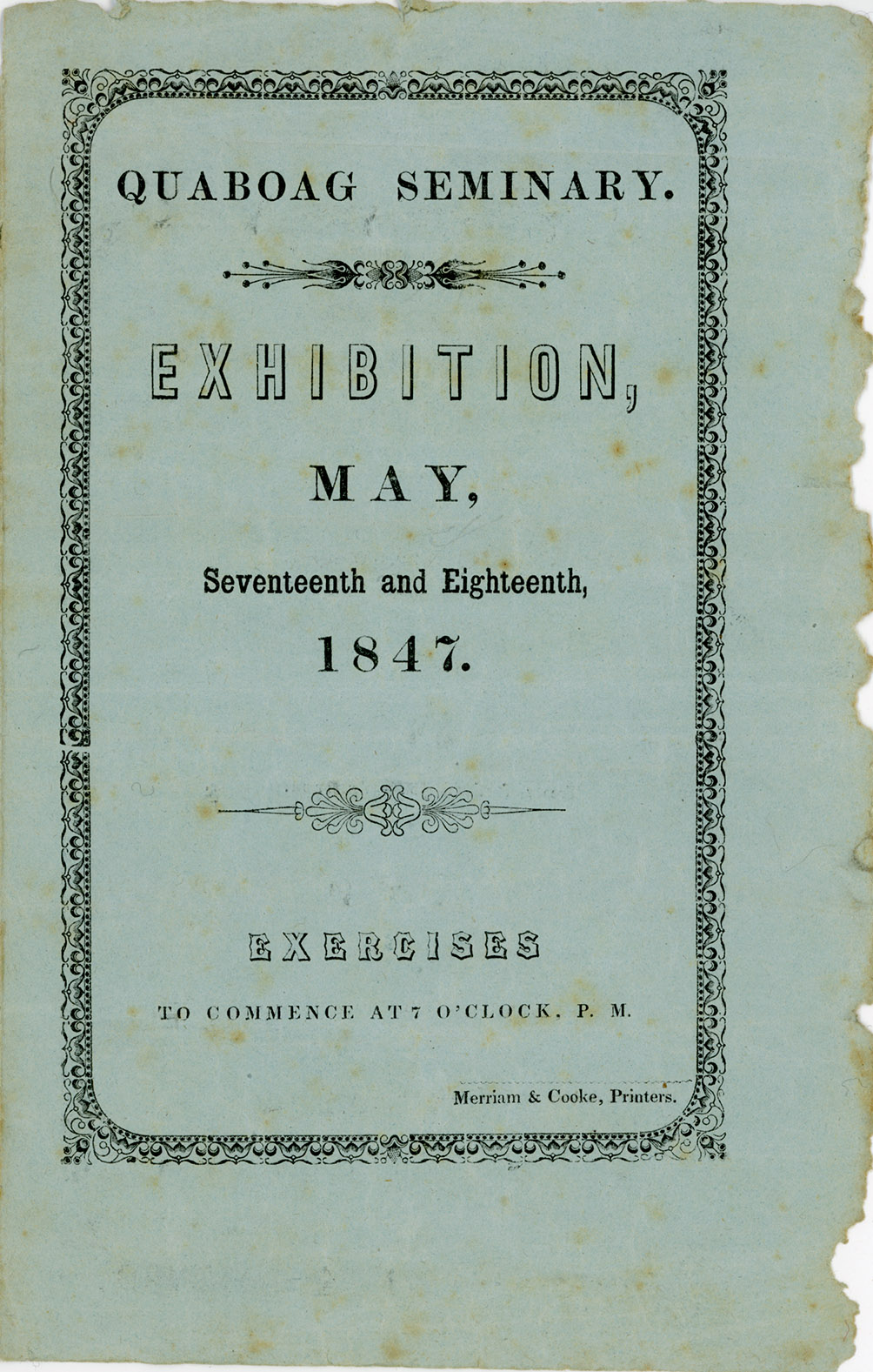
Depiction of Program of the student exhibition, Quaboag Seminary, 1847
Program of the student exhibition, Quaboag Seminary, 1847

The Quaboag Seminary was founded in Warren, Mass., in 1842 by two of Amherst College’s early graduates, and was incorporated eight years later. During its relatively brief period of operation, its best-known student may have bene the abolitionist and feminist Lucy Stone, who enrolled in 1841 to prepare for entrance examinations at Oberlin College. In 1856, the school was purchased by the town to serve as the local high school.

This small collection consists primarily of printed materials associated with the short-lived Quaboag Seminary of Warren, Mass. In addition to a school catalogue for 1847, the collection includes two issues — apparently all that were printed — of the student literary periodical, the Quaboag Quarterly Offering (1845); eight programs for school exhibitions (1842-1854); a flier announcing the spring term 1848; and two writing exercise books kept by Mary Ann Moore (later Richardson) while a student at the Seminary.

Gift of I. Eliot Wentworth, Mar. 2019

Subjects

Boarding schools--Massachusetts--WarrenSchools--Massachusetts--WarrenWarren (Mass.)--History--19th century

Contributors

Quaboag Seminary

Types of material

Broadsides (Notices)Catalogues (Documents)PeriodicalsPrograms (Documents)
Fukumi, Yasuko

Yasuko Fukumi Papers

1980s-2011
6 boxes 9 linear feet
Call no.: FS 191

Access restrictions: Temporarily stored offsite; contact SCUA in advance to request materials from this collection.

Yasuko Fukumi graduated from Tsuda College in Tokyo in 1949 with a B.A. in English. From 1949 to 1952, she worked in the library of the Narimasu High and Junior High Schools, before becoming an Assistant Librarian at the American School in Japan. In 1962, Fukumi moved to the United States to pursue a graduate degree in library science at Kansas State Teachers College. She held two positions at other American libraries before joining the staff of the UMass Amherst Library as a cataloger and later as the East Asian Studies Librarian. Fukumi first discovered the Benjamin Smith Lyman Collection, housed then at the Forbes Library in Northampton, in 1979. From that time forward, she worked tirelessly to bring the collection to the attention of the faculty at UMass and to the scholarly world at large. In 1987, she mounted a campaign to raise the $200,000 necessary to purchase the collection from the Forbes Library and secure it a permanent home in the UMass Amherst Special Collection and University Archives.

Fukumi’s papers focus on her extensive research both on Benjamin Smith Lyman and on the Japanese books that comprised his collection, books now housed along with his papers at UMass Amherst. Materials include Lyman family history and genealogy, Lyman’s contributions to Japan’s coal, oil, and mineral reserves during the latter of the 19th century, and Fukumi’s bibliography of Lyman’s library. The collection also contains limited material on Fukumi’s employment at the university library and a large selection of her Haiku poems.

Language(s): Japanese

Subjects

Geology--Japan--History--19th centuryJapan--History--1868-Lyman, Benjamin Smith, 1835-1920Mining engineering--Japan--History--19th centuryPrinting--Japan--History
Friends Meeting at Cambridge

Friends Meeting at Cambridge Records

1911-2010
8 vols., 15 boxes 10 linear feet
Call no.: MS 902 C363

The present-day Friends Meeting at Cambridge began as an independent, informal, unprogrammed meeting for worship that met between 1899 and 1901, and then again beginning in 1911. After holding joint meetings with neighboring Boston Monthly Meeting starting in 1926, Cambridge became an official independent monthly meeting in 1937, and during the Quaker union of 1944, merged with Boston Monthly to create the new Friends Meeting at Cambridge.

Although records from Cambridge are beset with significant gaps, they nevertheless provide a rich opportunity for examining the growth of a monthly meeting in New England during the post-World War II era and the commitment shown by its members to creating social justice. The collection includes extensive records of the Peace and Social Concerns Committee (and related endeavors), documenting peace activism during the Cold War and Vietnam years, and initiatives to fight poverty and racial injustice.

Gift of New England Yearly Meeting of Friends, April 2017

Subjects

Cambridge (Mass.)--Religious life and customsPeace movements--Massachusetts--CambridgeQuakers--MassachusettsSociety of Friends--MassachusettsVietnam War, 1961-1975--Protest movements--Massachusetts--Cambridge

Contributors

New England Yearly Meeting of Friends

Types of material

Minutes (Administrative records)NewslettersPhotographs