The University of Massachusetts Amherst
Robert S. Cox Special Collections & University Archives Research Center
CredoResearch digital collections in Credo

You searched for: "Politics " (page 3 of 19)

Healy, Jonathan L.

Jonathan L. Healy Papers

1963-2004
2 boxes 3 linear feet
Call no.: MS 1111
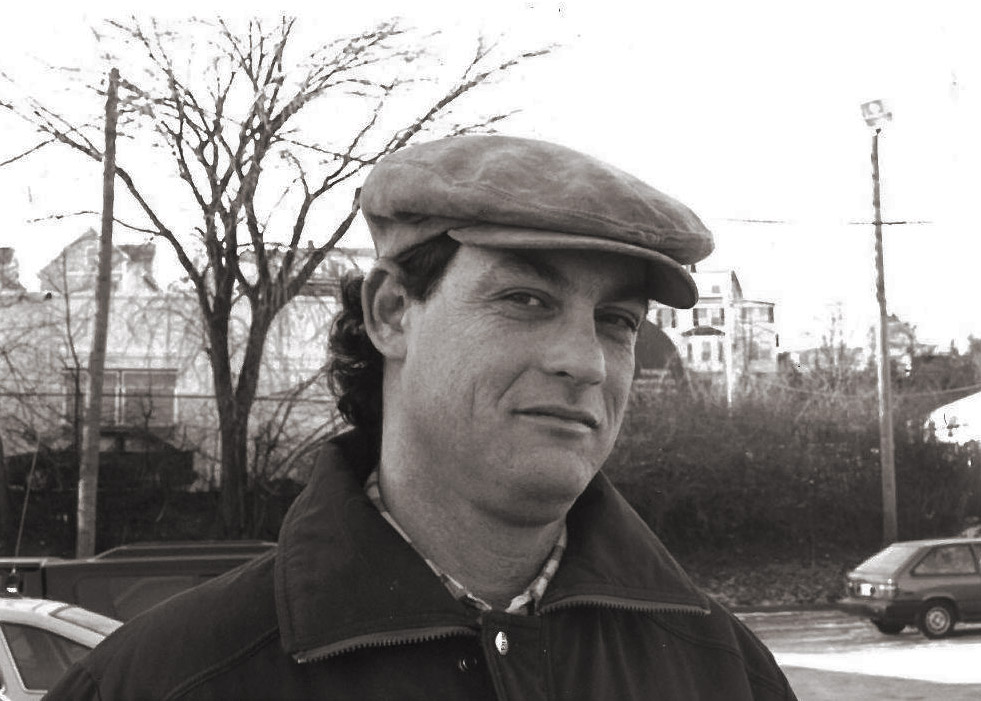
Depiction of Jay Healy with a pumpkin, Greenfield, Mass., 1998
Jay Healy with a pumpkin, Greenfield, Mass., 1998

Jonathan “Jay” Healy represented the 1st Franklin District in the Massachusetts House of Representatives from 1970 to 1993. A moderate Republican, Healy was born in Greenfield in 1945 and raised on a 500-acre farm in Charlemont. A recent graduate of Williams College, Healy ran for office for the first time in 1970, succeeding his own father, Winston Healy, defeating both his Democratic rival and a far right challenge from within his own party. His popularity over the succeeding years in a heavily Democratic district was rooted in his close attention to issues of local concern, particularly agriculture and dairying. When he left office in 1993, he was appointed state Commissioner of Food and Agriculture, where he remained until 2003.

Documenting the career of a Massachusetts Republican, the Healy Papers contain a small selection of constituents’ correspondence, press releases, and position papers, plus an excellent assortment of scrapbooks, news clippings, and photographs relating to his political career. Although the focus is largely on his time in the state house, there is some materials relating to his role as Commission of Food and Agriculture.

Gift of Jay Healy through Ellen Story, Jan. 2020.

Subjects

Franklin County (Mass.)--HistoryMassachusetts--Politics and government, 1951-Massachusetts. House

Types of material

PhotographsScrapbooks
Sisson, Charles

Charles Sisson Diary

1864 Feb.-1865 June
1 vol. 0.1 linear feet
Call no.: MS 1083

At the time of the American Civil War, Charles Sisson attended the Friends Boarding School in Providence, R.I. An active member of the Society of Friends, Sisson was apparently a dedicated student and avid member of the literary society. After graduation, he pursued an enormously successful career in the textile industry, becoming a founder of the Hope Webbing Company in 1883, one of the nation’s largest narrow-fabric manufacturers.

Kept by teenaged Charles Sisson, this diary includes regular entries describing a student’s daily life at the Friends Boarding School in Providence R.I. In addition to occasional details on coursework, Sisson describes his social activities in some depth, and often with some humor. With rare exceptions, the larger currents of the Civil War served as little more than a backdrop, although the future of liberated slaves appeared as a topic for debate at the Lyceum, and marching was taken up as an activity by the students.

Gift of I. Eliot Wentworth, June 2019

Subjects

High school students--Rhode Island--ProvidenceMoses Brown SchoolProvidence (R.I.)--History--19th centuryQuakers--Rhode Island

Types of material

Diaries
Esperanto Information Center

Esperanto Information Center Records

1933-2016 Bulk: 1960-1974
6 boxes 8 linear feet
Call no.: MS 1076
Depiction of Esperanta leciono per bildoj, ca.1968
Esperanta leciono per bildoj, ca.1968

Labor educator Mark Starr first became interested in the potential of the constructed language, Esperanto, for promoting peace and international understanding while serving time in prison for conscientious objection during the First World War. A career in labor led him to immigrate to the United States in 1928, where he taught at a labor college in New York before becoming the educational director for the International Ladies Garment Workers Union. Long active in the Esperanto movement, he joined the Esperanto Information Center when it was founded by Bernard Stollman in 1962 and served as its chair from 1965 to 1972. As the New York Office of the Esperanto League of North America, the EIC played a key role in promoting the movement in the United States and sharing information among supporters and aspiring learners.

Meticulously maintained by Starr during his tenure as chair, the EIC records include a rich correspondence with local and regional Esperanto organizations and national and international affiliates, and particularly its parent body, the Esperanto League for North America. While much of the content consists of routine communications about membership, queries from learners, and organizational wrangling about meetings, conferences, and publications, the collection provides insight into the grassroots organizing and lobbying for the language and its roots in internationalism, peace, and social justice concerns. Written in both Esperanto and English, the collection includes letters (retained copies as well as received) and articles by Starr and other noted Esperantists, including Allan Boschen, Francis Hellmuth, and Humphrey Tonkin.

Gift of Humphrey Tonkin, Apr. 2019
Language(s): Esperanto

Subjects

Esperanto--Study and teachingEsperanto--United States

Contributors

Starr, Mark, 1894-1985Tonkin, Humphrey, 1939-

Types of material

NewslettersPhotographsPrinted ephemera
Norsigian, Judy

Judy Norsigian Collection

1953-2002 Bulk: 1967-1976
1 box 0.5 linear feet
Call no.: MS 1071
Depiction of SDS pamphlet, 1969
SDS pamphlet, 1969

Judy Norsigian is a prominent advocate for women’s reproductive health and was a co-founder of the Boston Women’s Health Book Collective, better known by its later and the title of its best-known book, Our Bodies, Ourselves. Editor of each of the nine editions of the book and executive director of the collective from 2001 to 2015, Norsigian is an important public intellectual on women’s health issues and has served on numerous boards and advisory groups relating to reproductive health, contraception, and medical research.

Consisting primarily of the sort of ephemeral political literature that abounded in the late 1960s and early 1970s, the Norsigian collection offers insight into the feminist movement and the early milieu of Our Bodies, Ourselves. Many of the publications are devoted to issues in contemporary feminism or pertain to women’s conferences, however several (especially those published by the New England Free Press) take on other political and social movements.

Gift of Judy Norsigian, Jan. 2017

Subjects

Feminism--MassachusettsOur Bodies, Ourselves

Types of material

BrochuresEphemera (General object genre)NewspapersPamphlets
Neill, D. Monty

D. Monty Neill Collection

1986 Feb.-Apr.
2 boxes 0.5 linear feet
Call no.: MS 1061

An educator and scholar of educational assessment, Monty Neil is the Executive Director of the National Center for Fair and Open Testing (FairTest). For his doctorate at Harvard in the mid-1980s, Neill examined the impact of the 1974 desegregation order affecting Boston’s public schools and the ongoing search within the city’s African American community for quality and equity in education. He completed his dissertation, The Struggle of Boston’s Black Community for Quality and Equality in Education: 1960-1985, in 1987.

The 33 audiocassettes in this collection include interviews with 29 activists and educational and political leaders in Boston, predominantly from the city’s African American community, include in-depth discussions about the busing crisis in Boston during the late 1970s and early 1980s, its aftermath, and the ongoing search for educational equity and quality. The tapes were recorded between January and April 1986 as part of Neill’s dissertation research.

Gift of Monty Neill, Dec. 2018

Subjects

African Americans--Massachusetts--BostonBoston (Mass.)--History--20th centuryBoston (Mass.)--Politics and government--20th centuryBusing for school integration--Massachusetts--BostonCivil rights movements--Massachusetts--BostonPublic schools--Massachusetts--BostonSegregation in education--Massachusetts--Boston

Contributors

Breeden, James P. (James Pleasant)Haskins, Kenneth, 1923-1994Jones, Hubie, 1933-King, Melvin, 1928-O'Bryant, John D., 1931-1992Owens, Bill, 1937-Owens-Hicks, ShirleySmith, Mary EllenSnowden, Muriel S. (Muriel Sutherland), 1916-

Types of material

Audiocassettes
Scherman, Rowland

Rowland Scherman Collection

ca.1955-2018
20 boxes, 7 portfolios
Call no.: PH 084
Depiction of Mississippi John Hurt, ca.1965
Mississippi John Hurt, ca.1965

One of the most frequently published photographers in Life magazine during the late 1960s, Rowland Scherman is noted for an iconic portfolio that documents the worlds of politics, culture, and the rock music scene. Born in New York in 1937, Scherman attended Oberlin College and began his career in the darkroom at Life before winning an assignment as the first official photographer for the Peace Corps in 1961. His work blossomed after becoming a free-lancer two years later, with assignments that included the civil rights March on Washington and the presidential campaign of Lyndon Baines Johnson. He covered the Newport Folk Festival when Bob Dylan broke on the national scene, the Beatles’ first concert in the U.S., Robert Kennedy’s campaign for the presidency, and Woodstock, and he went along on a memorable tour with Judy Collins. His work has appeared in dozens of magazines and books, including Life, Look, Time, National Geographic, Playboy, and Paris Match, earning wide acclaim, including a Grammy Award in 1968 for the portrait that appears on the cover of Dylan’s greatest hits album. Scherman relocated to London in 1970, then to Birmingham, Ala., in the 1980s, and finally to Cape Cod on 2000. He continues to shoot portraits, photo essays, and abstract work.

This rich collection consists of nearly the entire body of work from Rowland Scherman’s long career in photography, including negatives and transparencies with a small selection of prints. Negatives from the March on Washington and the Peace Corps are in the collections of the Library of Congress.

Acquired from Rowland Scherman, Dec. 2018

Subjects

Dylan, Bob, 1941---PhotographsJohnson, Lyndon B. (Lyndon Baines), 1908-1973Kennedy, John F. (John Fitzgerald), 1917-1963Kennedy, Robert F., 1925-1968Newport Folk Festival (1963 : Newport, R.I.)--PhotographsPeace movements--PhotographsRock musicians--PhotographsVietnam War, 1961-1975--Protest movements--PhotographsWoodstock Festival (1969 : Bethel, N.Y.)--Photographs

Types of material

Photographs
Restrictions: Copyright for commercial purposes retained by Scherman
Hood, Otis A. (Otis Archer)

Otis A. Hood Papers

1941-1957
1 box 0.5 linear feet
Call no.: MS 1056
Depiction of Otis Hood for Boston School Board, 1949
Otis Hood for Boston School Board, 1949

A long-time leader in the Communist Party in Massachusetts, Otis A. Hood (1900-1983) was a frequent candidate for public office between the late 1930s and early 1950s. At a time of increasing repression, he stood openly for Communist principles, speaking regularly on the radio and at public forums. In 1954, he was one of several activists arrested for violating the state ban on the Communist Party, winning acquittal, and he was acquitted again after a second indictment in 1956 on charges of inciting the overthrow of the federal government.

The Hood papers are a slender reflection of Communist politics during the height of McCarthy-era repression. The collection centers around Otis Hood’s public espousal of Communist ideals as a candidate for public office in Boston, and particularly his runs for the city School Board in 1943 through 1949, but it includes fliers, handbills, and other materials relating to Communist-led campaigns relating to the war, housing, public transportation, and education, but most importantly, transcripts of radio broadcasts made by Hood during his political campaigns and relating to a variety of social issues.

Gift of Bruce Rubenstein via Eugene Povirk, Oct. 2018

Subjects

Boston (Mass.)--History--20th centuryCommunists--MassachusettsRacism--MassachusettsSchools--Massachusetts--BostonWorld War, 1939-1945

Contributors

Hood, Frances A.Lipshires, SidneyMassachusetts. Special Commission to Study and Investigate Communism and Subversive Activities and Related Matters in the Commonwealthommunist Party of the United States of America (Mass.)

Types of material

Fliers (Printed matter)Printed ephemeraRadio scripts
Naughton, George B.

George Naughton Collection

1969-1991 Bulk: 1972-1978
4 boxes 3 linear feet
Call no.: FS 015
Depiction of Coevolution Quarterly cover
Coevolution Quarterly cover

George Naughton was born in 1951 into an academically inclined family. His father, Thomas, was a writer and magazine editor and his mother a music teacher; his grandfather Julius Seelye Bixler was a college professor and president of Colby College (1942-1960); and his great-great-grandfather Julius Seelye served as the fifth president of Amherst College (1876-1890). Naughton grew up in the 1960s in Old Saybrook, Conn. He graduated from Mount Hermon School in 1969 and from New College in Sarasota, Fla., with a BA in General Studies, in 1973. For the next few years, Naughton lived, worked, and meditated in Cambridge, Mass., and California, then in March of 1978 moved to Amherst and took a job at UMass. From 1978 until his retirement in 2011, he worked in University Information Systems in Whitmore Administration Building. Now president of the Amherst Historical Society, Naughton is also active in the Pelham Historical Society and lives in Pelham with his wife, Cindy.

Naughton’s lifelong interests have included mathematics, science fiction, cultural alternatives, and books, and he accumulated a wide collection of print material on a variety of topics. The Naughton Collection is a reflection of many of those interests and comprises underground comics as well as pamphlets, periodicals, and ephemera on spirituality, new age thinking, counterculture, politics, the environment and sustainability, and intentional communities.

Types of material

BrochuresComic booksMagazinesNewslettersPeriodicals
Wasserman, Harvey, 1945-

Harvey Wasserman Papers
ca.1965-2017
46 boxes 45.5 linear feet
Call no.: MS 1082
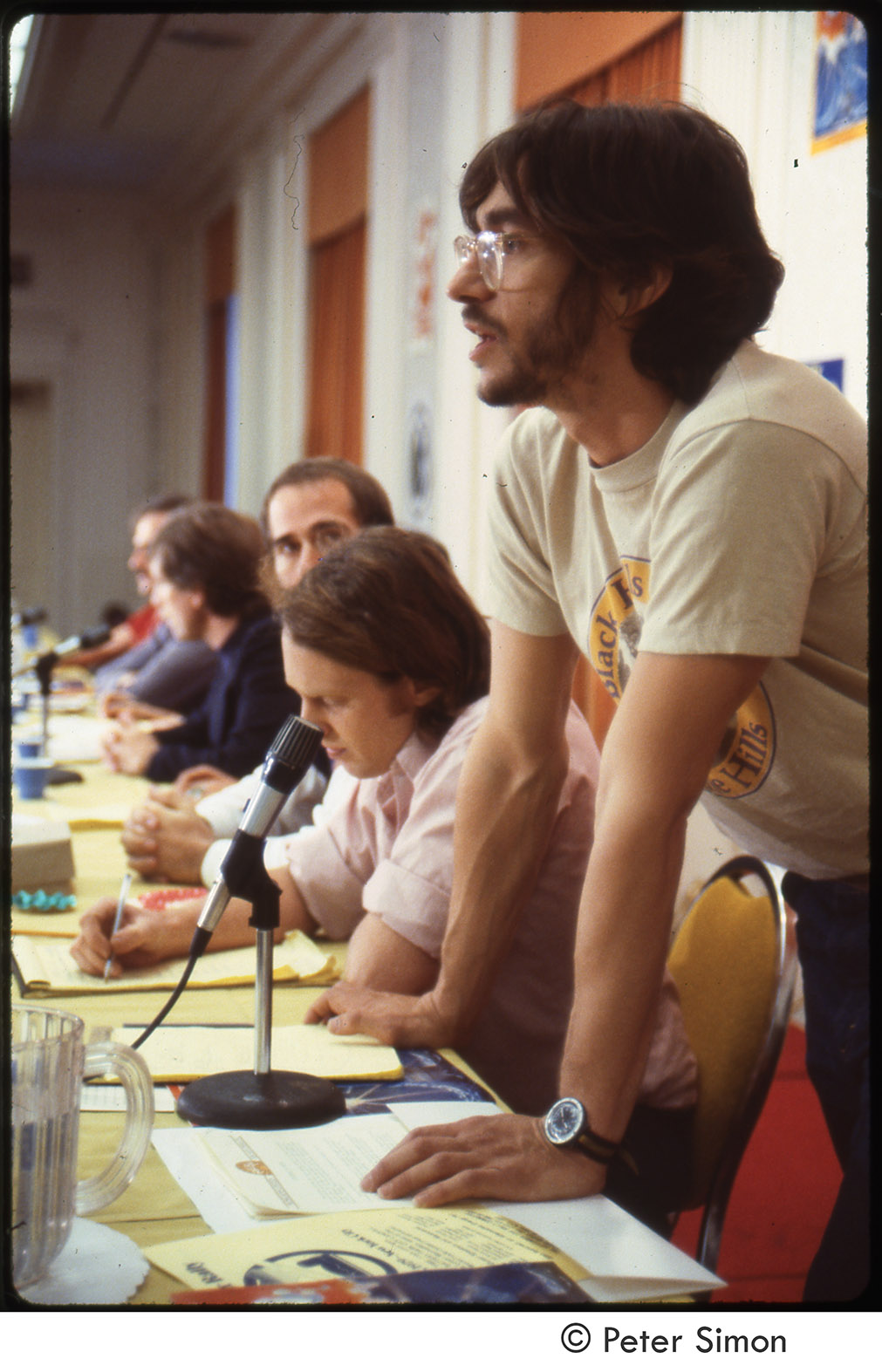
Depiction of Harvey Wasserman at MUSE press conference, 1979
Harvey Wasserman at MUSE press conference, 1979

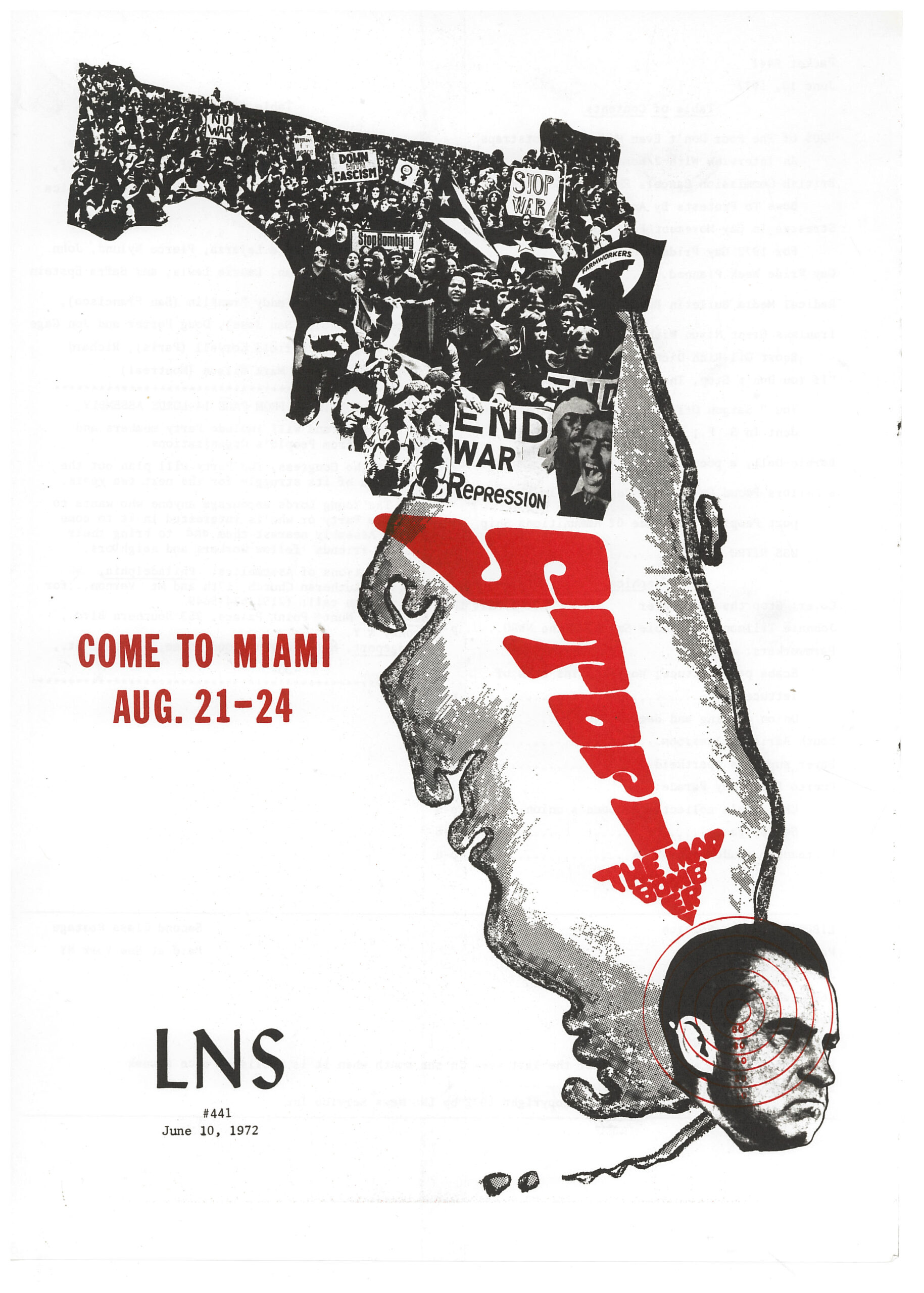
A journalist, writer, and historian, Harvey Wasserman has been an activist for radical democracy and alternative energy for over five decades. Influenced by civil rights activism as a child, Wasserman became seriously involved in journalism while on the staff of the Michigan Daily at the University of Michigan. After graduating in 1967, he joined the Liberation News Service supplying news to underground and alternative media outlets, remaining with the LNS branch that eventually settled on the Montague Farm Commune in Montague, Mass. During more than a decade at the Farm, Wasserman and his fellow communards helped ignite the modern movement opposing nuclear power. Helping to found two vital antinuclear groups, the Alternative Energy Coalition and the Clamshell Alliance, he became a key strategist and organizer of the mass protests at the Seabrook Nuclear Power Plant and was a motive force behind the Musicians United for Safe Energy concerts in 1979. His activism has since expanded into a broad range of environmental issues, alternative energy, election protection, and politics. A prolific writer, he is author of Harvey Wasserman’s History of the United States (1972) and Solartopia (2007), among other books, and his articles have appeared in both the mainstream and alternative press.

The Wasserman Papers document the career of a key figure in antinuclear and alternative energy activism. The collection includes a nearly comprehensive set of Wasserman’s writings, materials on the antinuclear movement, solar power, the Montague Farm Commune, and materials relating to his efforts to protect the American electoral system.
Gift of Harvey Wasserman, 2017

Subjects

Antinuclear movementsCommunal living--MassachusettsEnvironmentalismLiberation News ServiceMontague Farm CommunityRenewable energySolar energyUnited States--History--20th century
Broadside

Broadside and Poster Collection

1798-2012
5 folders, tube 1 linear feet
Call no.: RB 034
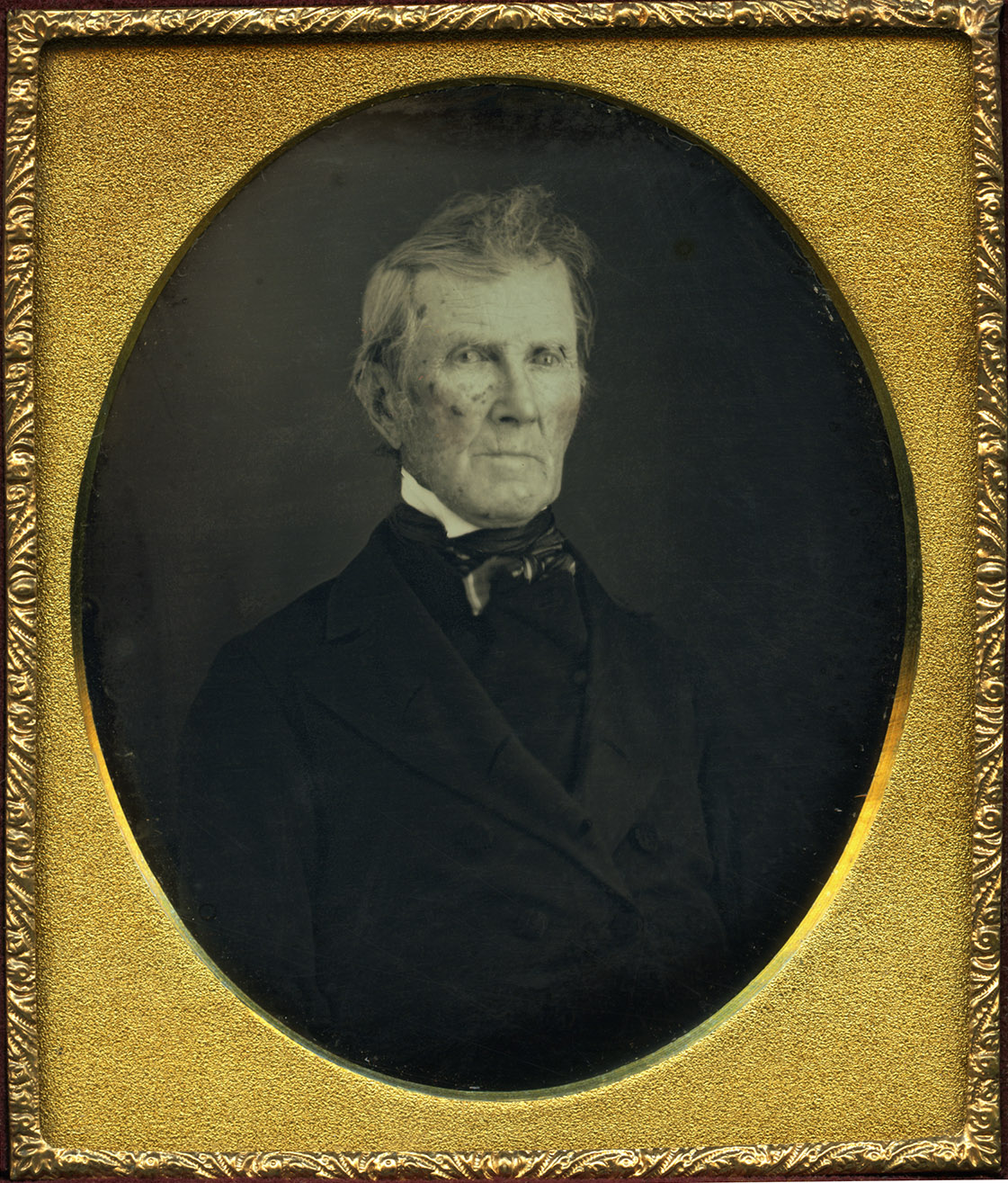
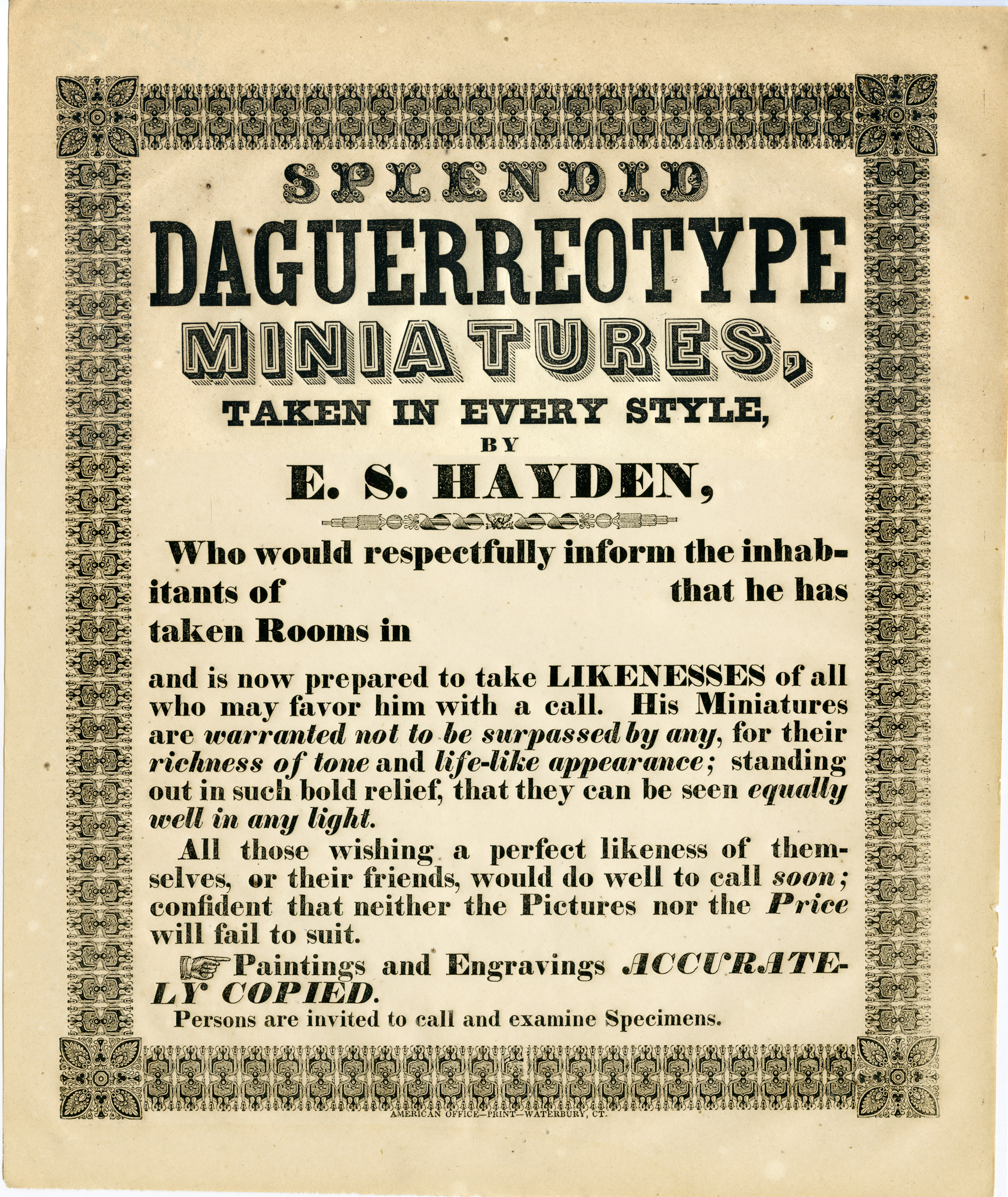
Depiction of Advertisement for E. S. Hayden's daguerreotypes, ca.1850
Advertisement for E. S. Hayden's daguerreotypes, ca.1850

Printers and bibliographers use a bevy of terms to refer to works printed on one side (or sometimes both sides) of a single sheet, classified primarily by size. From large to small, posters, broadsides, and fliers refer to works used to convey a more or less focused message to an audience, often using illustrations or inventive typography to grab the attention.

Posters from Communist world, with an emphasis on the political and cultural transformations of the late 1980s through mid-1990s. The majority of posters originated in the Soviet Union, although there are examples from East Germany, China, and elsewhere.

Gift of various donors
Language(s): YiddishRussian

Subjects

Antiwar movements--PostersCommunism--PostersSoviet Union--History--1985-1991Vietnam War, 1961-1975--Protest movements--Posters

Types of material

Broadsheets (Formats)Broadsides (Notices)Fliers (Printed matter)Posters