The University of Massachusetts Amherst
Robert S. Cox Special Collections & University Archives Research Center
CredoResearch digital collections in Credo

Collecting area: UMass (1947- )

Swedlund, Alan C.

Alan C. Swedlund Papers

1971-2006
5 boxes 4.5 linear feet
Call no.: FS 197

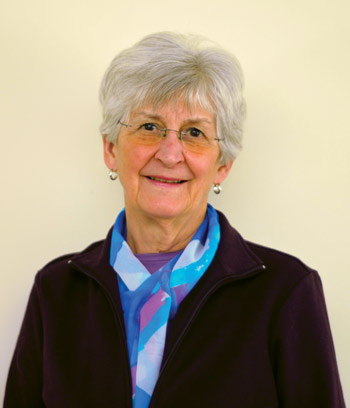
Born in Sacramento, Calif., but raised in Colorado, the biological anthropologist Alan C. Swedlund received each of his degrees at the University of Colorado Boulder (PhD, 1970). After a brief stint at Prescott College, Swedlund joined the faculty at UMass Amherst in 1973, where he helped to develop the doctoral program in biological anthropology and chaired the department for five years in the early 1990s. A prolific scholar, he drew upon diverse methodologies drawn from demography, epidemiology, and physical anthropology to explore interactions between cultural processes and human biological conditions in populations ranging from the Ancient Pueblo of the southwestern United States, to contemporary Central America and Yucatan, and historical New England. Among dozens of publications, he was author or editor of seven books, including Shadows in the Valley: A Cultural History of Illness, Death, and Loss in New England, 1840-1916 (2010), Plagues and Epidemics: Infected Spaces Past and Present (2010), and Beyond Germs: Explorations of Indigenous Depopulation in North America (2015). He was granted emeritus status upon his retirement in 2008.

The Swedlund Papers include extensive professional correspondence from his first professional appointment at Prescott College through the time of his retirement, along with numerous grant applications, unpublished papers and talks, and research data. Of particular note are extensive records and data files for his study of nineteenth-century demography in the Connecticut River Valley and Franklin County, Mass.
Gift of Alan C. Swedlund, August 2019.

Subjects

Connecticut River Valley--PopulationDemographyPhysical anthropologyUniversity of Massachusetts Amherst--FacultyUniversity of Massachusetts Amherst. Department of Anthropology
Talking Truth

Talking Truth Collection

2015-2018
2 boxes 0.75 linear feet
Call no.: RG 040/2 T35
Depiction of

Co-founded by Madeleine Charney, Lena Fletcher, and Kris Nelson, Talking Truth began as a workshop on climate activism held during the Fall of 2015. The original workshop focused on the overwhelming nature of the climate crisis and provided a three part discussion aimed at helping UMass Amherst students, faculty, and librarians find their individual voices as activists and to support collaboration among UMass community members in their efforts to combat climate change. The discussion included a letter writing activity asking writers to share their feelings about climate change. This activity originated in Fletcher’s Natural Resources Conservation course, “Environment and Society” and more letters were written at subsequent Talking Truth events. Through 2018, Talking Truth held a variety of other events including film screenings, author talks, and a booth at the Amherst, Mass. Sustainability Festival.

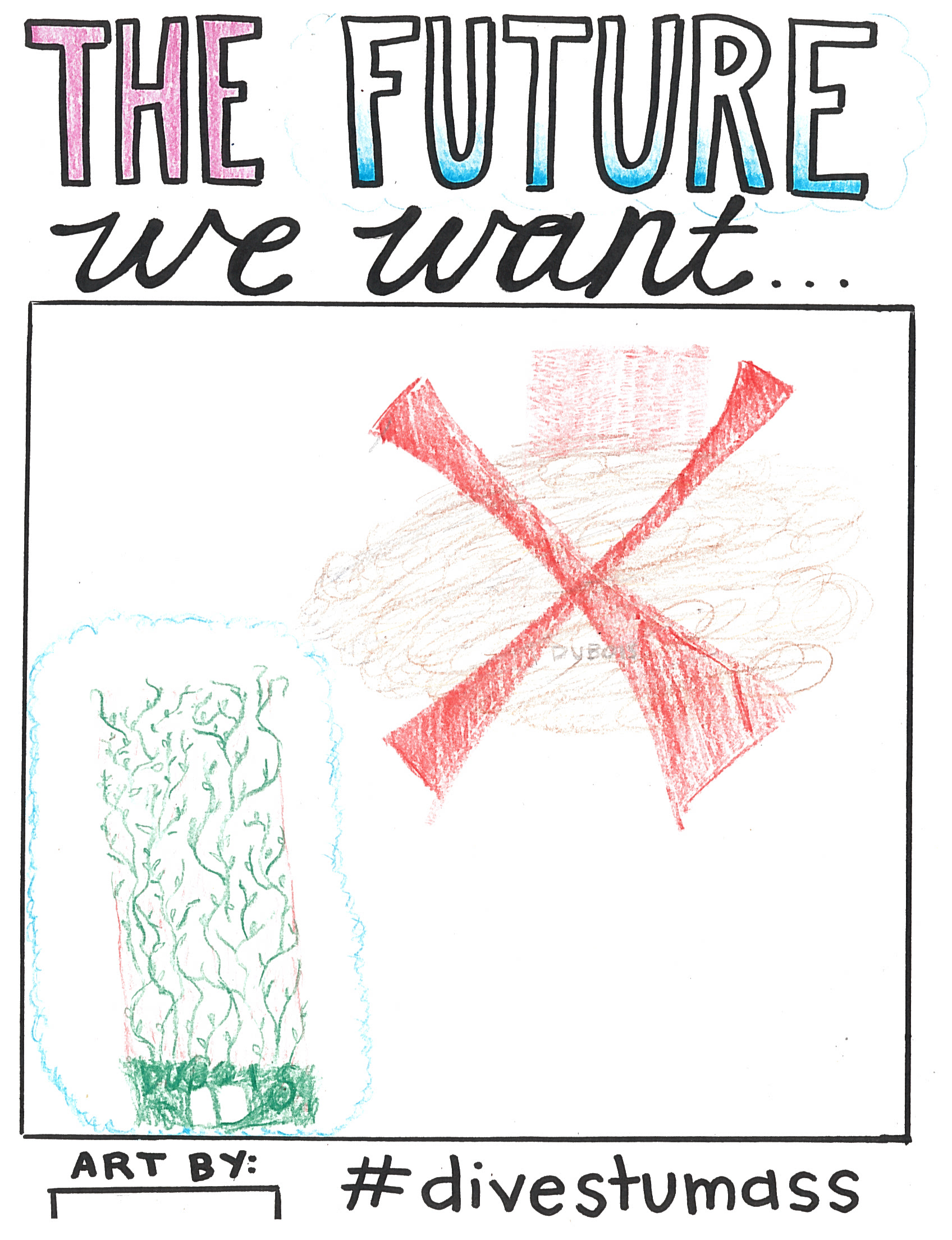
The Talking Truth Collection consists of letters written during Talking Truth workshops, events, and in Lena Fletcher’s classes. There is also a small group of drawings done as part of the “Teach-in, freak out: building power in a climate of urgency” on November 19th, 2015, which was sponsored by the UMass Fossil Fuel Divestment Campaign.

Subjects

Climatic change--Social aspects
Thomas, R. Brooke

R. Brooke Thomas Papers

ca.1948-1990
118 boxes 177 linear feet
Call no.: FS 105

Born in Lancaster, Pa., in June 1939, the biological anthropologist R. Brooke Thomas earned both his BA (1963) and PhD (1972) from Penn State University. From his days as a graduate student, Thomas’ research centered on the biocultural adaptation of Andean peoples to life at high altitudes, including a suite of problems relating to hypoxia, cold, undernutrition, and disease.

The Thomas Papers are comprised of biological, ethnographic, and anthropometric survey data relating to Indian cultures in the Central Andes, particularly in Peru, along with Thomas’s dissertation and research data, notes for research and teaching, correspondence, and an extensive run of publications.

Subjects

Adaptation (Human)Altitude, Influence ofBiological anthropology--PeruNutrition--PeruUniversity of Massachusetts Amherst--FacultyUniversity of Massachusetts Amherst. Department of Anthropology
Thorne, Curtis B.

Curtis B. Thorne Papers

ca.1976-1989
2 boxes 3 linear feet
Call no.: FS 153

Before joining the faculty of the microbial genetics department at UMass Amherst in 1966, Curtis B. Thorne worked as the branch chief at the biolabs in Fort Detrick from 1948-1961 and 1963-1966 where his research focused on Bacillus anthracis, the microbe that causes anthrax. During his tenure at UMass, Curtis applied for and received numerous grants for his continued research on the bacterium, including funding from the U.S. Department of Defense. While his research was centered on the genetics and physiology of the anthrax bacillus, with an emphasis on developing a vaccine, it garnered the unwanted attention of local peace activists in 1989. Protestors, who feared Thorne’s research was linked to germ warfare, picketed outside of his laboratory and demanded that the university reject Pentagon funding. Even though the university and the town of Amherst refused to limit Thorne’s research, he decided not to seek an extension of his contract with the Army in 1990, a decision he regretted having to make. Four years later, Thorne retired from UMass and was honored by his former students with a symposium and dinner. Thorne died in 2008 at the age of 86.

Thorne’s papers consist of lab notebooks and materials relating to the classes he taught at UMass Amherst. Many of the notebooks are related to his research on Bacillus anthracis as well as other microbes including Bacills thuringiensis. His papers do not contain any information related to the funding of his research or the controversy that later surrounded it.

Subjects

Bacillus anthracisBiological weaponsGeneticists--MassachusettsUniversity of Massachusetts Amherst--FacultyUniversity of Massachusetts Amherst. Department of Microbiology

Contributors

Thorne, Curtis B
Tierney, Rachel

Rachel Tierney Papers

1962-2013
1 small document box
Call no.: FS 220

Rachel Allen was born on September 25, 1941 in Fall River, MA to Peg and Elmer Allen. She graduated from the University of Massachusetts with degrees in Nursing, B.S., Psychiatric and Mental Health Nursing, M.S., and finally a PhD in Public Health Policy and Management. Dr. Tierney enjoyed an important career spanning over 40 years, notably as Professor of Nursing at UMass Amherst. Dr. Tierney was a leader, initiator, and innovator in her field of nursing including implementing new roles and programs, moving the nursing profession forward, and the first to advance nurse practitioners on the board of registration of nursing. She was the recipient of several prestigious awards including the Living Legends in Massachusetts Nursing Award, the Outstanding Alumni Nursing Education Award, and the Elvira Whiting Ball Award for Improving the Lives of Older Adults. Rachel also had a full life outside of her professional obligations actively serving on several community groups including the Alzheimer’s Association, Pioneer Valley Chapter, the West Springfield, MA School Committee, and the Pioneer Valley Area Health Education Center Advisory Board. She was a longtime member of P.E.O. International, a sisterhood of women who are purposeful and passionate about celebrating, supporting, and motivating women.

The Rachel Tierney Papers consist of one small box containing “The Kids” typewritten newsletter from UMass School of Nursing (1962); School of Nursing publications, memory books, correspondence, and notes; and “Nurses’ Attitudes about Caring for Patients with AIDS” dissertation (1990), published as Rachel Chandler.

Subjects

Nursing
Tillis, Frederick, 1930-2020

Frederick Tillis Papers

1970-2010
10 boxes 8 linear feet
Call no.: FS 156
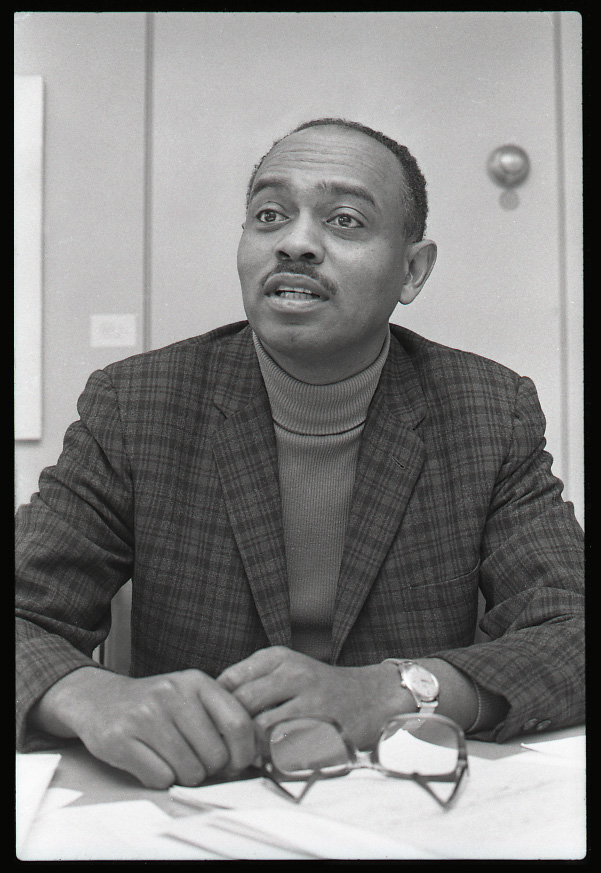
Depiction of Fred Tillis, Nov. 23, 1977
Fred Tillis, Nov. 23, 1977

A composer, performer, poet, educator, and arts administrator, Fred Tillis was one of the major influences on the cultural life at UMass Amherst for forty years. Born in Galveston, Texas, in 1930, Tillis began playing jazz trumpet and saxophone even before his teens. A product of segregated schools, he graduated from Wiley College at the age of 19, and received his MA and PhD in music at the University of Iowa. As a performer and composer of unusual breadth, his work spans both the jazz and European traditions, and he has written for piano and voice, orchestra, choral pieces, chamber music, and in the African American spiritual tradition, drawing upon a wide range of cultural references. After teaching at Wiley, Grambling, and Kentucky State in the 1960s, Tillis was recruited to UMass in 1970 by his former adviser at Iowa, Philip Bezanson, to teach music composition and theory. Earning promotion to Professor in 1973, Tillis was appointed Director of the Fine Arts Center in 1978, helping to jump start some of the most successful arts initiatives the university has seen, including the the Afro American Music and Jazz program, the New World Theater, Augusta Savage Gallery, Asian Arts and Culture Program, and Jazz in July. Upon retirement from UMass in 1997, he was appointed Emeritus Director of the Fine Arts and continued to focus on music and poetry.

The Tillis papers document an extraordinary career in the arts, focused on Fred Tillis’s work as a composer. Consisting primarily of musical scores along with an assortment of professional correspondence relating to his publishing and miscellaneous notes, the collection offers insight into the evolution of Tillis’s musical vision from the 1970s into the new millennium.

Subjects

African American composersAfrican American musiciansFine Arts Center (University of Massachusetts Amherst)JazzUniversity of Massachusetts Amherst--FacultyUniversity of Massachusetts Amherst. Department of Music and Dance

Contributors

Tillis, Frederick, 1930-2020

Types of material

Scores
Tippo, Oswald

Oswald Tippo Papers

ca.1930-1990
20 boxes 30 linear feet
Call no.: FS 106
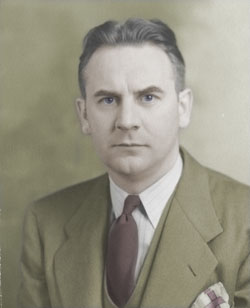
Depiction of Oswald Tippo
Oswald Tippo

A 1932 graduate of Massachusetts State College (later University of Massachusetts Amherst), Oswald Tippo earned his doctorate in botany from Harvard in 1937. A respected plant anatomist, Tippo’s career was divided relatively evenly between the laboratory and higher administrative offices. Joining the faculty at the University of Illinois in 1937, he was eventually tabbed to become Dean of the Graduate School. After moving to Yale as Eaton Professor of Botany (1955-1960), he served as Provost at the University of Colorado and Executive Dean of Arts and Sciences at New York University (1963), before returning to UMass Amherst in 1964. As Provost under President John W. Lederle, Tippo oversaw a period of rapid expansion at the University, and in 1970, he was appointed as the first Chancellor of the Amherst campus. One year later, he was named Commonwealth Professor of Botany, remaining in that position until his retirement in June 1982. After his retirement, Tippo was often seen “holding court” at his regular table at the University Club. He remained in Amherst with his wife Emmie until his death in 1999.

The Tippo Papers are a robust collection of professional and administrative correspondence, speeches, research notes, notes from Tippo’s student years, photographs, and several of his publications. The collection documents Tippo’s unique relationship with UMass as both Provost and Chancellor as well as his tenure as a Professor of Botany.

Subjects

BotanyUniversity of Massachusetts Amherst--Alumni and alumnaeUniversity of Massachusetts Amherst--FacultyUniversity of Massachusetts Amherst. Botany DepartmentUniversity of Massachusetts Amherst. Chancellor

Contributors

Tippo, Oswald
Topol, Sidney

Sidney Topol Papers

1944-1997
52 boxes 78 linear feet
Call no.: MS 374
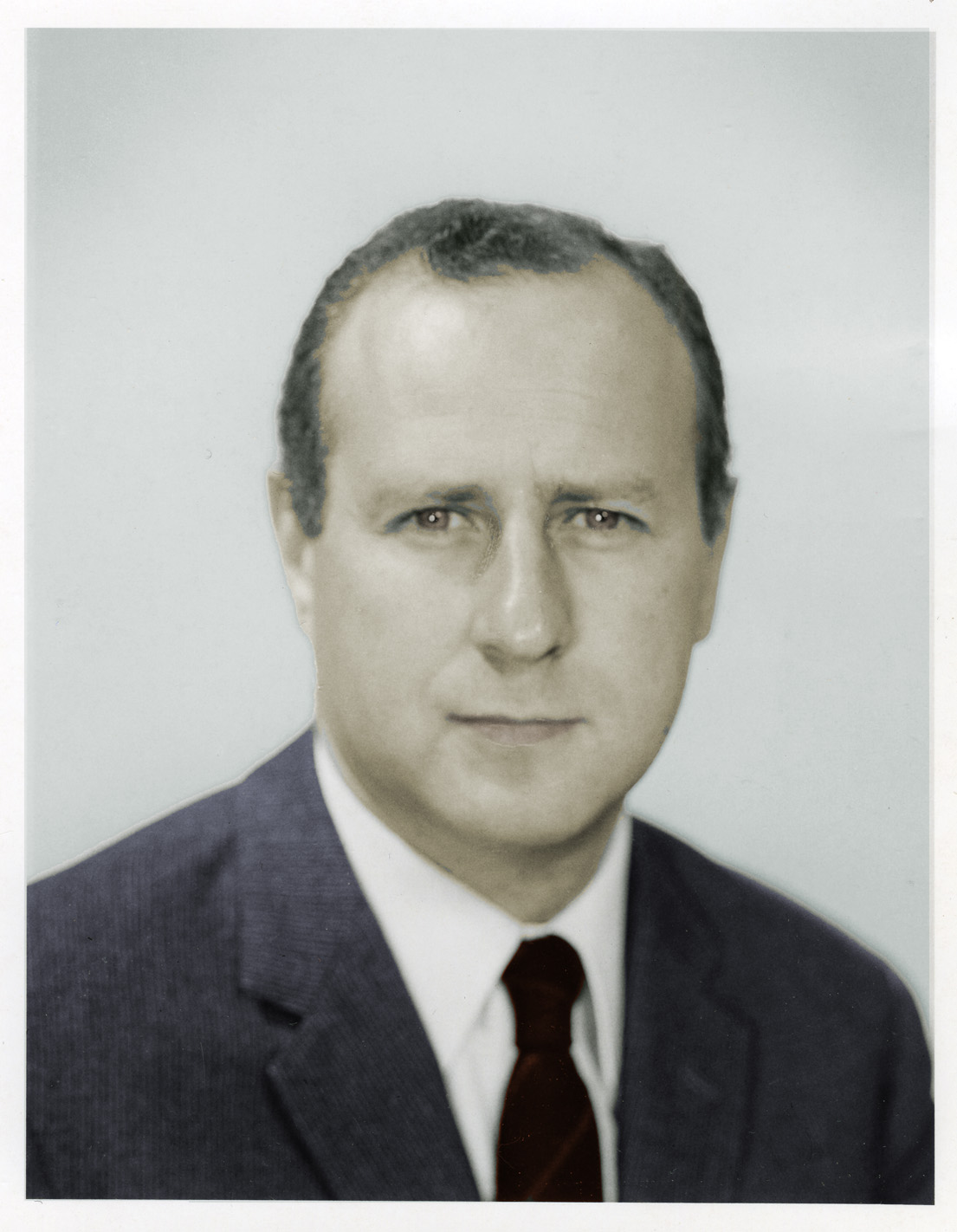
Depiction of Sidney Topol
Sidney Topol

Temporarily stored offsite; contact SCUA to request materials from this collection.

An innovator and entrepreneur, Sidney Topol was a contributor to several key developments in the telecommunications industries in the latter half of the twentieth century. A graduate of the University of Massachusetts (1947) and an engineer and executive at Raytheon and later Scientific-Atlanta, Topol’s expertise in microwave systems led to the development of the first effective portable television relay links, allowing broadcasts from even remote areas, and his foray into satellite technologies in the 1960s provided the foundation for building the emerging cable television industry, permitting the transmission of transoceanic television broadcasts. Since retiring in the early 1990s, Topol has been engaged in philanthropic work, contributing to the educational and cultural life in Boston and Atlanta.

The product of a pioneer in the telecommunications and satellite industries and philanthropist, this collection contains a rich body of correspondence and speeches, engineering notebooks, reports, product brochures, and photographs documenting Sidney Topol’s forty year career as an engineer and executive. The collection offers a valuable record of Topol’s role in the growth of both corporations, augmented by a suite of materials stemming from Topol’s tenure as Chair of the Electronic Industries Association Advanced Television Committee (ATV) in the 1980s and his service as Co-Chair of a major conference on Competitiveness held by the Carter Center in 1988.

Subjects

Boston (Mass.)--Social conditions--20th centuryCable televisionElectronic Industries AssociationRaytheon CompanyScientific-Atlanta

Contributors

Topol, Sidney
Torrey, Ray Ethan, 1887-

Ray Ethan Torrey Papers

1832-1983
13 boxes 5.5 linear feet
Call no.: FS 121
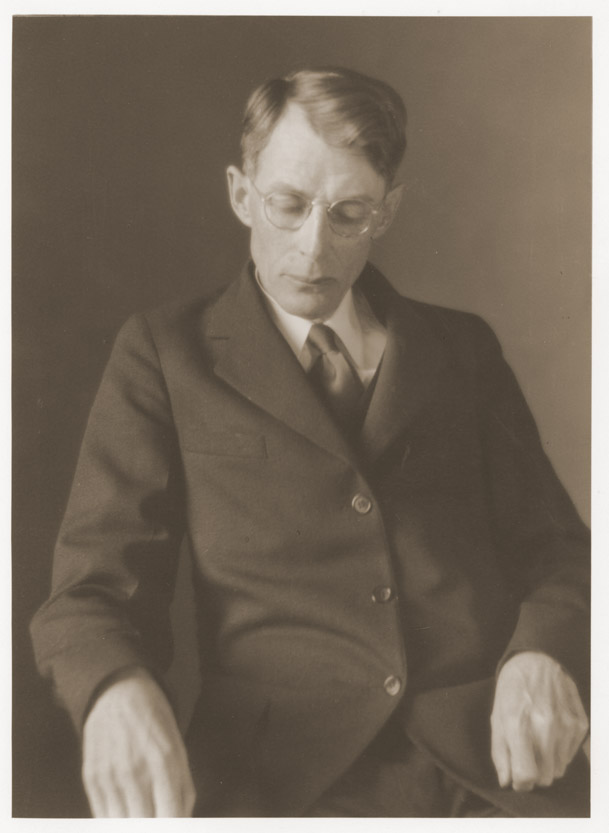
Depiction of Ray Ethan Torrey. Photo by Frank A. Waugh
Ray Ethan Torrey. Photo by Frank A. Waugh

A plant morphologist and member of the Botany Department at Massachusetts Agricultural College, Ray Ethan Torrey was among the college’s most charismatic faculty members during the early twentieth century. Born in Leverett, Mass., and educated in the local public schools, Torrey graduated from MAC with the class of 1912, earning his PhD at Harvard six years later. After serving on the faculty of Grove City College and Wesleyan, he returned to his alma mater in 1919, where he remained for more than 36 years. A specialist in plant morphology and author or two widely used textbooks and numerous articles, Torrey’s introductory course in botany was among the most popular in the college. He was best known, however, for taking a broader, philosophical approach to science that encouraged students to explore the connections between philosophy, science, religion, and the humanities. Torrey died of leukemia in Boston on Jan. 16, 1956.

Correspondence, chiefly with former students and colleagues at other institutions; lecture notes and outlines; 27 pen and ink drawings; published writings and drawings; biographical material; class and laboratory notes taken by students; family and educational records (1832-1956); photographs, and other papers.

Subjects

Botany--Study and teachingUniversity of Massachusetts Amherst--FacultyUniversity of Massachusetts Amherst. Botany Department

Contributors

Torrey, Ray Ethan, 1887-

Types of material

Pen and ink drawings
Totman, Ruth J.

Ruth J. Totman Papers

ca. 1914-1999
6 boxes 3 linear feet
Call no.: FS 097
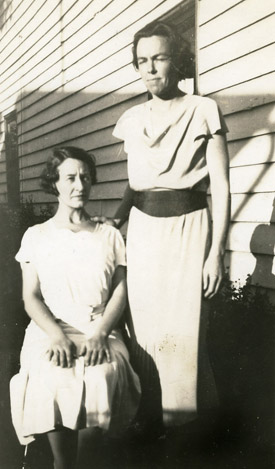
Depiction of Ruth Totman and Jean Lewis, ca.1935
Ruth Totman and Jean Lewis, ca.1935

Trained as a teacher of physical education at the Sargent School in Boston, Ruth J. Totman enjoyed a career at state normal schools and teachers colleges in New York and Pennsylvania before joining the faculty at Massachusetts State College in 1943, building the program in women’s physical education almost from scratch and culminating in 1958 with the opening of a new Women’s Physical Education Building, which was one of the largest and finest of its kind in the nation. Totman retired at the mandatory age of 70 in 1964, and twenty years later, the women’s PE building was rededicated in her honor. Totman died in November 1989, three days after her 95th birthday.

The Totman Papers are composed mostly of personal materials pertaining to her residence in Amherst, correspondence, and Totman family materials. The sparse material in this collection relating to Totman’s professional career touches lightly on her retirement in 1964 and the dedication of the Ruth J. Totman Physical Education Building at the University of Massachusetts Amherst. Supplementing the documents is a sizeable quantity of photographs and 8mm films, with the former spanning nearly her entire 95 years. The 8mm films, though fragile, provide an interesting, though soundless view into Totman’s activities from the 1940s through the 1960s, including a cross-country trip with Gertrude “Jean” Lewis, women’s Physical Education events at the New Jersey College for Women, and trips to Japan to visit her nephew, Conrad Totman..

Subjects

College buildings--Massachusetts--Amherst--History--SourcesConway (Mass.)--GenealogyDairy farms--MassachusettsFamily farms--United StatesFarm life--United StatesPhysical Education for womenTotman familyUniversity of Massachusetts Amherst--FacultyUniversity of Massachusetts Amherst--HistoryWomen physical education teachers

Contributors

Drew, Raymond Totman, 1923-1981Lewis, Gertrude Minnie, 1896-Totman, Conrad DTotman, Ruth J

Types of material

Genealogies