A local, grassroots organization, Hadley Neighbors for Sensible Development coalesced in the early 2000s to advocate for environmentally and socially responsible development in Hadley, Mass. Working through the town planning board and town meeting, the group successfully opposed the construction of Walmart Superstore in town and worked to mitigate the impact of Lowes and other big box stores along the Route 9 corridor.
A miscellaneous assortment of documents relating to work in town meeting and with the town planning board, the collection includes notes, newspaper clippings, and assorted background information.
Subjects
City planning--Massachusetts--HadleyHadley (Mass.)--History
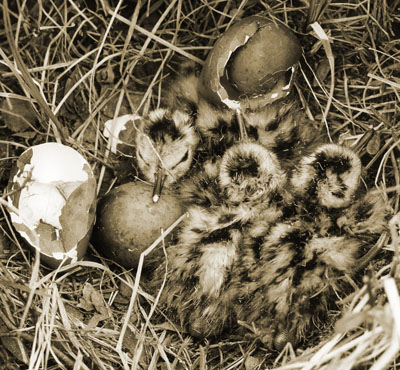
An ornithologist and conservationist for the Commonwealth of Massachusetts, Joseph A. “Archie” Hagar’s career was rooted in the generation of naturalists such as William Brewster, Edward Howe Forbush, and Arthur Cleveland Bent. Born in Lawrence, Mass., on May 13, 1896, Hagar’s undergraduate career at Harvard was interrupted by service in the First World War, after which he completed his studies at the Massachusetts Agricultural College, graduating with the class of 1921. An expert field biologist and ecologist, he was appointed State Ornithologist in the Department of Fish and Game in November 1934 serving in that position for almost twenty-five years. A specialist in waterfowl and raptors, Hagar was deeply involved in early conservation efforts in New England, noted for his work on wetland conservation and for linking the use of DDT with eggshell thinning in peregrine falcons, and he was famously at the center of a dispute with the U.S. Fish and Wildlife Service over the design of the Parker River Wildlife Refuge. Never a prolific writer, he was an active member of the American Ornithological Union, the Nuttall Ornithological Club, the Wildlife Society, and other professional organizations, and after retirement, he was specially cited for his work in waterfowl conservation by Ducks Unlimited. Active until late in life, he died at home in Marshfield Hills on Dec. 17, 1989.
The Hagar Papers are a deep and valuable resource for the study of New England birds and the growth of modern conservation biology. With abundant professional correspondence, field notes on shorebirds and raptors, and drafts of articles, the collection documents the full range of Hagar’s activities as State Ornithologist, including a particularly thick run of material for the controversy over the Parker River Wildlife Refuge. Hagar also acquired a set of field notes, 1897-1921, from the Harvard ornithologist John E. Thayer.
Subjects
Birds--MassachusettsBlack duckConservationists--MassachusettsMassachusetts Agricultural College--Alumni and alumnaeOrnithologists--MassachusettsParker River National Wildlife Refuge
Western Massachusetts political leader, publisher, and banker (1881-1960), trustee of the University of Massachusetts (1940-1956), and founder, editor and publisher of the Greenfield Recorder newspaper (1912-1928); political positions included State Representative (1909-1913), State Senator (1913-1915, 1923-1927), and State Treasurer (1929-1930); in 1934, was Republican candidate for Lieutenant Governor, and in 1936, candidate for Governor.
The Haigis collection includes scrapbooks (1903-1936), chiefly of clippings, together with speeches (1936), posters, badges, campaign material, and photographs, mainly from Haigis’s unsuccessful campaigns for lieutenant governor (1934) and governor (1936); and tape of an interview (1974) with Leverett Saltonstall about Haigis, conducted by Craig Wallwork.
Subjects
Campaign speeches--MassachusettsLegislators--Massachusetts--History--20th centuryMassachusetts--Politics and government--1865-1950Montague (Mass. : Town)--Politics and government--20th centuryPolitical candidates--Massachusetts--History--20th centuryRepublican Party (Mass.)--History--20th century
Contributors
Haigis, John W., 1881-1960Saltonstall, Leverett, 1892-Wallwork, Craig
Temporarily stored offsite; contact SCUA to request materials from this collection.
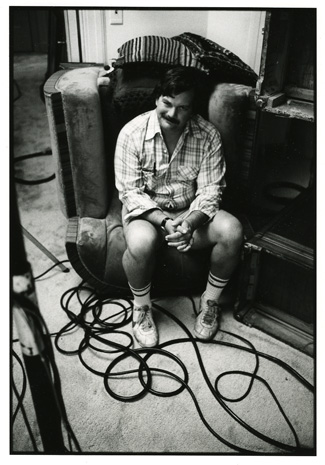
An actor and motion picture assistant director and producer, Michael Haley was born in Pittsfield, Mass., in 1942. While an undergraduate student at UMass Amherst, Haley became involved in theater, joining the avant garde Buffalo Meat Company that performed original works in Massachusetts and New York City. Following a chance call from a producer looking for local help in 1969, Haley worked on his first film, the low-budget crime drama Honeymoon Killers. After work on several other film and television productions, Haley was among ten people selected for the Directors Guild of America’s Assistant Directors Training Program. During his forty year career, Haley’s credits have included work with a number of noted directors, including Sidney Lumet, Barry Levinson, and Penny Marshall, and he has enjoyed a particularly long and productive association with Mike Nichols. His films have included The Taking of Pelham One Two Three, The Stepford Wives, Biloxi Blues, True Colors, A League of Their Own, Groundhog Day, Primary Colors, and Closer. He was the recipient of two Humanitas Prizes (for Wit and Angels in America), and among others awards, the Christopher Award (for Wit), the Directors Guild of America award, Producers Guild of America award, and an Emmy (for Angels in America), a Directors Guild of America plaque (Working Girl), and the Berkshire International Film Festival Life-Time Achievement Award. He was named Artist of the Year at UMass and has been selected for a Bateman Fellowship.
Reflecting a diverse career in film, the Haley collection consists of scripts, photographs, memorabilia, and diaries, with a small quantity of notes and correspondence. The scripts, approximately 110 of them, are from films ranging from The Godfather Part II to Charlie Wilson’s War and Angels in America, may include several drafts. The photographs are both numerous and particularly rich, including some particularly interesting candid shots taken on film sets, as well as official shots taken by photographers such as Mary Ellen Mark.
Subjects
ActorsMotion picture producers and directorsMotion picturesNichols, Mike
Residents of Worcester, Mass., Madeline and Winthrop Goddard Hall were part of an extended community of young friends and family associated with the American Board of Commissioners of Foreign Missions, including Charlotte and Edwin St. John Ward, Margaret Hall, and Ruth Ward Beach. From 1907 to 1914, Edwin Ward was sent as a missionary to the Levant, working as a physician and teacher at Aintab College in present-day Turkey and Syrian Protestant College in Beirut. Margaret Hall and Ruth Beach were stationed in China, teaching in Tientsin, at the Ponasang Women’s College in Fuzhou, and at the Bridgeman School in Shanghai.
The Hall Papers include 67 lengthy letters from the Ottoman Empire and China, the majority from Charlotte and Edwin Ward. Intimate and often intense, the correspondence provides insight into the social and family life of missionaries and gives a strong sense of the extended community of missionaries.
Subjects
American Board of Commissioners for Foreign MissionsLebanon--Description and travelMissionaries--ChinaMissionaries--Middle EastTurkey--Description and travel
Contributors
Beach, Ruth WardHall, MadelineHall, MargaretHall, Winthrop Goddard, 1881-1977Ward, CharlotteWard, Edwin St. John
Joel Martin Halpern Atlas of Massachusetts Collection
1985-1989
1 box0.25 linear feet
Call no.: MS 263
As a contributor to the Atlas of Massachusetts, Professor Joel Halpern collected data and articles in support of his essay published in the “Ethnic Groups” section. The collection consists primarily of drafts of his essay and research notes.
Subjects
Atlas of MassachusettsEthnic groups--MassachusettsImmigrants--Massachusetts
Temporarily stored offsite; contact SCUA to request materials from this collection.
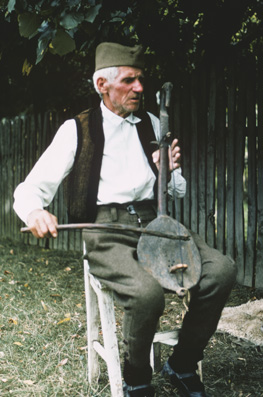
The anthropologist Joel Martin Halpern (1929- ) has worked in regions from the Alaskan arctic to Laos and Lapland, but he is best known for his studies of modernization in the Balkans. Following undergraduate study in history at the University of Michigan (BA, 1950), Halpern entered the renowned anthropology program at Columbia, receiving his doctorate in 1956 for a study of the village of Orašac in the former Yugoslavia, which in turn became the basis of his first book, A Serbian Village (N.Y., 1958). After two years working in Laos as a Field Service Officer with the Community Development Division of the U.S. International Cooperation Administration, Halpern was a member of the faculty at UCLA, Brandeis, and the Russian Research Center at Harvard (1965-1967) before coming to UMass Amherst in 1967. A prolific author, Halpern has written or edited dozens of books on the Balkans and Southeast Asia, including A Serbian Village in Historical Context (1972), The Changing Village Community (1967), The Changing Peasantry of Eastern Europe (1976), and The Far East Comes Near (1989). Since retiring from the university in 1992, Halpern has remained in Amherst.
A massive collection documenting the long and varied career of a prolific ethnographer, the Halpern Papers include a wide range of textual and visual materials documenting the anthropological study of modernization, ethnicity, rural life and urbanization, the economy, and cultural change. Much of Halpern’s research centered on the Balkans (Macedonia and Serbia), Laos, and arctic Alaska and Canada, however he has worked on Asian immigrant communities in the United States and many other topics.
Subjects
Balkan Peninsula--Ethnic relationsLaos--AnthropologyMacedonia--AnthropologySerbia--AnthropologyUniversity of Massachusetts Amherst--FacultyUniversity of Massachusetts Amherst. Department of AnthropologyYugoslavia--Anthropology
A theoretical physicist at University of the Sciences in Philadelphia, Paul Halpern is the author of a dozen popular books on science and dozens of scholarly articles. After spending his undergraduate years at Temple University, Halpern received a doctorate at SUNY Stony Brook, and has since written on complex and higher-dimensional solutions in general relativity theory and the nature of time as well as the history of the modern physical sciences. He has been a Fulbright Scholar and fellow of the John Simon Guggenheim Foundation.
The hundreds of ephemeral publications, fliers, and handbills in the Halpern Collection provide a window into political and social activism in Philadelphia during the late 1970s and early 1980s. The content ranges widely from publications produced by peace and disarmament groups to the literature of anti-imperialist (e.g. CISPES), antinuclear groups (SANE and post-Three Mile Island mobilization), radical political parties, and religious organizations including the Unification Church and the Church of Scientology.
A writer, publisher, and expert in the culture of cemeteries and death, Roberta Halporn was born in New York in 1927. Although she entered NYU intending to study medicine, Halporn soon turned to dance, eventually earning a masters degree and working in the field for nearly two decades. When an injury ended her dance career, however, she changed careers to publishing, opening her own house in 1978. Her growing interest in the culture of death meshed well with her job and following her interests, she founded ran the Center for Thanatology Research and Education in 1986. Based in Brooklyn, the Center was a non-profit organization that worked to raise public awareness of the artistic and historical importance of cemeteries, and in addition to a library and museum, the Center ran tours of cemeteries, published books and periodicals, and operated a retail store. Halporn published regularly on topics ranging from Jewish cemeteries to hospice, thanatology libraries, and her passion, gravestone rubbing. Halporn died in 2014.
The collection consists of files relating to Roberta Halporn’s extensive thanatological research, including drafts, correspondence, photographs, and ephemera from two of her projects: on Chinese American funeral practices (resulting in the book Gods, Ghosts, and Ancestors) and on Jewish cemeteries. It also includes approximately 40 gravestone rubbings. A significant number of books donated with the collection have been added to the Association for Gravestone Studies Book Collection.
Subjects
Funeral rites and ceremonies--ChinaJewish funeral rites and ceremonies
The horticulturist Tom S. Hamilton was a member of the faculty at UMass Amherst in the Department of Landscape Architecture and Regional Planning. A specialist in ornamental plants, Hamilton worked at UMass from prior to 1950 until his retirement in 1986.
The Hamilton Papers contain three works on ornamental plants published by the Dept. of Landscape Architecture, along with a mimeographed laboratory manual that Hamilton used in his courses on landscape operations in 1979.
Subjects
HorticultureUniversity of Massachusetts Amherst--FacultyUniversity of Massachusetts Amherst. Department of Landscape Architecture and Regional Planning