The University of Massachusetts Amherst
Robert S. Cox Special Collections & University Archives Research Center
CredoResearch digital collections in Credo

Archive

Thatcher, Roscoe Wilfrid, 1872-1933

Roscoe Wilfrid Thatcher Papers
1900-1934
4 boxes 2 linear feet
Call no.: RG 003/1 T43
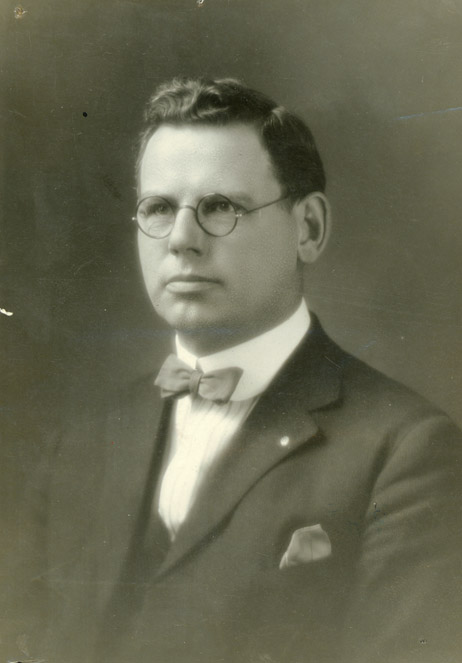
Depiction of Roscoe W. Thatcher
Roscoe W. Thatcher

The agronomist Roscoe Thatcher served as the last president of Massachusetts Agricultural College and the first when the institution changed its name to Massachusetts State College in 1931. Before coming to Amherst, Thatcher had extensive experience in both agricultural research and administration, having served as director of the agricultural station for the state of Washington, as professor of plant chemistry at the University of Minnesota (1913-1917), and as dean of the School of Agriculture and director of the Minnesota Experiment Station (1917-1921), and as director of the New York Agricultural Experiment Station at Geneva. Selected as President of the Massachusetts Agricultural College in 1927, he helped expand the two year program in practical agriculture to become the Stockbridge School of Agriculture and oversaw curricular reform, orienting vocational training toward citizenship education. The student health service also started during his tenure. Thatcher resigned due to ill health in 1933. Although he returned to research in agricultural chemistry at the College in April 1933, he died in his laboratory on December 6, 1933.

Official and administrative correspondence, memos, and other papers, relating to Thatcher’s service as president of Massachusetts State College together with writing and biographical material.
Subjects

Massachusetts State College. President

Contributors

Thatcher, Roscoe Wilfrid, 1872-1933
Thayer Family Industries

Thayer Family Industries Ledger

1847-1855
1 vol. 0.2 linear feet
Call no.: MS 238 bd

The Thayer family operated a small manufacturing complex on the Deerfield River in Charlemont, Massachusetts. Businesses included a sawmill, a foundry, a shop for the manufacture of axes and edged tools, and a tannery. Ledger documents their businesses and reflects the exchange economy of rural Massachusetts.

Subjects

Axe industry--Massachusetts--Charlemont--History--19th centuryBarter--Massachusetts--Charlemont--History--19th centuryCharlemont (Mass.)--Economic conditions--19th centuryCharlemont (Mass.)--Rural conditions--19th centuryFoundries--Massachusetts--Charlemont--History--19th centuryKingsley, EdmondManufacturing industries--Massachusetts--Charlemont--History--19th centurySawmills--Massachusetts--Charlemont--History--19th centuryTanneries--Massachusetts--Charlemont--History--19th centuryThayer familyThayer, Alonzo, 1817-Thayer, Ruel, 1785-Thayer, Ruel, 1824-Tinsmiths--Massachusetts--Charlemont--History--19th century

Types of material

Account books
Thielman, Jean

Jean Thielman Papers

ca.1960-1980
1 box 1.5 linear feet
Call no.: MS 676

As Secretary for the Citizens Committee Against Fluoridation for Western Pennsylvania, Jean Thielman was one of the key litigants in the landmark 1978 case that halted fluordiation of the water supply in the borough of West View, near Pittsburgh. Having become involved in opposition to fluoridation of the water supply in the 1960s, Thielman was part of a network of activists that included Ellie Rudolph, Eugene Albright, and Martha Bevis.

The Thielman Papers consist of a small assemblage of correspondence and supporting materials pertaining to antifluoridation activism in western Pennsylvania during the mid-1970s.

Gift of Richard M. Bevis, Jan. 2010

Subjects

Antifluoridation movements--Pennsylvania

Contributors

Citizens Committee Against Fluoridation for Western PennsylvaniaThielman, Jean

Types of material

Letters (Correspondence)
Thomas, R. Brooke

R. Brooke Thomas Papers

ca.1948-1990
118 boxes 177 linear feet
Call no.: FS 105

Born in Lancaster, Pa., in June 1939, the biological anthropologist R. Brooke Thomas earned both his BA (1963) and PhD (1972) from Penn State University. From his days as a graduate student, Thomas’ research centered on the biocultural adaptation of Andean peoples to life at high altitudes, including a suite of problems relating to hypoxia, cold, undernutrition, and disease.

The Thomas Papers are comprised of biological, ethnographic, and anthropometric survey data relating to Indian cultures in the Central Andes, particularly in Peru, along with Thomas’s dissertation and research data, notes for research and teaching, correspondence, and an extensive run of publications.

Subjects

Adaptation (Human)Altitude, Influence ofBiological anthropology--PeruNutrition--PeruUniversity of Massachusetts Amherst--FacultyUniversity of Massachusetts Amherst. Department of Anthropology
Thomes, John B.

John B. Thomes Contract Bridge Collection

1929-1936
5 vols. 0.75 linear feet
Call no.: MS 874
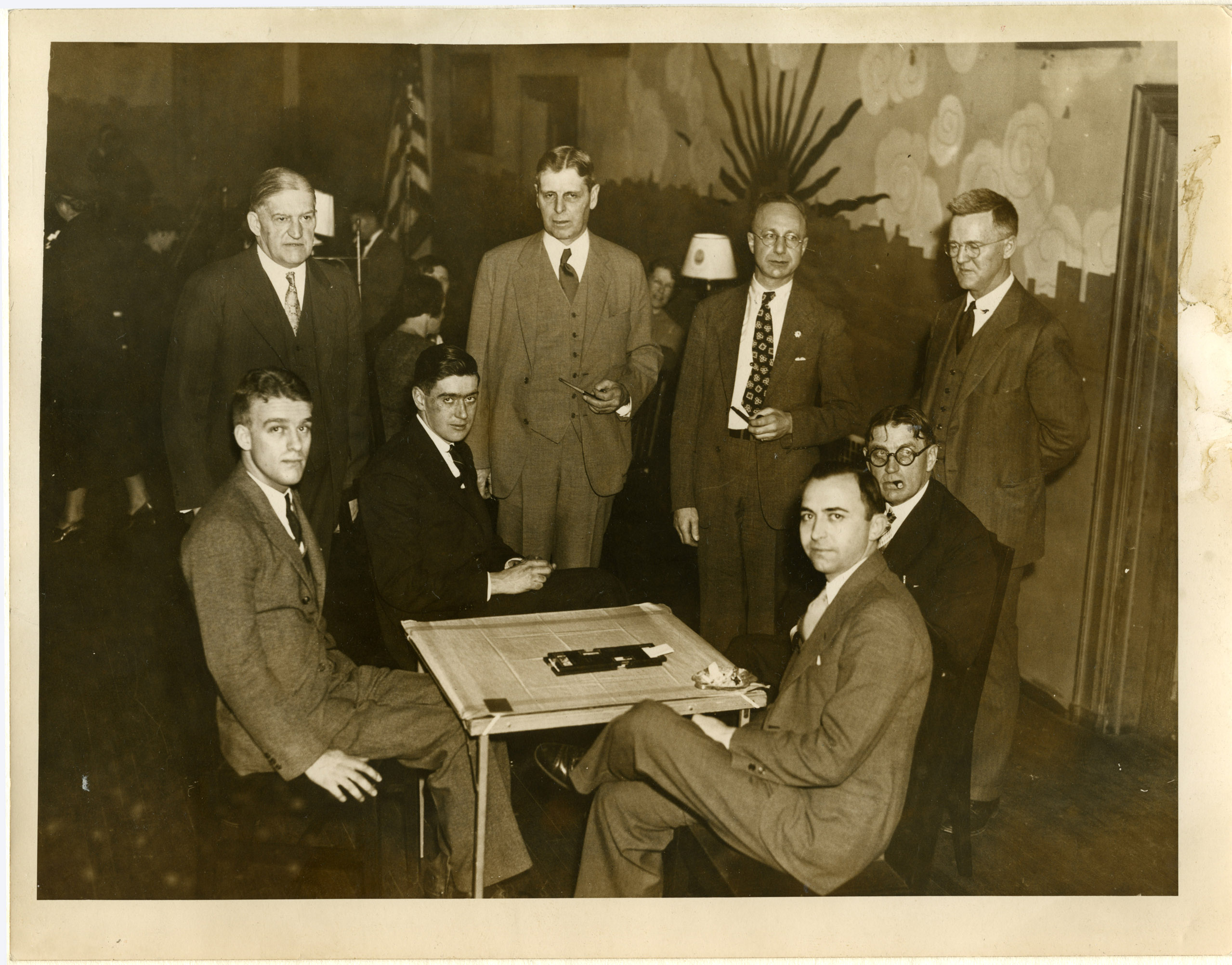
Depiction of Shepard Club, ca.1934 (Thomas standing, second from right)
Shepard Club, ca.1934 (Thomas standing, second from right)

An enthusiast for contract bridge, John Bidwell Thomes was at his playing peak when the new game was sweeping the nation in popularity. In 1931, Thomes and his fellow Portland aficionados organized what may be the first state-wide contract bridge conference in their native state of Maine, just three years after formation of the American Bridge League and prior to creation of the present-day New England Bridge Conference.

Thomes indicated that these five typewritten volumes were originally intended as a means of preserving a record of “some hands that were quite remarkable,” holding out hope that his project might develop into a book that might be called “Adventures at the bridge table.” Simultaneously a record of the games themselves and the strategy and tactics pursued, these volumes are equally a record of the early formation of a bridge conference in New England and its first tournaments. The league included both men’s and women’s teams.

Subjects

Contract bridgeContract bridge--Tournaments--Maine

Contributors

Shepard Club (Portland, Me.)Shepard, E. V. (Edward Valentine), 1866-

Types of material

CorrespondencePhotographs
Thompson, William

William Thompson Account Book

1861-1862
1 folder 0.1 linear feet
Call no.: MS 097

During the years of the Civil War, George Dodge and Co. operated a general store, possibly in Worcester County, Mass., selling a range of personal consumables.

This diminutive account book includes records of personal purchases by William Thompson at a general store operated by George Dodge and Co. Beginning in Dec. 1861, Thompson purchased small quantities of goods such as coffee, fish, pork, flour and rye meal, bed cord and suspenders, indigo, molasses, and butter, settling his accounts in January 1864.

Subjects

General stores--Massachusetts

Contributors

Thompson, William

Types of material

Account books
Thomson, J. (John), 1837-1921

John Thomson Photograph Collection

1863
8 items 0.2 linear feet
Call no.: PH 002
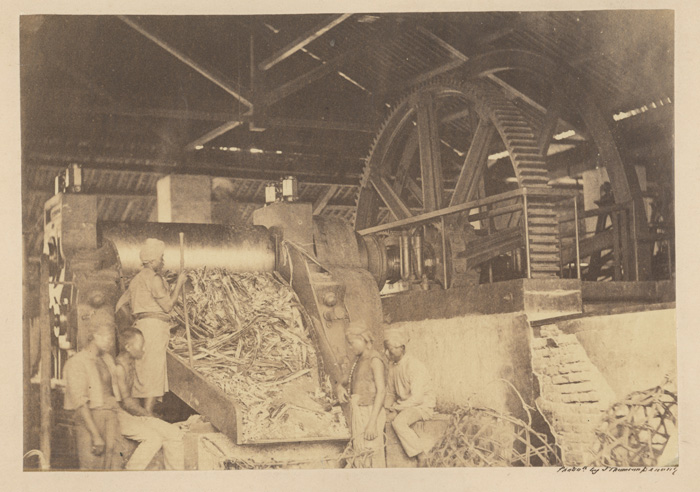
Depiction of Caledonia Sugar Mill
Caledonia Sugar Mill

The Scotsman John Thomson is considered one of the fathers of social documentary photography and a pioneer in the photography of southeast Asia. Between 1861 and 1872, he traveled extensively in Asia, documenting the scenery and people of modern day Malaysia, Cambodia, Thailand, Indonesia, and China.

The collection includes eight albumen prints from wet-plate collodion negatives taken early in Thomson’s photographic career. The images of Penang, Malaysia, are all signed by John Thomson, with five dated November 1863. Subjects include Malay people, a native infantry regiment, sugar mill, temple, and Thomson’s widely reproduced image of tree ferns.

Subjects

George Town (Pinang)--PhotographsKedah--PhotographsMalaysia--Photographs

Contributors

Thomson, J. (John), 1837-1921

Types of material

Albumen printsPhotographs
Thorne, Curtis B.

Curtis B. Thorne Papers

ca.1976-1989
2 boxes 3 linear feet
Call no.: FS 153

Before joining the faculty of the microbial genetics department at UMass Amherst in 1966, Curtis B. Thorne worked as the branch chief at the biolabs in Fort Detrick from 1948-1961 and 1963-1966 where his research focused on Bacillus anthracis, the microbe that causes anthrax. During his tenure at UMass, Curtis applied for and received numerous grants for his continued research on the bacterium, including funding from the U.S. Department of Defense. While his research was centered on the genetics and physiology of the anthrax bacillus, with an emphasis on developing a vaccine, it garnered the unwanted attention of local peace activists in 1989. Protestors, who feared Thorne’s research was linked to germ warfare, picketed outside of his laboratory and demanded that the university reject Pentagon funding. Even though the university and the town of Amherst refused to limit Thorne’s research, he decided not to seek an extension of his contract with the Army in 1990, a decision he regretted having to make. Four years later, Thorne retired from UMass and was honored by his former students with a symposium and dinner. Thorne died in 2008 at the age of 86.

Thorne’s papers consist of lab notebooks and materials relating to the classes he taught at UMass Amherst. Many of the notebooks are related to his research on Bacillus anthracis as well as other microbes including Bacills thuringiensis. His papers do not contain any information related to the funding of his research or the controversy that later surrounded it.

Subjects

Bacillus anthracisBiological weaponsGeneticists--MassachusettsUniversity of Massachusetts Amherst--FacultyUniversity of Massachusetts Amherst. Department of Microbiology

Contributors

Thorne, Curtis B
Thresholds to Life

Thresholds to Life Records

1983-1986
1 box 0.25 linear feet
Call no.: MS 156

Thresholds to Life is a program developed by psychiatrist Milton Burglass for training prison inmates and offenders on probation about decision making, problem solving, and life planning. It is operated by volunteers in 30 locations in the United States.

The Thresholds to Life collection includes records of the program in Greenfield, Mass., and contains newsletters, minutes, by-laws, treasurer’s reports, correspondence, news clippings, brochures, and lists of volunteers, board members, and staff.

Subjects

Prisoners--Massachusetts--GreenfieldPrisoners--Rehabilitation--Massachusetts--Greenfield
Thurber, George, 1821-1890

Thurber-Woolson Botanical Manuscripts Collection

1803-1918
4 boxes 2.5 linear feet
Call no.: MS 065 bd

Largely self-educated, George Thurber (1821-1890) began a career as a pharmacist before signing on as botanist to the U.S. Boundary Commission from 1850-1854. After completing a masters degree at Brown University, he emerged as a important horticultural writer and editor of American Agriculturist from 1863 to 1885.

Letters, photographs, engravings, and clippings compiled primarily by George Thurber and bequeathed to George Clark Woolson (MAC class of 1871) who added to it and donated it as a memorial to his class, the first to graduate from the College. The collection includes 993 letters written by 336 correspondents, and 35 photographs and engravings, primarily botanists and other scientists, including Asa Gray, Louis Agassiz, John Torrey, Frederick Law Olmsted, John James Audubon, Henry Ward Beecher, Jefferson Davis, Edward Payson Roe, Donald G. Mitchell, and George Brown Goode.

Subjects

Botany--HistoryHorticulture--History

Contributors

Thurber, George, 1821-1890Woolson, George Clark

Types of material

Photographs