The University of Massachusetts Amherst
Robert S. Cox Special Collections & University Archives Research Center
CredoResearch digital collections in Credo

Archive

Schrum, Ronald W.

Ronald Wayne Schrum Papers

1966-1968
1 box 0.5 linear feet
Call no.: MS 867

Born in Richmond, Va., in 1946, Ronald Wayne Schrum served as a corporal in the 9th Engineer Battalion, US Marine Corps, during the Vietnam War. Based in Chu Lai, on the coast 56 miles southeast of Da Nang, the 9th Engineers were responsible for the maintenance of bridges and roads, and perhaps most importantly mine sweeping. Schrum was wounded in action in August 1967, returning to duty after a short recuperation. While on leave in May 1968, Schrum married his fiancee Carolyn Ann Garrett, and the two settled in Virginia after the end of his time in service. Schrum died in Glen Allen, Va., on June 20, 1995.

A compact record of one marine’s service in Vietnam, this collection contains letters written by Ronald Schrum to his fiancee describing his duties as a combat engineer near Chu Lai. Covering only the months from Jan. 1967 to Nov. 1968, they include accounts of mine sweeping, fire fights with the Viet Cong (including one in which he was wounded in action), the Tet Offensive, and life on base, and increasingly as the couple approach their marriage, the letters are marked by a longing for his wife and home and a literal counting down of days remaining in service.
Subjects

Military engineeringTet Offensive, 1968United States. Marine Expeditionary Force, 3rd. Engineer Battalion, 9thVietnam War, 1961-1975--Engineering and construction

Contributors

Schrum, Carolyn Ann Garrett

Types of material

Photographs
Schultze, Robert and Waldemar

Robert and Waldemar Schultze Papers

1941-1950
1 box 0.5 linear feet
Call no.: MS 528

Robert and Waldemar Schultze were brothers from Buffalo, New York, held in disciplinary army barracks because of their status as conscientious objectors during the Second World War. Both Robert and Waldemar wrote to their mother, Jennie Schultze, frequently, and she to them. The collection contains roughly 120 letters, almost all of them dated, spanning mainly from 1943 to 1944. Robert, the younger of the two Schultze boys, also wrote to his fiancee Helen Anne Rosen.

The letters concern everything from the family dog to the family business. Due to strictly enforced censorship, the brother’s were cautious in the official letters home to their mother. Waldemar and Robert were able to sneak a handful of letters out of prison to their mother, however, and in those letters they wrote honestly about the conditions they encountered. In one such letter, Waldemar wrote his mother and told her about the threat of postponing his good behavior release date if he should slip up and write something that had to be censored, or even if she wrote something to him that needed to be censored. A small amount of correspondence exists that is addressed to Jennie from Attorneys J. Barnsdall and J. Cornell, regarding Robert and Waldemar’s case.

Subjects

Conscientious objectors--New YorkPacifists--United StatesWorld War, 1939-1945

Contributors

Schultze, RobertSchultze, Waldemar
Science Fiction Society

Science Fiction Society Collection

1934-2003 Bulk: 1947-1990
ca.3,000 items 120 linear feet
Call no.: RB 010
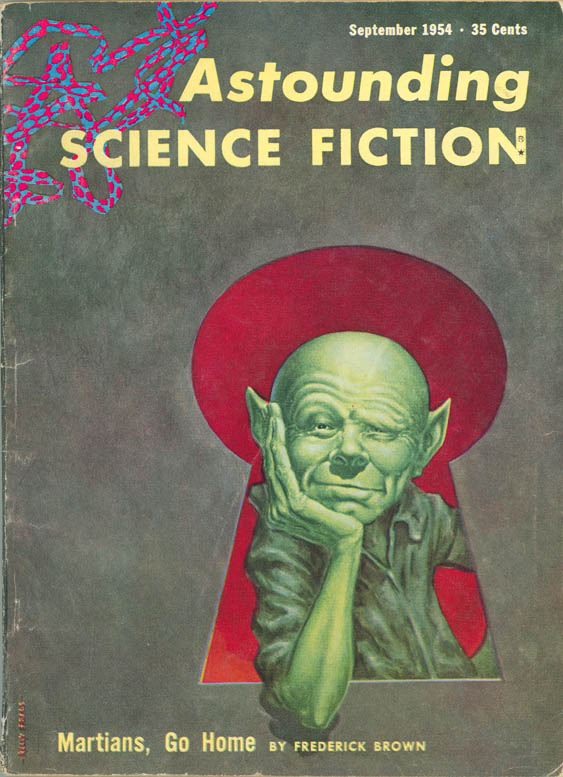
Depiction of Astounding Science Fiction, Sept. 1954
Astounding Science Fiction, Sept. 1954

Temporarily stored offsite; contact SCUA to request materials from this collection.

Founded in 1964, the Science Fiction Society at UMass Amherst is one of the oldest university based clubs of its kind in the United States. From the beginning, the members of the Society built a library to share books and periodicals, eventually amassing one of the largest circulating science fiction collections on the east coast, and they encouraged members to write their own fiction, at various points publishing their own magazine.

The Science Fiction Society Collection contains thousands of issues of science fiction periodicals from the golden age of the 1940s through the late 1990s. The collection includes essentially complete runs of major titles such as Galaxy and Analog, as well as minor and more ephemeral magazines.

Subjects

Pulp literatureScience fiction
Scott, Job, 1751-1793

Job Scott Collection

ca.1790-1946
1 box 0.5 linear feet
Call no.: MS 931

A traveling minister for the Society of Friends, Job Scott was born in Providence, R.I., in October 1751. After a spiritual experience at the age of 19, Scott became deeply religious, joining Smithfield Monthly Meeting, and at the age of 22, he took a position teaching the children of Moses Brown, helping to convince Brown to join the Society in 1774. Removing to Springfield, Mass., at the time of the American Revolution, Scott was authorized as a traveling minister, eventually visiting communities from New England to Georgia and England. A quietist in principle, he preached and wrote about both the importance of the Inward Light and the importance of scripture, insisting on the dependence on the immediate movings of the spirit that in some ways prefigures the debate at the center of the Hicksite separation of 1827. He died of smallpox while traveling in Ireland in 1793. His posthumously published journal was highly influential throughout American Quakerism.

The Scott collection is a slender compilation of works by and about the Quaker minister Job Scott. In addition to a thin folder of family materials, the collection includes several unpublished essays by Scott (Brief remarks upon the knowledge of the one Lord; Salvation by Jesus Christ the most important of all subjects; Remarks on the nature of salvation; and On perseverance), several of his published works, and research notes and a biographical essay about him compiled by Jessie G. Carter (1940-1946).

Gift of the New England Yearly Meeting of Friends, 2016

Subjects

Quakers--Rhode IslandSalvationSociety of Friends--DoctrinesSociety of Friends--Rhode Island
Sears, Fred Coleman, 1866-

Fred C. Sears Papers

1911-1927
3 boxes 1.25 linear feet
Call no.: FS 136
Depiction of Fred C. Sears
Fred C. Sears

For nearly 30 years, Fred C. Sears served as Professor of Pomology at the Massachusetts Agricultural College. Born in Lexington, Mass., in 1866, Sears was raised on the Kansas prairies and educated at Kansas State College. After graduating in 1892, he taught horticulture in Kansas, Utah, and Nova Scotia before returning to Massachusetts and to MAC in 1907. The author of three textbooks and numerous articles on fruit culture and orcharding, he also developed the successful Bay Road Fruit Farm with his colleagues Frank A. Waugh and E.R. Critchett. Sears died at his home in Amherst in October 1949.

In addition to several offprints, the collection contains a set of articles written by Sears for the Country Gentleman bound with editorial correspondence; the well-edited original manuscripts of Sears’ textbooks Productive Orcharding (1914) and Productive Small Fruit Culture (1920), including correspondence, reviews, and photographs; Reports of the Massachusetts Fruit Growers Association (1911-1912, 1914-1916), and editions of Productive Orcharding (1927) and Fruit Growing Projects (1912) bound with Japanese titles.

Subjects

Fruit-culture--MassachusettsMassachusetts Agricultural College--FacultyMassachusetts Agricultural College. Department of Pomology

Contributors

Sears, Fred Coleman, 1866-
Sears, Roebuck and Company

Sears, Roebuck and Company Catalog Collection

1929-1980
104 vols. 19.5 linear feet
Call no.: RB 020

Sears, Roebuck and Company were pioneers in the concept of the mail order catalog. Beginning in 1894, company founder Richard Sears began sending thick catalogs offering a wild profusion of consumer goods, ranging from clothing and kitchen goods to toys, bicycles, furniture, and even homes themselves. With an affordable price tag, the catalogs became a staple in many homes, particularly in rural settings and locations with limited access to stores. Changes in the retail market and the country’s demographics led Sears to end publication of its “big book” catalogs in 1993, although the company continues to issue specialty and seasonal catalogs.

This collection contains over one hundred seasonal catalogs issued by Sears from its stores in Boston between 1929 and 1990.

Subjects

Department storesMail-order business

Types of material

Mail order catalogs
Seneca Women's Encampment for a Future of Peace and Justice

Seneca Women's Encampment for a Future of Peace and Justice Collection

1979-1992
1 box 0.5 linear feet
Call no.: MS 839
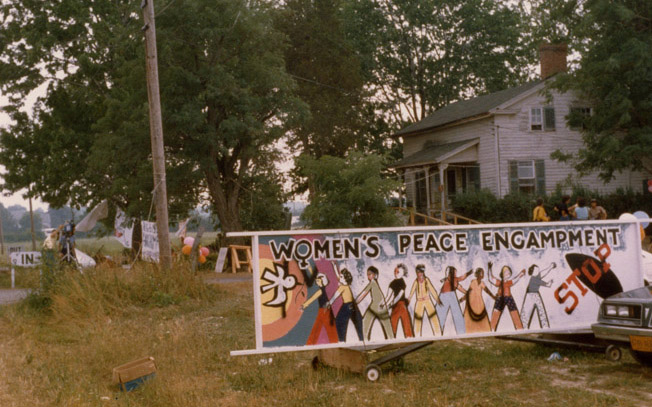
Depiction of

Concerned women in upstate New York joined together in the summer 1983 to form the Seneca Women’s Encampment for a Future of Peace and Justice, occupying a site near the Seneca Army Depot in Romulus, N.Y., where nuclear weaponry was stored. Taking a radical stance against militarism, violence, and oppression and modeling their approach after the women’s encampment at Greenham Common in England, the Seneca Encampment drew participants from a large number of women’s peace groups. In 1994, the Encampment transitioned into the Women’s Peace Land, remaining an active center of resistance to militarism and nuclear power for several years.

Maintained by attorney Alaine T. Espenscheid, the collection consists primarily of legal records relating to the Seneca Encampament, including filings documenting health and saftey, sanitation, water, and finances and materials relating to the arrest of several women for civil disobedience in 1985. Also included is a folder of ephemera and clippings on the Encampment from local media.

Subjects

Antinuclear movements--New York (State)Peace movements--New York (State)

Contributors

Espenscheid, Alaine T.
Severy, Robert Bayard

Robert Bayard Severy Photograph Collection

1980-2007
5 boxes 5.5 linear feet
Call no.: PH 024
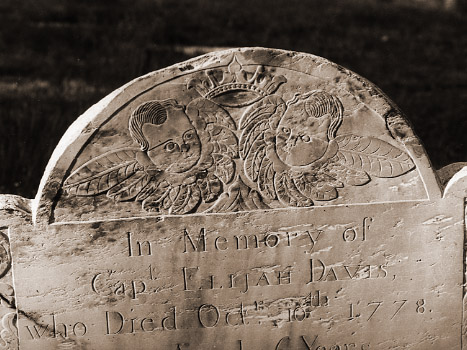
Depiction of Capt. Elisha Davis, d. Oct. 10, 1778
Capt. Elisha Davis, d. Oct. 10, 1778

A local historian and photographer from Dorchester, Mass., and an official in the Dorchester Historical Society, Robert Bayard Severy was born on October 11, 1944, at the New England Hospital for Women and Children in Roxbury, Massachusetts. After high school Severy attended Suffolk University and received a certificate from the Franklin Institute in Photography in 1967. For over 32 years, he was employed in the Human Resources Division of the Commonwealth of Massachusetts, pursuing his interests in photography throughout and documented the changing streetscapes of Boston and nearby towns. Since the early 1980s, Severy has documented gravestones in New England cemeteries.
The Severy Collection includes nearly 2,000 black and white prints (with some color) of gravestones in cemeteries in Massachusetts and Vermont. The collection is arranged by town and cemetery, and includes particularly good documentation of gravestones in Barnstable, Boston (Old Granary, King’s Chapel, Copps Hill), Brimfield, Dorchester (Cedar Grove, Dorchester North), Manomet (Manomet), Newbury (1st Parish), Norwell (First Parish), Quincy (Hancock), Watertown (Mt. Auburn), and Weymouth (Old North, Mt. Hope, Fairmount) in Massachusetts; and Bennington and Wilmington, Vermont. Larger collections of Severy’s work can be found in many other institutions, including Historic New England, The Bostonian Society, The Boston Athenaeum, The Boston Public Library, University of Massachusetts Boston, and several local public libraries and historical societies.

Subjects

Sepulchral monuments--MassachusettsSepulchral monuments--Vermont

Contributors

Association for Gravestone StudiesSevery, Robert Bayard

Types of material

Photographs
Shapiro, Leon

Leon Shapiro Papers

1939-1985
15 boxes 8.75 linear feet
Call no.: MS 127

Historian, author, Professor of Russian and Soviet Jewish History at Rutgers University, who helped arrange the escape of Jews from Europe during World War II and was active in several organizations concerned with the emigration of Soviet and Eastern European Jews to Palestine. Papers include biographical materials, correspondence, legal documents, writings, lecture and research materials, statistical data in the world Jewish population before and after World War II, oral history transcripts, pamphlets, newspaper clippings, and four photographs.

Subjects

Europe, Eastern--Ethnic relations--History--20th centuryIsrael--Emigration and immigration--HistoryIsrael--History--1948-1967Jews, Soviet--History--SourcesJews--Europe, Eastern--History--SourcesJews--Migration--HistoryJews--Population--HistoryJews--Soviet Union--History--SourcesOccupational training for Jews--History--SourcesPalestine--History--1929-1948Romania--Emigration and immigration--HistoryRutgers University--CurriculaRutgers University--FacultySoviet Union--Ethnic relations--HistoryWorld ORT Union--History

Contributors

Shapiro, Leon

Types of material

Oral historiesPhotographs
Shapiro, Seymour

Seymour Shapiro Papers

1959-2005
10 boxes 15 linear feet
Call no.: FS 176

Born in 1924, the botanist Seymour Shapiro studied at Brooklyn College and the University of Michigan. After positions at Brookhaven National Laboratory, where he worked on the peaceful uses of nuclear energy, and the University of Oregon, Shapiro was recruited to UMass in 1964 to become head of the Botany Department. A specialist in radiology and the physiology of higher plants, he served as acting dean of two colleges during his time at the university and was one of the administrators credited with reducing tensions during the student unrest in the spring 1970. A recipient of the University Medal for Outstanding Service (1973) and the Distinguished Teaching Award (1984), Shapiro retired in 1990. He died in Henderson, Nev., on March 24, 2016, at the age of 92.

The collection contains the professional correspondence, miscellaneous papers, photographs, scrapbooks, and realia of former UMass botany professor Seymour Shapiro.

Subjects

Botany--Study and teachingUniversity of Massachusetts Amherst--FacultyUniversity of Massachusetts Amherst. Department of Botany

Types of material

PhotographsScrapbooks