The University of Massachusetts Amherst
Robert S. Cox Special Collections & University Archives Research Center
CredoResearch digital collections in Credo

Page 93 of 168

Dudley, Joseph

Joseph Dudley Memoir and Diary

1866-1893
1 vol. 0.25 linear feet
Call no.: MS 650 bd

Born in Cheshire, Conn., in 1822, Joseph Dudley learned “the marble business” from his father Elias, who had in turn been trained by David Ritter of New Haven. A staunch Methodist swept up in the religious ferment of the Second Great Awakening, Dudley joined his father’s business as a stonecutter in about 1845 and notes that he was among the first to letter tombstones in the rural Ever Green Cemetery in Woodstock, Conn., when it opened in 1848. He later worked in Meriden, Conn.

By generations, this volume has served as an account book, diary and memorandum book, memoir, geneaological record, and scrapbook, with each layer accumulated over all previous. Dudley’s memoir (beginning p. 78) includes a discussion of his upbringing in Cheshire, the tumultuous religious revivals during the 1840s and his reception into the Methodist Church and the Millerites, and much on his introduction to the marble business and work as a stonecutter through about 1853. The diary somewhat erratically covers the years 1873-1893.
Subjects

Marble industry and trade--ConnecticutMillerite movementSepulchral monuments--ConnecticutStonecutters

Contributors

Association for Gravestone StudiesDudley, Joseph

Types of material

DiariesMemoirs
Alford Marble Works

Alford Marble Works Records

1870-1873
1 vol. 0.1 linear feet
Call no.: MS 649 bd

Beginning in the early nineteenth century, the small town of Alford in far southwestern Massachusetts was the site of significant marble quarrying operations. Highly profitable for several decades, the quarries began to decline in profitability by mid-century when new sites became accessible by rail. By the early 1870s, the Alford Marble Works stood as one of the last quarries in the region to remain active.

The Alford Marble Works ledger includes pay and work records for quarrymen during its last years of operation. Although the Marble Works is sometimes recorded as suspending activity in 1872, it is clear from these records that their work continued through the end of 1873.

Subjects

Marble industry and trade--MassachusettsSepulchral monuments--Massachusetts

Contributors

Alford Marble WorksAssociation for Gravestone Studies

Types of material

Account books
Portland Granite Company

Portland Granite Company Records

1836
1 vol. 0.1 linear feet
Call no.: MS 648 bd

Three months after it was incorporated by the state of Maine in March 1836, the Portland Granite Company acquired 17 acres of land from Seth Clark in Westbrook, Me., and began its quarrying operation. With 160 shares of common stock, the company’s members elected a board of three directors (Henry Iseley, M.P. Sawyer, and George Clark), with Henry R. Stickney serving as Treasurer and Secretary. Though not particularly prominent, the firm appears to have operated for at least fifty years, and is listed in directories of state industries through about the time of Stickney’s death in 1887.

Recorded on a slender seven pages in an otherwise blank bound ledger, the records of the Portland Granite Company provide slight but critical documentation of the organization of a significant quarrying operation. Included are the formal act of incorporation for the company, a record of approval by the corporation to accept their charter; notes on the election of officers; company by-laws; approval for the distribution of stock (160 shares); and an agreement with Seth Clark to purchase 17 acres in Westbrook, Me., for the operation.

Subjects

Granite industry and trade--MaineSepulchral monuments--Maine

Contributors

Stickney, Henry Rolfe, 1799-1887

Types of material

Articles of incorporationBylaws (Administrative records)
Halley, Anne

Anne Halley Papers

1886-2004
13 boxes 10 linear feet
Call no.: MS 628

Writer, editor, and educator, Anne Halley was born in Bremerhaven, Germany in 1928. A child during the Holocaust, she relocated with her family to Olean, New York during the late 1930s so that her father, who was Jewish, could resume his practice of medicine. Graduating from Wellesley and the University of Minnesota, Halley married a fellow writer and educator, Jules Chametzky, in 1958. Together they raised three sons in Amherst, Massachusetts where Chametzky was a professor of English at UMass and Halley taught and wrote. It was during the late 1960s through the 1970s that she produced the first two of her three published collections of poetry. The last was published in 2003 the year before she died from complications of multiple myeloma at the age of 75.

Drafts of published and unpublished short stories and poems comprise the bulk of this collection. Letters to and from Halley, in particular those that depict her education at Wellesley and her professional life during the 1960s-1980s, make up another significant portion of her papers. Publisher’s correspondence and a draft of Halley’s afterward document the Chametzkys effort to release a new edition of Mary Doyle Curran’s book, The Parish and the Hill, for which Halley and Chametzky oversaw the literary rights. Photographs of Halley’s childhood in Germany and New York as well as later photographs that illustrate the growth of her own family in Minnesota and Massachusetts offer a visual representation of her remarkable professional and pesonal life.

Subjects

Curran, Mary Doyle, 1917-1981Jews--Germany--History--1933-1945Poets, American--20th centuryWomen authors, AmericanWomen poets, AmericanWorld War, 1939-1945

Contributors

Chametzky, JulesHalley, Anne
Our Hideaway

Our Hideaway Collection

1998-1999
1 box 0.5 linear feet
Call no.: MS 647

Founded in Chicopee, Massachusetts in 1949 under another name, Our Hideaway was the oldest women’s bar on the east coast, offering the local lesbian community a safe haven in which to socialize for fifty continuous years. Before the bar was forced to close after losing its lease in 1999, it was home to a diverse community of women from those known as “old timers,” comprised of women patronizing the bar for upwards of 25 years, to college students new to the area.

As part of a project to research the lesbian bar as a social institution, Smith College student Heather Rothenberg conducted interviews of the women who frequented Our Hideaway. During the course of her research an unexpected announcement was made: the bar was closing. As a result, Rothenberg’s efforts to document Our Hideaway extended far beyond her original intent, and she was able to capture the final days of the bar as both a physical place as well as a community of women assembled over five decades. The collection consists of interview transcripts, emails, photographs and Rothenberg’s written reports. Transcripts of the interviews were modified to protect the privacy of the women interviewed; the original transcripts are restricted.

Gift of Heather Rothenberg, Oct. 2009

Subjects

Lesbian bars--MassachusettsLesbian business enterprises--MassachusettsLesbian community--Massachusetts

Contributors

Rothenburg, Heather
Natural Farmer

The Natural Farmer

1999-2005
26 items (digital)
Call no.: Digital

Published quarterly by the Northeast Organic Farming Association, The Natural Farmer is a widely circulated newspaper devoted to the support of organic farming. These files are made available courtesy of the editors, Jack Kittredge and Julie Rawson of NOFA Massachusetts.

Subjects

Farming--United StatesOrganic farmersOrganic farming

Contributors

Northeast Organic Farming Association
Halpern, Paul

Paul Halpern Collection

ca.1975-1985
2 boxes 1 linear feet
Call no.: MS 646

A theoretical physicist at University of the Sciences in Philadelphia, Paul Halpern is the author of a dozen popular books on science and dozens of scholarly articles. After spending his undergraduate years at Temple University, Halpern received a doctorate at SUNY Stony Brook, and has since written on complex and higher-dimensional solutions in general relativity theory and the nature of time as well as the history of the modern physical sciences. He has been a Fulbright Scholar and fellow of the John Simon Guggenheim Foundation.

The hundreds of ephemeral publications, fliers, and handbills in the Halpern Collection provide a window into political and social activism in Philadelphia during the late 1970s and early 1980s. The content ranges widely from publications produced by peace and disarmament groups to the literature of anti-imperialist (e.g. CISPES), antinuclear groups (SANE and post-Three Mile Island mobilization), radical political parties, and religious organizations including the Unification Church and the Church of Scientology.

Subjects

Antinuclear movement--United StatesEl Salvador--History--1979-1992Nicaragua--History--1979-1990Peace movements

Contributors

Halpern, Paul
Yiamouyiannis, John

John Yiamouyannis Papers

1967-1999
22 boxes 33 linear feet
Call no.: MS 645

Access restrictions: Temporarily stored offsite; contact SCUA in advance to request materials from this collection.

One of the most prominent and vocal scientific critics of fluoridation, the biochemist John Yiamouyiannis (1943-2000) spent over three decades fighting the professional and political establishment. A graduate of the University of Chicago with a doctorate in biochemistry from the University of Rhode Island (1967), Yiamouyiannis became interested in the health effects of fluoride while employed as an editor with the Chemical Abstracts Service. His growing opposition to fluoridation, however, led to conflict with his employers and after being placed on probation in 1972, he resigned. Becoming a key organizer in the antifluoridation movement, he served at various times as the Executive Director of Health Action, the Science Director of the National Health Federation, founder and president of the Safe Water Foundation, and editor of the journal Fluoride. He also ran for the Senate from Ohio and twice for the U.S. Presidency on small party tickets, never garnering more than a handful of votes. Yiamouyiannis died of cancer at his home in Delaware, Ohio, on Oct. 8, 2000, at the age of 53.

Offering important insight into the antifluoridation movement in the 1970s through 1990s, the papers of John Yiamouyiannis offer a perspective on an unusually prolific and determined activist. The collection contains a large quantity of research material and correspondence relating to Yiamouyiannis’s antifluoridation work, and perhaps most importantly an extensive series of transcripts relating to civil cases in which he was involved.

Gift of Paul Connett, June 2012

Subjects

Antifluoridation movementDrinking water--Law and legislation--United StatesFluorides--Physiological effectFluorides--Toxicology

Contributors

Yiamouyannis, John
Knapp, David C.

David C. Knapp Papers

1990-1995.
1 box 1.5 linear feet
Call no.: RG 003/1 K63
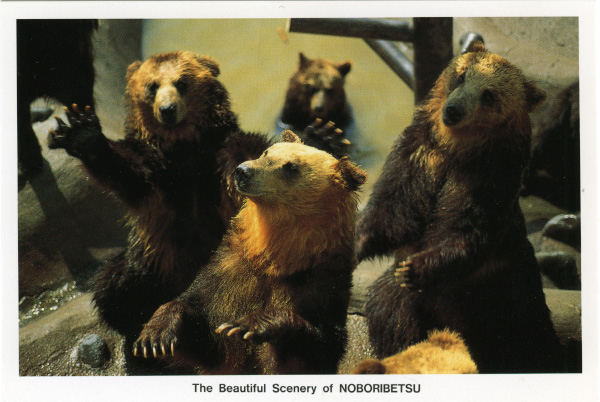
Depiction of Bears
Bears

Born in Syracuse, New York, in 1927, David C. Knapp studied at Syracuse University (BA, 1947) and the University of Chicago (M.A., 1948; PhD, 1953)., before joining the faculty in government at the University of New Hampshire. Recognized as an able administrator from early in his career, Knapp was appointed assistant to the university president and then Dean of the College of Liberal Arts (1961-1962). Leaving UNH in 1963, he served successively as associate director of the Study of American Colleges of Agriculture, director of the Institute of College and University Administrators of the American Council on Education, and Dean of the New York State College of Human Ecology at Cornell University (1968-1974) before being elected president of the University of Massachusetts in 1978. He retired in 1990.

The Knapp Papers consist primarily of materials relating to efforts in the early 1990s to designate Hokkaido and Massachusetts as sister states, to celebrate the long relationship Between UMass and the University of Hokkaido, and to commemorate the legacy of Benjamin Smith Lyman. In addition to correspondence with the Massachusetts Hokkaido Society and Hokkaido University, the collection includes memorabilia associated with Knapp’s connections with Japan.

Gift of David C. Knapp, Dec. 2009

Subjects

Hokkaid¯o DaigakuLyman, Benjamin Smith, 1835-1920University of Massachusetts. President

Contributors

Knapp, David CMassachusetts Hokkaido Society
Carton, Robert J.

Robert J. Carton Papers

1935-2002 Bulk: 1983-2002
3 boxes linear feet
Call no.: MS 643

The environmental scientist Robert J. Carton emerged in the mid-1980s as one of the leading scientific critics of fluoridation of the water supply. After receiving his doctorate in Environmental Science from Rutgers University, Carton accepted a position in 1972 with the Office of Toxic Substances in the Environmental Protection Agency, assessing the risks associated with a range of toxic substances from asbestos to arsenic and hexachlorobenzene. By 1985, Carton became concerned about EPA standards for fluoride in drinking water, taking a public stance against undue political influence in framing those standards and insisting that there was no scientific evidence that fluorides prevented tooth decay and that any level of fluoride exposure presented a significant health hazard. In 1992, Carton left the EPA to work for as Chief of Environmental Compliance for the U.S. Army Medical Research and Materiel Command in Fort Detrick, Maryland.

Consisting primarily of research, notes, and some correspondence relating to the health effects of fluoridation of drinking water, the collection documents Robert Carton’s nearly two decade long struggle against the EPA and federal government. Also included are transcripts of filings relating to various legal challenges against fluoridation during the mid-1980s.

Subjects

Drinking water--Law and legislation--United StatesFluorides--Physiological effectUnited States. Environmental Protection Agency

Contributors

Carton, Robert J
« Older posts Newer posts »