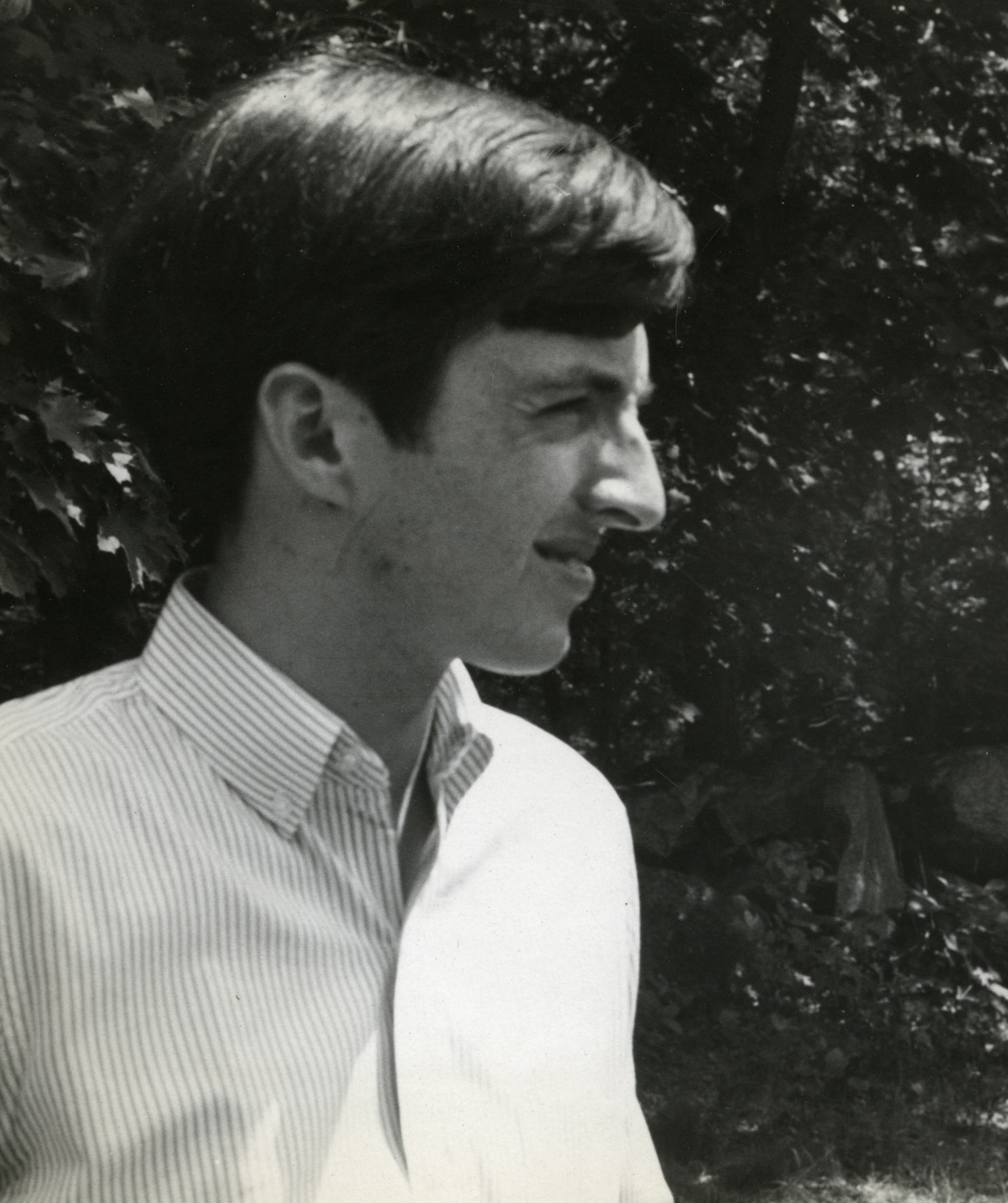
Charlie Frizzell, ca.1963 (from Betsy Siggins Papers)
Raised in suburban Boston, Charlie Frizzell became a well-known photographer of the music scene during the height of the folk revival of the early 1960s. At the age of 14, Frizzell took up photography after landing his first job at a camera shop, and he developed his talents under the mentorship of a local commerical photographer, Bob O’Shaughnessy. As a regular at Club 47 in Cambridge, Frizzell photographed the most popular performers of the era, from Bob Dylan and Joan Baez to Geoff and Maria Muldaur and Jim Kweskin. He left Massachusetts in the late 1960s for Berkeley, Calif., and according to folklorist Millie Rahn, created a sort of conduit between the music scenes in Berkeley and Cambridge. Frizzell died in Berkeley on May 29, 2004, following complications from a liver transplant.
Dating primarily from the mid-1960s, the collection includes approximately 50 prints and some negatives from Charlie Frizzell, including images of Jim Kweskin, Maria Muldaur, Bob Siggins, and Bonnie Dobson, along with images of performances at Newport Folk Festival.
Transferred from Cambridge Historical Society, April 2018
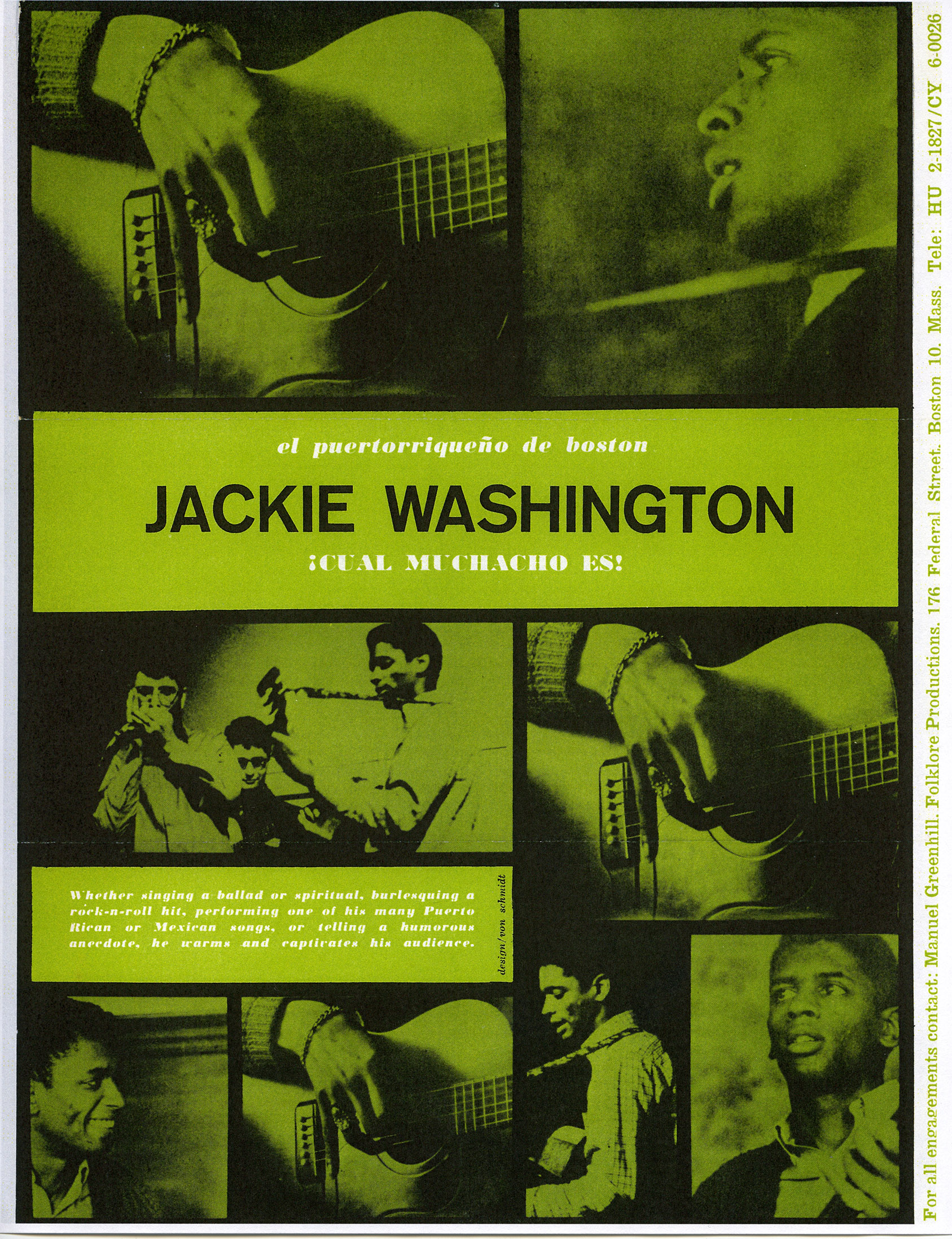
Poster for performance by Jackie Wilson, 1964 (designed by Eric von Schmidt)
Founded by Betsy Siggins in 2009, Folk New England is an organization dedicated to documenting, preserving, and interpreting the cultural legacy of folk music in all its forms, with an emphasis on New England’s contribution.
The Ephemera Collection consists of dozens of posters, fliers, calendars, and other promotional materials for musical acts collected by Folk New England. Concentrated in the years of the folk revival in the late 1950s to late 1960s, many of the posters were sent to Club 47 in Cambridge, Mass.
Gift of Tom Curren and Folk New England, March 2018
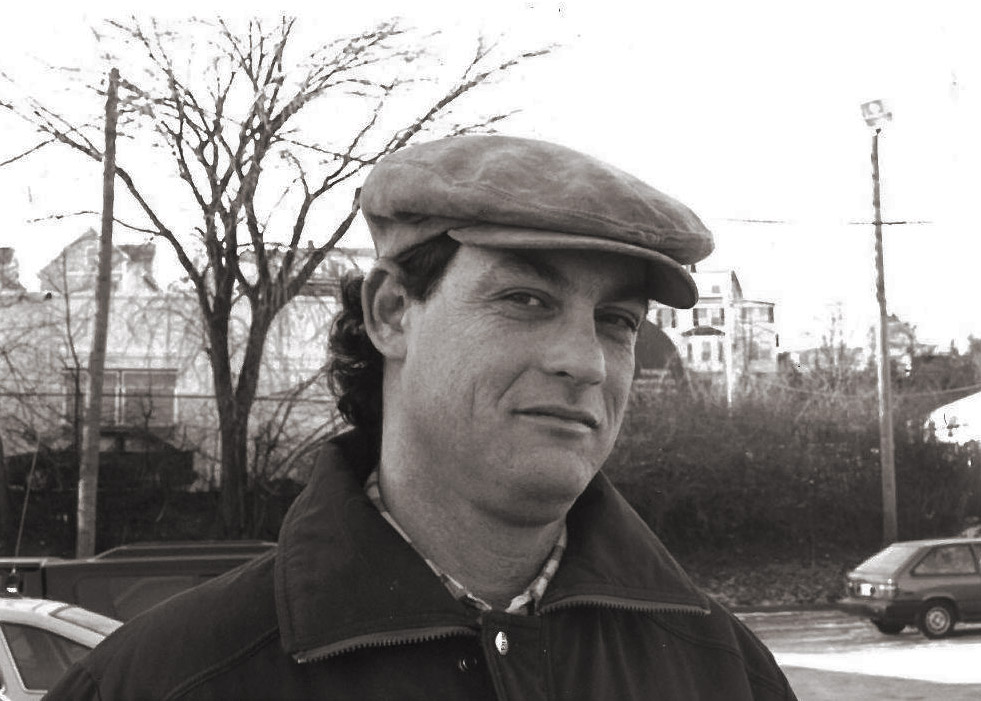
Gene Bruskin arrived at Princeton in 1964 as a basketball player and left as a political radical. After taking part in the Second Venceremos Brigade, Bruskin got involved in antiracist, cultural, and labor organizing in Boston. As president of the United Steelworkers of America local during the busing crisis of the 1970s, he helped win overwhelming support among the city’s bus drivers to have the union represent them, leading successful campaigns for better wages and working conditions and for safefty for the children. In the years since, he has held numerous high-profile positions nationally and internationally, including as labor director for Jesse Jackson’s Rainbow Coalition, Secretary Treasurer for the Food and Allied Service Trades Department of the AFL-CIO, and co-convener of U.S. Labor Against the War, an organization promoting peace and the demilitarization of U.S. foreign policy and an initiator of the National Labor Network For Ceasefire (NLNC). Bruskin was a major figure in the largest private union election in the history of the United Food and Commercial Workers when he led the successful campaign to unionize 5,000 workers at Smithfield Foods in North Carolina. Since retiring in 2012, he has continued to consult with unions and has played an active role as mentor for Amazon workers organizing across the country. In addition he has returned to some of his earlier undertakings in producing cultural works as a poet, songwriter, and playwright, centered on social justice and working class themes including three original musicals.
Documenting nearly fifty years of activism, Gene Bruskin’s papers are an exceptional resource for the labor movement in the 1970s through early 2000s, and particularly its radical flank. Although Bruskin’s early years are relatively sparsely represented, there is a significant run of Brother, the first anti-sexist, “male liberation” journal that he helped found while in Oakland, and the collection includes important material from his work in Boston with the Hyde Park Defense Committee, the Red Basement Singers, and especially with the School Bus Drivers and their tumultuous three-week strike in 1980.
The collection also contains a rich assortment of material on labor left and antiwar organizing in the 1990s and 2000s, the Justice at Smithfield campaign, and Bruskin’s work on behalf of single payer insurance, for International Solidarity, the American Federation of Teachers, and the Brotherhood of Maintenance of Way Employees.
Also included are materials about the US labor movements solidarity with workers in Gaza in 2024 as well as a range of documents about Amazon workers organizing, including important materials about the historic organizing victory of Amazon workers in Staten Island in 2022. In addition, there are a number of digital files of interviews with Gene about his work, past and present. Bruskin’s cultural work includes materials from his three original musicals, dozens of poems, and recorded original songs.
Gift of Gene Bruskin, April 2018
Subjects
Boston (Mass.)--HistoryBus drivers--Labor unionsCharter schoolsJackson, Jesse, 1941-Labor unions--MassachusettsLabor unions--North CarolinaNational Rainbow Coalition (U.S.)Public schoolsSmithfield Foods, Inc.Strikes and lockouts--Bus driversWeatherman (Organization)
Contributors
Boston School Bus Drivers UnionUnited Steelworkers of America
Temporarily stored offsite; contact SCUA to request materials from this collection.
Beloved for her essays on New England life and for a long-running column in Yankee Magazine, Edie Clark was born in northern New Jersey in 1948 and raised near Morristown. A graduate of Beaver College, Clark cut short a career as editor for the Chilton Company in 1973 when she and her husband, inspired by Scott Nearing, moved to Vermont to pursue a simpler, more self-sufficient life. Drawing on the skills honed at Chilton, Clark developed a successful editorial business, which led her to approach Yankee Magazine in 1978 with the idea of writing an article on Abby Rockefeller and composting toilets, beginning an association that would last nearly twenty years. In 1990, Clark began writing a regular column on country life for Yankee, and in the years since, she has written dozens of essays and seven books, including The place he made (2008), a memoir about her second husband’s struggle with cancer; States of grace (2010), containing essays on “real Yankees;” and What there was not to tell (2013), an account of Clark’s search to uncover her parents’ experiences during the Second World War. Following a lengthy period of ill health, Clark retired from writing in 2017.
The record of a popular writer known for her depictions of contemporary New England, the Edie Clark Papers contain drafts and printed copies of nearly all of Clark’s work. An assiduous researcher, she gathered background materials on topics ranging from Lyme disease to the New England-Canadian border region to psychics and Spiritualists, and she corresponded or conducted interviews with dozens of people who featured in her work, including the author Carolyn Chute (author of The Beans of Egypt, Maine) and her husband Michael, then leaders in the so-called Second Maine Militia. Even more voluminous are some remarkable Clark family materials, including dozens of essays and letters by Clark’s grandmother Eleanor Sterling Clark and over 2,000 letters from her parents. Luther and Dorothy Clark, written during the Second World War while they were serving in the Army Air Corps and Marine Corps, respectively. These letters formed the basis for Clark’s remarkable book, What there was not to tell.
Gift of Edie Clark, April 2018.
Subjects
Authors--New EnglandNew England--Social life and customs--20th centurySpiritualismWorld War, 1939-1945
Contributors
Chute, CarolynClark, Dorothy RahmannClark, Eleanor SterlingClark, Luther Stowell, Jr.
Born in Germany in 1866, Annie C. Horsch worked for many years as a servant and housekeeper in the home of the Dummer family in Rowley, Mass. Listed as a domestic in the Rowley City Directories as early as 1888, Horsch began to work for the miller Nathaniel N. Dummer (1824-1907) and his wife Elizabeth (b. 1839) prior to 1900 and was retained well into the 1940s. Horsch died of cerebral arteriosclerosis in Newburyport on Jan. 23, 1956, at the age of 89.
Scrappy and well used, the Horsch cookbook was the working reference for a domestic employed by an old Rowley family, the Dummers. The cookbook consists primarily of recipes for breads and desserts, with a slight nod to healthy eating (including Graham Bread and “Health bread”) followed by a succession of pies, cakes, and puddings. The book includes recipes for Spider Johnny Cake; lemon, raisin, various minces (mock mince, pear mine, tomato mince), sour milk, rhubarb, cranberry, coconut, pineapple, and caramel pies; and then the cakes: dark cake, French cake, fruit cake, apple sauce cake, Harrison cake, chocolate cake, ribbon cake, Bangor cake, and marble cake, among many others.
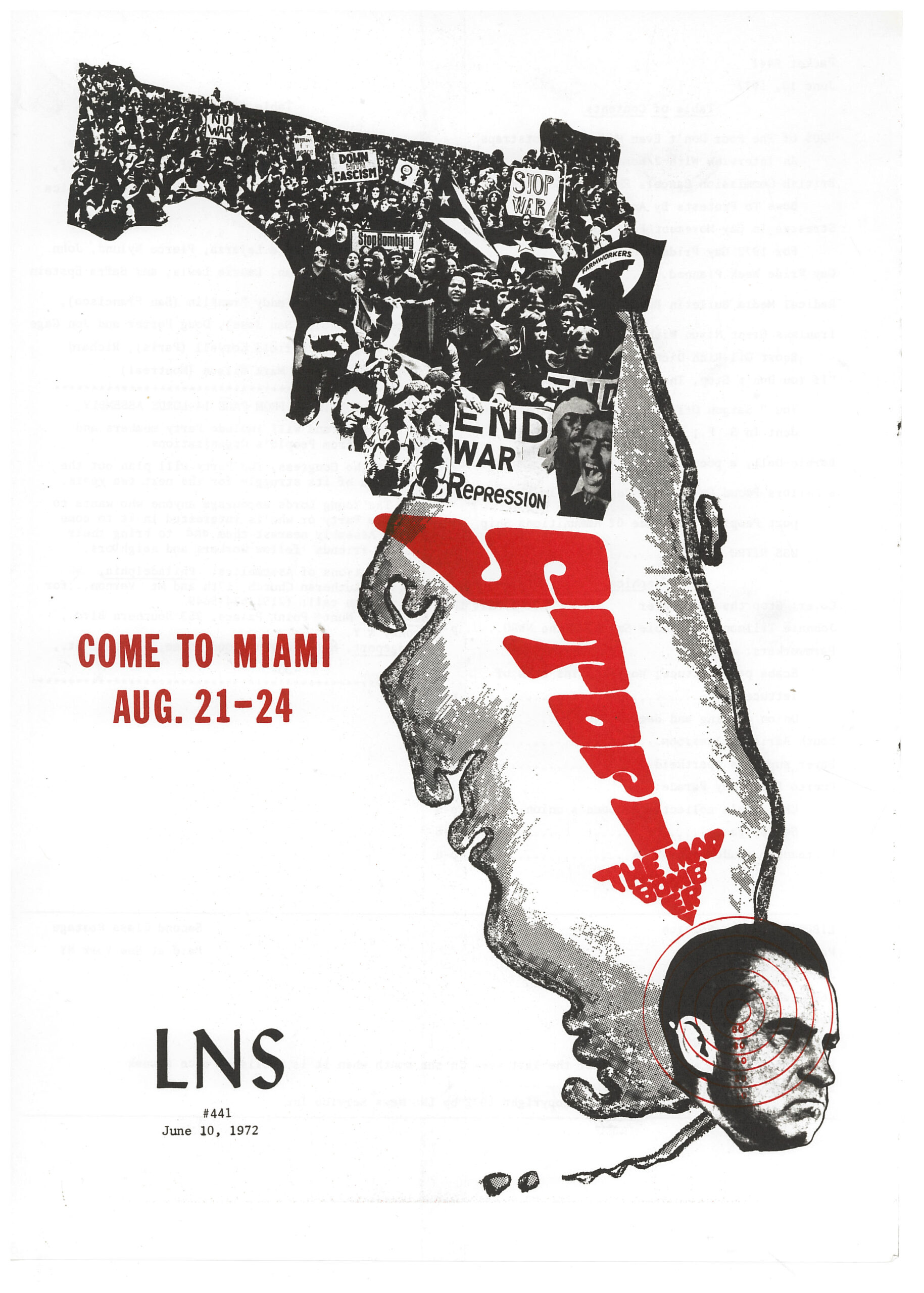
Cover of Liberation News Service issue 441, June 10, 1972.
Founded in 1967, Liberation News Service, an alternative news agency, issued twice-weekly packets aimed at providing inexpensive images, articles, and art reflecting a countercultural outlook. First from its office in Washington, D.C., and then from New York City, LNS provided underground and college papers around the globe with radical and unconventional coverage of the war in Vietnam, global liberation struggles, American politics, and the cultural revolution. Two months after moving to New York City in June 1968, LNS split into two factions, with the sides mirroring common points of dispute within the New Left. The more traditional political and Marxist activists remained in New York, while those more aligned with the counterculture and “hippie” movement settled on farms in western Massachusetts and southern Vermont. For a year each faction put out competing versions of LNS news packets, until the winter conditions and small staff at the farm in Montague caused their production to end in January 1969. LNS-New York continued its production of unique leftist coverage of national and international issues throughout the 1970s, closing in 1981.
The LNS-NY Records include a relatively complete run of packets 102-701 (1968-1975) sent to the subscribing underground press newspaper the Indianapolis Free Press. Some packets and years are more complete than others, and these New York packets are especially dense with photographs compared to earlier LNS packets from before the split in 1968. The collection also includes a small selection of other artwork, articles, and materials kept by the Indianapolis Free Press.
Gift of Ron Haldeman, courtesy of Thomas P. Healy, January 2018
Subjects
News agencies--New York (State)Press and politicsRadicalismUnderground press publications
Contributors
Indianapolis Free PressLiberation News Service (New York, N.Y.)
A legal scholar and pacifist, Caleb Foote was born in Cambridge, Mass., on March 26, 1917, the son of a Unitarian minister and Quaker mother. Earning degrees in history from Harvard (AB 1939) and economics from Columbia (MA 1941), Foote was hired by the Fellowship of Reconciliation to organize their northern California office as the U.S. entered the Second World War. A committed conscientious objector, he refused assignment to a Civilian Public Service camp, arguing that the draft was undemocratic and “an integral part of the war effort,” thus earning a sentence of six months in prison. When released, Foote resumed his work with the Fellowship, opposing the internment of Japanese Americans, but ran afoul of the Selective Service a second time in 1945, earning an additional eighteen months. After a presidential pardon in 1948, Foote became Executive Director of the Central Committee for Conscientious Objection, but left after two years to return to school, hoping a law degree might aid him in the cause of addressing racial and economic injustice. He held academic positions in law schools at the University of Nebraska (1954-1956), Penn (1956-1965), and Berkeley (1965-1987), becoming well known for his opposition to a bail system that unfairly burdened the poor and falsely accused, among other causes. Foote died in Santa Rosa, Calif., in 2006, shortly before his 89th birthday.
An extraordinary archive of principled resistance to war, the Foote collection contains a thorough record of one man’s experience as a conscientious objector during the Second World War. Accompanying some of the legal proceedings associated with Foote’s refusal of assignment to Civilian Public Service is an extensive correspondence with family while imprisoned and other associated content. Foote also retained important material from his wartime work with the Fellowship of Reconciliation and later work with the CCCO. His later correspondence provides an important perspective on his developing legal career, particularly the earlier years, and an extensive series of essays and autobiographical writings provides critical personal and intellectual context for Foote’s pacifism and legal practice. The collection also includes some correspondence and writings by and about Foote’s education, his father, Henry Wilder Foote, and mother.
Gift of Robert Foote, Feb. 2018
Subjects
Central Committee for Conscientious ObjectorsFellowship of ReconciliationLawyersPacifists--United StatesWorld War, 1939-1945--Conscientious objectors
A producer, performer, writer, and pioneer in Americana music, Jim Rooney was born in Boston on January 28, 1938 and raised in Dedham. Inspired to take up music by the sounds of Hank Williams and Leadbelly he heard on the radio, he began performing at the Hillbilly Ranch at just 16 years old, taking to music full time after an undergraduate degree in classics at Amherst College and an MA at Harvard. As manager of Club 47, Rooney was at the epicenter of the folk revival in Boston, becoming director and talent coordinator for the Newport Folk Festival beginning in 1963, a tour manager for jazz musicians in the late 1960s, and by 1970, a producer. After managing Bearsville Sound Studios in Woodstock, NY, for Albert Grossman, he moved to Nashville, where he has produced projects by Hal Ketchum, Townes Van Zandt, Iris DeMent, John Prine and Bonnie Raitt, among others, winning a Grammy award in 1993 for his work with Nanci Griffith.
Documenting a varied career in American music, the Rooney collection contains material from two of Rooney’s books on the history of American music, Bossmen: Bill Monroe and Muddy Waters (1971) and Baby, Let Me Follow You Down (1979), his autobiography In It For the Long Run (2014). In addition to correspondence and other content relating to his collaborations with key Americana musicians and his record production career in Nashville, the collection includes valuable interview notes, photographs, recordings, and news clippings.
Gift of Jim Rooney through Folk New England, Mar. 2018
Subjects
Club 47 (Cambridge, Mass.)Folk music--Massachusetts--BostonProducers and directors
Established in 1863 as the Massachusetts Agricultural College, the University of Massachusetts Amherst is a national research university and the flagship campus of the states five-campus University system. UMass, one of the founding members of the Five College Consortium established in 1965, offers reciprocal student access among the University and Amherst, Hampshire, Mount Holyoke, and Smith Colleges. The University currently enrolls approximately 24,000 undergraduate and graduate students, and offers 87 bachelor’s degree programs, 6 associate’s, 73 masters, and 51 doctoral programs in 10 schools and colleges.
Collocated for reasons of preservation and convenience of storage, the sound recordings in this series were produced under a variety of circumstances by a range of individuals and units in the university. Although they represent only a small proportion of the audio materials in UMass collections, they include a handful of recordings of administration activities, such as the Board of Trustees meetings and the Chancellor’s Committee investigating the women’s occupation of the Daily Collegian offices, along with selected recordings from the Distinguished Visitors Program.
Subjects
University of Massachusetts Amherst
Contributors
Distinguished Visitors Program (University of Massachusetts Amherst)
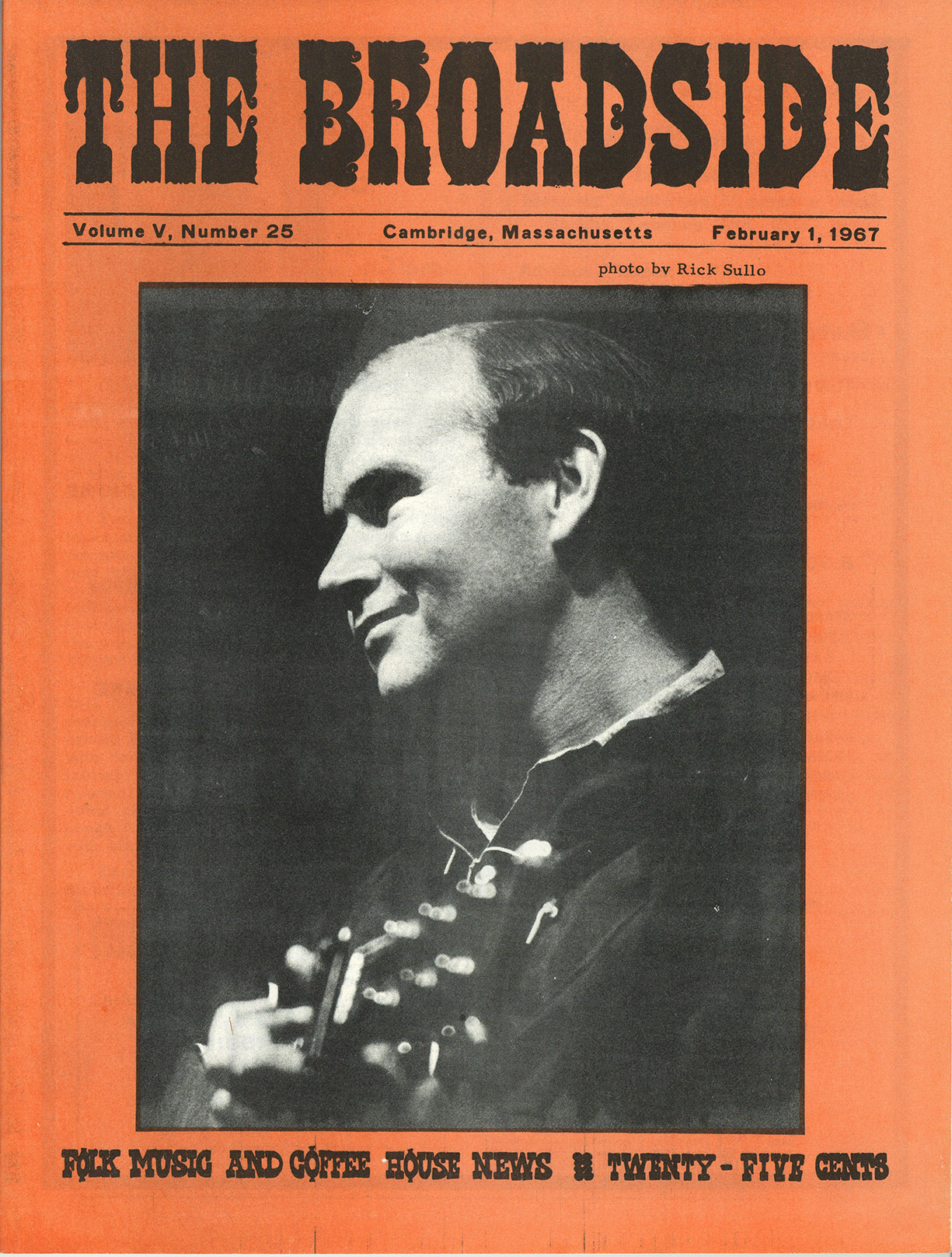
Bill Keith on the cover of Broadside, Feb. 1, 1967
When The Broadside first appeared in March 1962, it immediately became a key resource for folk musicians and fans in New England. Written by and for members of the burgeoning scene, The Broadside was a central resource for information on folk performances and venues and throughout the region, covering coffeehouses, concert halls, festivals, and radio and television appearances.
Assembled by Folk New England, the collection contains a complete run of the Boston- and Cambridge-based folk music periodical, The Broadside, with the exception of the first issue, which has been supplied in photocopy.
Gift of Folk New England, Oct. 2017
Subjects
Folk music--New England--PeriodicalsPopular music--New England--Periodicals