The University of Massachusetts Amherst
Robert S. Cox Special Collections & University Archives Research Center
CredoResearch digital collections in Credo

Archive

Liberation News Service (New York, N.Y.)

Liberation News Service (New York, N.Y.) Records
1968-1975
6 boxes 4.5 linear feet
Call no.: MS 1007
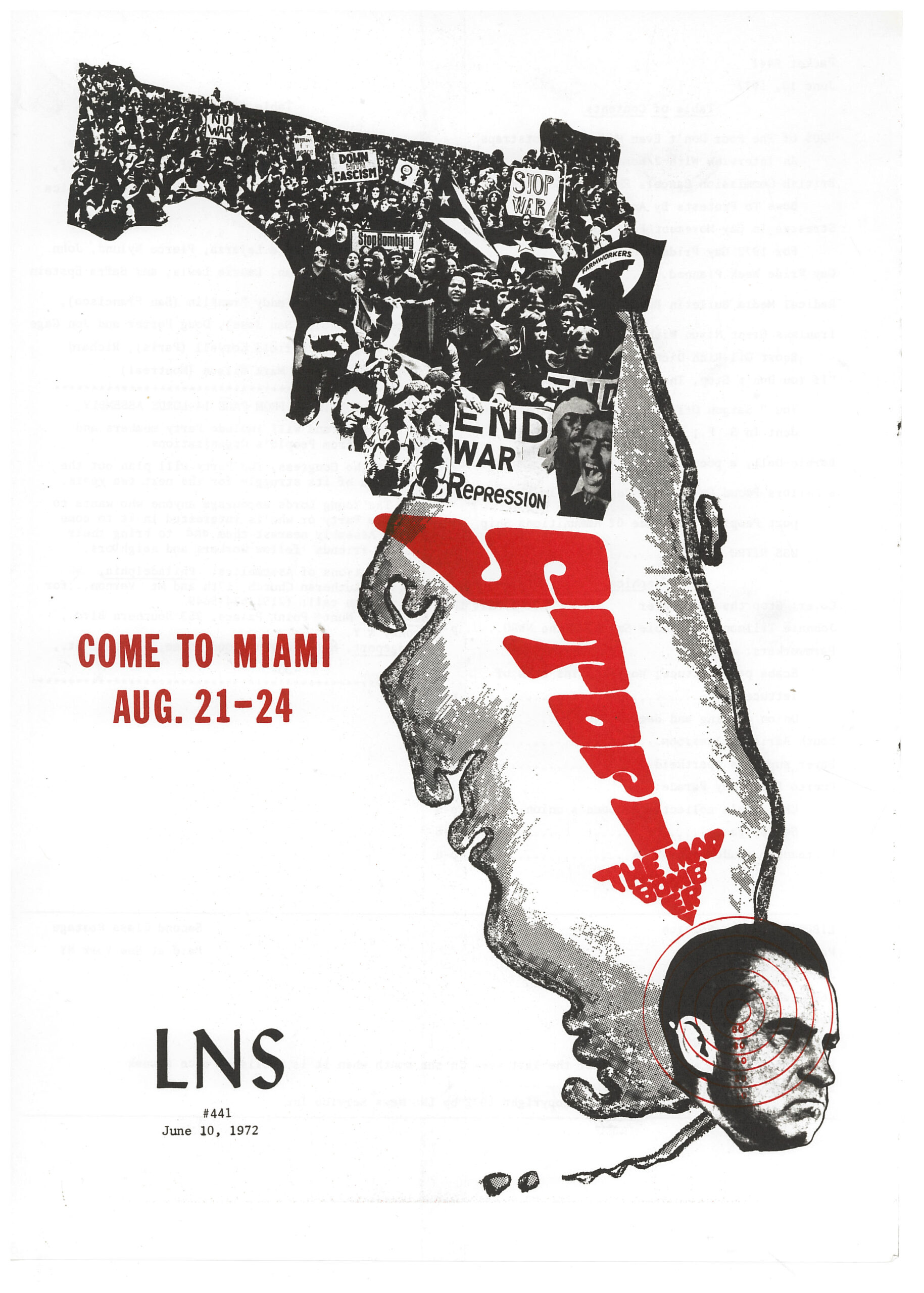
Cover of Liberation News Service issue 441, June 10, 1972.

Founded in 1967, Liberation News Service, an alternative news agency, issued twice-weekly packets aimed at providing inexpensive images, articles, and art reflecting a countercultural outlook. First from its office in Washington, D.C., and then from New York City, LNS provided underground and college papers around the globe with radical and unconventional coverage of the war in Vietnam, global liberation struggles, American politics, and the cultural revolution. Two months after moving to New York City in June 1968, LNS split into two factions, with the sides mirroring common points of dispute within the New Left. The more traditional political and Marxist activists remained in New York, while those more aligned with the counterculture and “hippie” movement settled on farms in western Massachusetts and southern Vermont. For a year each faction put out competing versions of LNS news packets, until the winter conditions and small staff at the farm in Montague caused their production to end in January 1969. LNS-New York continued its production of unique leftist coverage of national and international issues throughout the 1970s, closing in 1981.

The LNS-NY Records include a relatively complete run of packets 102-701 (1968-1975) sent to the subscribing underground press newspaper the Indianapolis Free Press. Some packets and years are more complete than others, and these New York packets are especially dense with photographs compared to earlier LNS packets from before the split in 1968. The collection also includes a small selection of other artwork, articles, and materials kept by the Indianapolis Free Press.

Gift of Ron Haldeman, courtesy of Thomas P. Healy, January 2018

Subjects

News agencies--New York (State)Press and politicsRadicalismUnderground press publications

Contributors

Indianapolis Free PressLiberation News Service (New York, N.Y.)
Mainstream Media Project

Mainstream Media Project Records

1995-2012
11 boxes 16 linear feet
Call no.: MS 976

A World of Possibilities logo, ca. 1998

Founded in 1995, by founder and former executive director Mark Sommer, the Mainstream Media Project (MMP) was a nonprofit public education organization focused on print and broadcast media about creative approaches in achieving peace, security, and sustainability in an interdependent global community. Until its closing in early 2014, it was particularly involved with placing top policy analysts, social innovators, and on-the-ground organizers on radio and television stations across the country and globe. One such project, A World of Possibilities radio show, founded in 2001, was an award-winning one hour weekly show hosted by Sommer. A program “of spirited global conversations,” featuring interviews searching for understanding of, and solutions to, longstanding global public affairs challenges, A World of Possibilities was nationally and internationally syndicated until it ceased broadcasting in 2011.

The MMP Records contain over ten linear feet of CD and DVD masters of uncut interviews and produced radio shows. Shows, including Heart of the Matter and A World of Possibilities, explore promising new thinking and experimentation in fields ranging from energy, food, water, and wilderness to human rights, global security, and public health, and include interviews with leading experts and innovators, such as Studs Terkel, Pete Seeger, Laurie Garrett, Wangari Maathai, Frances Moore Lappe, Howard Gardner, Lily Yeh, Robert Reich, Majora Carter, Van Jones and many more. The collection also contains MMP business files, consisting of correspondence, reports, articles, grant information, and organizational materials.

Gift of Mark Sommer, May 2017

Subjects

ActivistsEnvironmentalismGlobalizationGreen movementPeaceful changePolitics and cultureReconciliationScience--Social aspectsSustainable livingTechnology--Social aspects

Types of material

InterviewsRadio programs
Massachusetts Law Reform Institute

Massachusetts Law Reform Institute Records

1966-1993 Bulk: 1975-1985
3 boxes 3.5 linear feet
Call no.: MS 889

Founded in 1968, the Massachusetts Law Reform Institute (MLRI) is a statewide non-profit poverty law and policy center. Their mission is to advance economic, racial, and social justice through legal action, education, and advocacy, specializing in large-scale impact litigation and policy reforms in a wide range of poverty law fields. The MLRI Housing Unit was involved in several cases attempting to protect low-income and minority housing in urban settings in Massachusetts in the 1980s. In a 1982 case, Olga Ramos et al. v. Ernest Proulx et al., nine minority residents of Holyoke and two Hispanic non-profit service agencies sued Mayor Proulx and the City of Holyoke for discriminatory practices related to disproportionately demolishing housing in low income and minority neighborhoods. In Boston, MLRI joined as council for the plaintiffs in a 1981 case, Viviana Munoz-Mendoza, et al. v. Samuel R. Pierce, Jr., et al., where South End residents sued the Department of Housing and Urban Development (HUD), claiming federal funds were being used to racially desegregate their neighborhood when a HUD grant for the Copley Place development did not make a thorough study of the impact on residential integration or address a long standing desire for low-income housing on an adjacent site known as Tent City.

The MLRI Records consist of legal records, memos, correspondence, and strategy related to litigation for fair housing practice in the Holyoke and Boston cases, Ramos v. Proulx and Munoz-Mendoza v. Pierce. Newspaper clippings, city statistics and reports, and other documents stemming from the discovery portions of the cases are also abundant.

Subjects

Boston (Mass.)--HistoryDiscrimination in housing--Law and legislationHolyoke (Mass.)--HistoryHousing--Law and legislation

Types of material

Legal documents
Meyer, Helen C.

Helen C. Meyer Collection

ca.1911-2020 Bulk: ca. 1940-1995
13 boxes 9 linear feet
Call no.: MS 1084

Adolph and Helen Meyer, Mass. Federation Presentee Ball, at Hotel Statler Hilton Boston, 1959 Nov.

A founding member of the Massachusetts Federation of Polish Womens’ Clubs, holding every post in the organization, Helen (Gorecka) Meyer (1908-2003) was incredibly active in the Polish community in Boston, Cambridge, and later Cape Cod. Born in Poland, Helen came to America at the age of three, living with her parents in Lynn and Wilmington, before moving to Cambridge. She married Adolph Meyer in 1928, and both were important business owners (establishments included the White Eagle Restaurant in Cambridge, the Log Cabin Restaurant in Waltham, South Boston Liquors, and Al’s Bottled Liquors) and community members. Honored by the Mass. Federation of Polish Womens’ Clubs in 1963 as their “Woman of the Year,” Helen was also actively involved in the St. Joseph and Sacred Heart Societies of St. Hedwig’s Parish, local and national Polish Roman Catholic Union groups, and the Kosciuszko Foundation Presentation Balls.

Compiled from Helen Meyer’s papers by her nephew Stan Bartosiak, this collection of personal, family, and community papers – including published materials, photographs, slides, correspondence, audiovisual material, news clippings and ephemera – documents the Polish community in the Boston area from the 1930s through the 1990s. Some records concerning the Meyer, Gorecka, and connected families are from earlier. Various Polish clubs and organizations are represented through society badges, souvenir programs, financial records, correspondence, and photographs, with the Kosciuszko Foundation Presentation Balls particularly well documented. Additional audiovisual recordings document Bartosiak and his work an educator.

Gift of Stan Bartosiak, 2019-2020.

Subjects

Boston (Mass.)--Social life and customsPolish Americans--Massachusetts

Types of material

Audiovisual materialsPhotographsSouvenir programs
New Victoria Publishers

New Victoria Publishers Records

1974-2009
6 boxes 11 linear feet
Call no.: MS 883
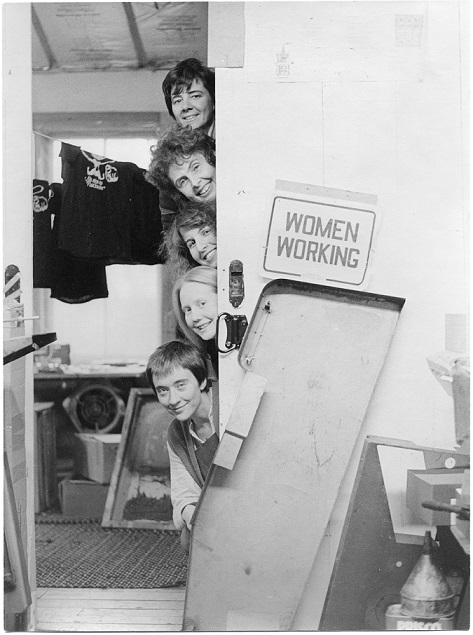
Depiction of From the top down: Beth Dingman, Claudia McKay Lamperti, Petey Becker, Bonnie Arnold, and ReBecca Béguin (ca. 1976)
From the top down: Beth Dingman, Claudia McKay Lamperti, Petey Becker, Bonnie Arnold, and ReBecca Béguin (ca. 1976)

Founded in 1975 in Lebanon, NH, by Beth Dingman, Claudia McKay (Lamperti), Katie Cahill, Nina Swaim, and Shelby Grantham, New Victoria Printers became one of two all-female print shops in New England at the time. Believing strongly that “the power of the press belongs to those who own it,” they began to solicit work from non-profit and politically-oriented groups. Like its namesake Victoria Press, an 1860s women run print shop in London owned by Emily Faithful, an early advocate of women’s rights, New Victoria was also committed to feminist principles. The shop offered work and training in printing, machine work, and other traditionally male dominated fields; initially focused on printing materials from the women’s movement; and was organized as a collectively owned and democratically run organization.
Additionally, the shop functioned as a de facto women’s center and lesbian hub for Lebanon and the surrounding area, often overlapping with the lesbian social club Amelia Earhart’s Underground Flying Society, (a.k.a. the Amelia’s). The print shop was a place of education, community, creativity, and activism, and soon publishing opportunities, as the group founded New Victoria Publishers in 1976 to publish works from their community. The print shop closed in 1985, with Dingman and McKay taking over the running of the non-profit publishing company out of their home in Norwich, VT, with an emphasis on lesbian fiction in addition to other women-focused works. An early bestseller, Stoner McTavish by Sarah Dreher, put them on the map, with the company publishing over a hundred books by and about lesbians, winning three Lambda Literary Awards and several other honors.
The New Victoria Publishers Records consist of photographs, newsletters, and cards put out by the collective, materials printed by the press, marketing and promotional materials, author correspondence, graphics and cover art, book reviews, financial and legal records, histories of the organization, news clippings, and an almost full run of the books published by the company. The collection is particularly rich in documenting the work and production of a women owned business within the feminist press movement as well as the lesbian publishing industry.

Subjects

Collective labor agreements – Printing industryFeminist literature – PublishingLesbian authorsLesbians' writings -- PublishingWomen printers – New EnglandWomen publishers – New England

Contributors

Beth DingmanClaudia McKayNew Victoria PrintersNew Victoria Publishers

Types of material

Photographs
Nopper, John

John Nopper Photograph Collection

2012-2013
25 photographs 0.1 linear feet
Call no.: PH 078
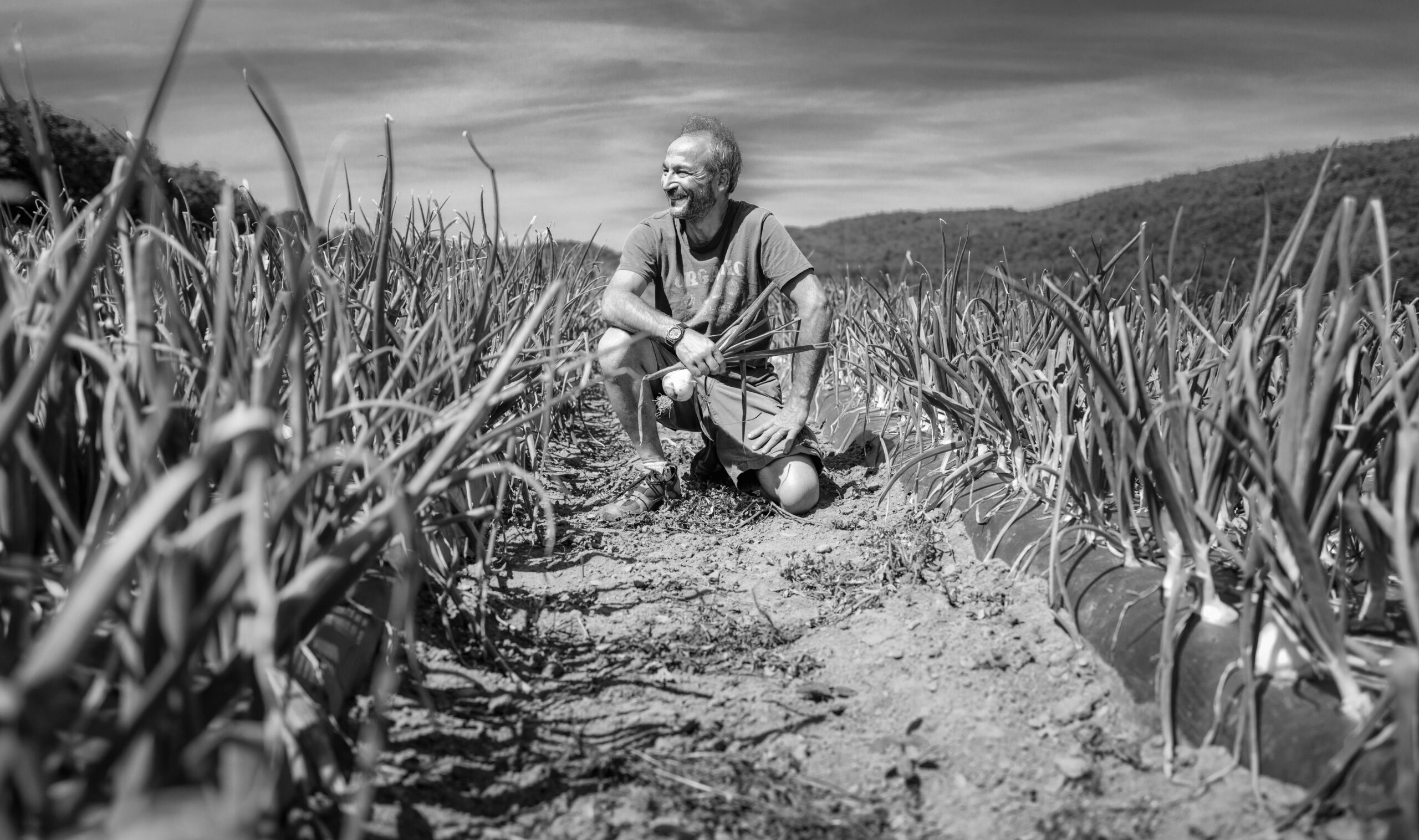
Howard Prussack in a field at High Meadows Farm in Putney, VT
Howard Prussack at High Meadows Farm in Putney, VT

A farmer for over thirty years along the Connecticut River in Vermont, John Nopper came to photography later in life. Drawn to the challenge of capturing individuals and environments in his and surrounding communities, Nopper focuses on portraits and landscapes, and specializes in 11”x17” or larger printing, emphasizing the depth of tone in his black and white photography. His photograph projects often focus on the instruments and individuals of a specific industry or place, and frequently document subjects and vocations he feels warrant increased attention, either due to their methods, like his work documenting traditional maple sugaring and printing practices, or due to current events, such as a more recent project as an embedded photographer within a Vermont city police department.

The John Nopper Photograph Collection currently consists of twenty-five, 11”x17”, black and white prints from the exhibit “Plowing Old Ground: Vermont’s Organic Pioneers,” along with the descriptions from the project. In a collaborative effort with interviewer and writer Susan J. Harlow, Nopper photographed the subjects of Harlow’s interviews for an exhibit featuring interview summaries and quotations alongside photographs from six farms and their farmers, all pioneers in the history of organic farm production, marketing, and distribution in Vermont. The collection also includes digital photographs not printed, as well as digital versions of most of the prints.

Gift of John Nopper, July 2017

Subjects

Northeast Organic Farming AssociationOrganic farmers--VermontOrganic farming--StandardsOrganic farming--VermontSustainable agriculture

Types of material

Photographs
Ozer Family

Ozer Family Papers

ca. 1935-2015
10 boxes 13.5 linear feet
Call no.: MS 1002
Ruth and Abe Ozer celebrating their 90th birthdays in 2010.

Born five days apart in June 1920 in Manhattan, Abraham Jay Ozer (born Abraham Ozersky) and Ruth Sydell Ozer (born Ruth Sydell Newman) married in 1947 after Abe returned from his army service in Australia, New Guinea, and the Philippines. Abe received the Purple Heart after being wounded by shrapnel from a kamikaze attack on his ship after the Battle of Leyte Gulf in 1944. Returning to New York, Abe and Ruth began their romance, after being friends earlier as part of a Workmen Circle teen group, and lived almost the entirety of the rest of their lives in the Amalgamated Housing Cooperative in the Bronx, the country’s oldest nonprofit housing cooperative. The Ozers were involved in the social, cultural, and financial community of the cooperative, originally founded by Amalgamated Clothing Workers Union members, and decidedly Jewish and progressive in its early decades. Working for RKO Pictures Inc. and as a substitute teacher, Ruth also volunteered at the local Amalgamated nursery school, which her daughters Alison and Stephanie attended as children. Self-employed in the insurance business, Abe served on several of the community’s boards and societies, and later volunteered as a dispatcher for ambulances in the Amalgamated, and as a tour guide at the Bronx Zoo. The two were also able to pursue their passion for travel, beginning their adventures in 1969 with a trip to the United Kingdom. Over the next thirty-five years they would take more than fifty international and national trips.

The Ozer Family Papers primarily document the lives of Abe and Ruth Ozer, including their high school and college years, their correspondence and other records from Abe’s military service in the 311th and then 168th Ordnance Depot Company, additional war correspondence between Ruth and other parties, and extensive documentation of the couple’s many years of travel, including selected slides, photographs, travel planning documents, and Ruth’s detailed travel journals for each trip from 1969 through 2005. Additional materials cover the Amalgamated Housing Cooperative, RKO Pictures Inc., and other aspects of the Ozer’s lives, including numerous oral history interviews and home movies on formats ranging from 8mm film to digital. The greater Ozer family is also represented, from a family tree back to Abe’s grandparents from Belorussia, to content and interviews with his mother, Sadie Uretsky, and several folders of clippings about Abe’s brother, Bernard Ozer, an important figure in fashion, and former vice-president of Associated Merchandising Corporation. Additional content on the Ozer’s children, grandchildren, and extended family rounds out the collection. An additional two boxes of family photographs and albums, added to the collection later, remain unprocessed.

Gift of Alison Ozer, November 2017

Subjects

Bronx (New York, N.Y.)--Social life and customsHousing, CooperativeHunter College--StudentsJews--New York (State)--New YorkLeyte Gulf, Battle of, Philippines, 1944TourismTravelUnited States. Army. Ordnance CorpsWorld War, 1939-1945

Types of material

Letters (Correspondence)Oral historiesPhotographsSlides (photographs)
Sommer, Mark

Mark Sommer Papers

1966-2017
13 boxes 16.5 linear feet
Call no.: MS 973

Mark Sommer, with Zetta, the first newborn goat at the Sommer homestead in northern CA, May 1985

Mark Sommer is an explorer, storyteller, and award-winning public radio and print journalist focused on advocacy and narratives of social, political, and environmental change and positive action. In Washington, D.C., Sommer found himself on hand for some of the 1960s pivotal moments, where he was involved with the Liberation News Service and the New Left think tank, the Institute for Policy Studies. Sommer moved to California in 1969 to explore the counterculture, spending several years journeying – spiritually, psychedelically, and physically between communes, farms, and wilderness homesteads along the western coast – before he and his wife built a self-reliant organic homestead in the deep woods of northern CA, where they lived from the 1970s to the 1990s. The resilience of nature deeply impacted Sommer’s outlook and work as a writer and journalist, driving his interest in the human capacity for overcoming adversity. Sommer founded and directed the Mainstream Media Project, a nonprofit media placement service scheduling leading edge thinkers and social innovators for extensive radio interviews, and Sommer served as host and executive producer of the internationally syndicated and award winning, one-hour weekly radio program, A World of Possibilities. Sommer is the author of three books (Beyond the Bomb, The Conquest of War, and Living in Freedom), and hundreds of op-eds in major newspapers worldwide. Current projects include short and movie length videos crafted from his photographs, films, interviews, and experiences.

Chronicling over five decades of creative and journalistic output of a life-long explorer and progressive advocate, the Mark Sommer Papers are an extensive collection, covering Sommer’s entire career and personal life from the late 1960s to the present. Writings include personal and multiple travel journals (including a unique trip to North Vietnam in 1968), correspondence, student essays, op-eds, articles, project and grant plans, memoirs, and book manuscripts. Additional journals exist in audio format, along with radio interviews where Sommer served as a guest. Slides, photographs, and movies cover Sommer’s family and home life to his wide-ranging travels and interests. Some main topics of coverage include foreign policy and international politics, progressivism, peace and conflict studies, the anti-nuclear and disarmament movements, wilderness and back-to-the-land experiences, and later in life fatherhood. Materials from Mainstream Media Project have been separated into the Mainstream Media Project Records.

Gift of Mark Sommer, May 2017

Subjects

Antinuclear movementCounterculture--United StatesInstitute for Policy StudiesJournalists--CaliforniaNuclear disarmamentPeace--researchPeaceful change (International relations)Political activistsReconciliationSelf-reliant living--CaliforniaSustainable livingTravel writingVietnam War, 1961-1975

Types of material

ArticlesCorrespondenceDiariesMemoirsPhotographsSound recordingsVideo recordings
Stokes, Ann R.

Ann R. Stokes Papers

ca. 1900-2016 Bulk: 1952-2010
15 boxes 19 linear feet
Call no.: MS 1124
Ann Stokes hugging Nanette the large white dog, 1972
Ann Stokes with Nanette the dog, 1972

Ann Richardson Stokes (1931-2016) was an activist, artist, and community builder across such issues as progressive politics, women’s and lesbian/gay rights, and the environmental and antinuclear movements. Stokes was born and educated in New Jersey, the daughter of Dr. Emlen Stokes and Lydia Babbott Stokes, and the great grand-daughter of Charles Pratt. A lifelong Quaker and longtime member of Putney Friends Meeting, Ann moved to Welcome Hill in West Chesterfield, NH in 1959. She helped build and run the studio retreat for women artists, Welcome Hill Studios, which has been inspiring and nurturing artists since the 1970s, and in 1985 Stokes published an account of the all-woman-built first studio in “A Studio Of One’s Own.” Ann purchased a large parcel of land in West Chesterfield with stone ruins left by Madame Sherri, a vaudeville costume designer known for her entertaining, and carried on her party tradition by hosting Nina Simone, Odetta, the Arthur Hall African-American Dance Troupe and many others. Ann eventually donated the parcel now known as the Madame Sherri Forest with many sites and trails, including the Ann Stokes Loop named in her honor. A talented writer and painter, Ann penned numerous thoughtful letters to editors across the country, but was happy to engage personally in social action as well, such as when she was jailed for two weeks for protesting the Seabrook Station nuclear power plant in 1977 or when she ran, unsuccessfully, for Sheriff in West Chesterfield.

The Ann R. Stokes Papers document Ann’s varied and passionate life of art, community building, Quakerism, and activism. The building and story of Welcome Hill Studios, as well as Ann’s famous parties, are well documented with scrapbooks, photographs, and posters. Her engagement with the Putney Friends Meeting is evident through numerous records and correspondence. Family photo albums and scrapbooks document the Stokes extended family history, and Ann’s own writing, photographs, and art (mostly original paintings and prints) make up a bulk of the collection. Ann’s collection of women/lesbian organization’s newsletters, mostly from the 1980s-2000s, with titles such as Lezzie Fair, Open Closet, Lesbian Connection, the Revolutionary & Radical Feminist Newsletter, show her engagement with local and national women’s issues.

Gift of ARS, Inc. and Welcome Hill Studios, 2020.

Subjects

Antinuclear movement--United StatesArtists' studios--New HampshireLesbian community--New EnglandQuakers--New HampshireWomen artists

Contributors

Stokes, Ann R.

Types of material

CorrespondenceNewslettersPaintings (visual works)Photographs
Swaim, Nina

Nina Swaim Papers

ca. 1950-2015
4 boxes 5 linear feet
Call no.: MS 1125

Eleanor “Nina” Hathaway Swaim (1938-2015) was a feminist, environmental and antinuclear activist, antiwar organizer, and proponent of women’s collective enterprises globally. She was arrested for the final time just a month before her death, chained to the gates of a pipe yard in Williston, VT, protesting a fracked gas pipeline. Born into a conservative family in Sharon, MA, Swaim was radicalized during the mid-sixties by courses at the Free University on the Lower East Side and during the 1968 occupations at Columbia University, where she was an administrator. She joined the It’s All Right to be a Woman Theater in 1970 and toured the country with them before leaving New York City to work in a GI bookstore near a military base in Massachusetts, helping soldiers protesting the Vietnam War. Learning the printing trade, she moved to Vermont and co-founded the women’s collective press, New Victoria Press, worked as a mediation coordinator for the Vermont Supreme Court, and became a strong force in the antinuclear movement, helping found the Upper Valley Energy Coalition (UVCE), and co-authoring a book with Susan Koen, “A Handbook for Women on the Nuclear Mentality.” She met her husband, Douglas Smith, through UVEC, and the pair worked on numerous antinuclear, environmental, and other grassroots campaigns and protests together, including a project in Mozambique on water access, where Swaim worked as a cooperator with the revolutionary Organization of Mozambican Women. Other international work included picking cotton in Nicaragua, visiting Cuba under siege, and touring Gandhian centers in India to learn practical nonviolence and social change techniques. A practicing Buddhist, Swaim was an avid writer, gardener, beekeeper, and hiker, and in addition to her other causes, spearheaded numerous events related to the natural world, food security, and honeybees.

The Nina Swaim Papers offer an intimate look into the life of an indomitable and inspiring grassroots activist focused on both local Vermont issues and global concerns. Unpublished writings, clippings, and correspondence, as well as photographs, tapes, and scrapbooks reflect her international travels and work, as well as her community and concerns in the antinuclear and environmental movements based out of Vermont. Detailed writings, reflections, short stories, travel notes, and a comprehensive set of journals dating from the late sixties make up a large part of the collection. They are full of the musings of an activist pondering the meaning of women’s consciousness raising and conflict settlement, of worker collectives and other community building, of struggles and misunderstandings between lesbian and straight women, of power in organizations like Clamshell Alliance and the Upper Valley Energy Coalition, of motherhood and aging, and of the relationship between action for social change and spiritual practice.

Gift of Douglas V. Smith, 2021.

Subjects

Antinuclear movement--United StatesAntinuclear movement--VermontEnvironmental justiceFeminismNuclear energy--VermontPeace movements--United States

Contributors

Nina Swaim

Types of material

CorrespondenceDiariesPersonal narrativesPhotographs